
RLG Engineered | Precision Die-Cut Parts
Precision die-cut parts engineered for product performance.
Functional components converted from specialty materials, adhesives, foams, films and tapes. Built for bonding, sealing, spacing, cushioning, protection and assembly support across demanding product applications.
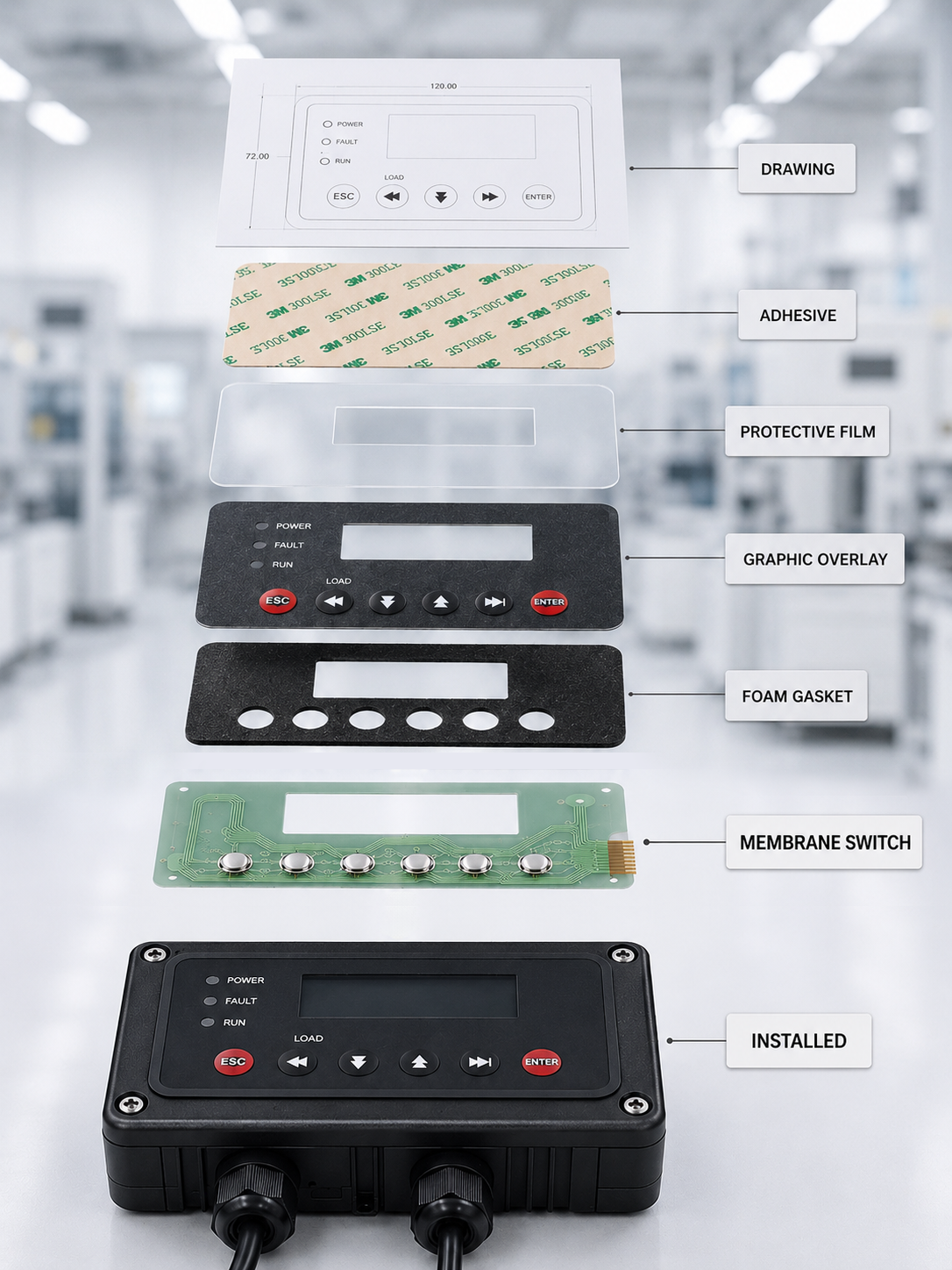
Functional Components
The part you don’t see may be the part that matters most.
Precision die-cut parts often live inside the product, between layers, behind panels or within assemblies. They may look simple on the table, but their job can be critical: seal an opening, bond dissimilar materials, isolate vibration, space components or protect a surface during use.
RLG Engineered converts specialty materials into functional components built around the drawing, material stack, tolerance, application surface, assembly process and expected product life.
These are not standard labels cut into unusual shapes. They are parts and pieces built to support how the finished product functions, assembles, performs and scales.
From prototype through repeat production, RLG Engineered helps manufacturers turn application requirements into die-cut components that are manufacturable, repeatable and ready for the real world.
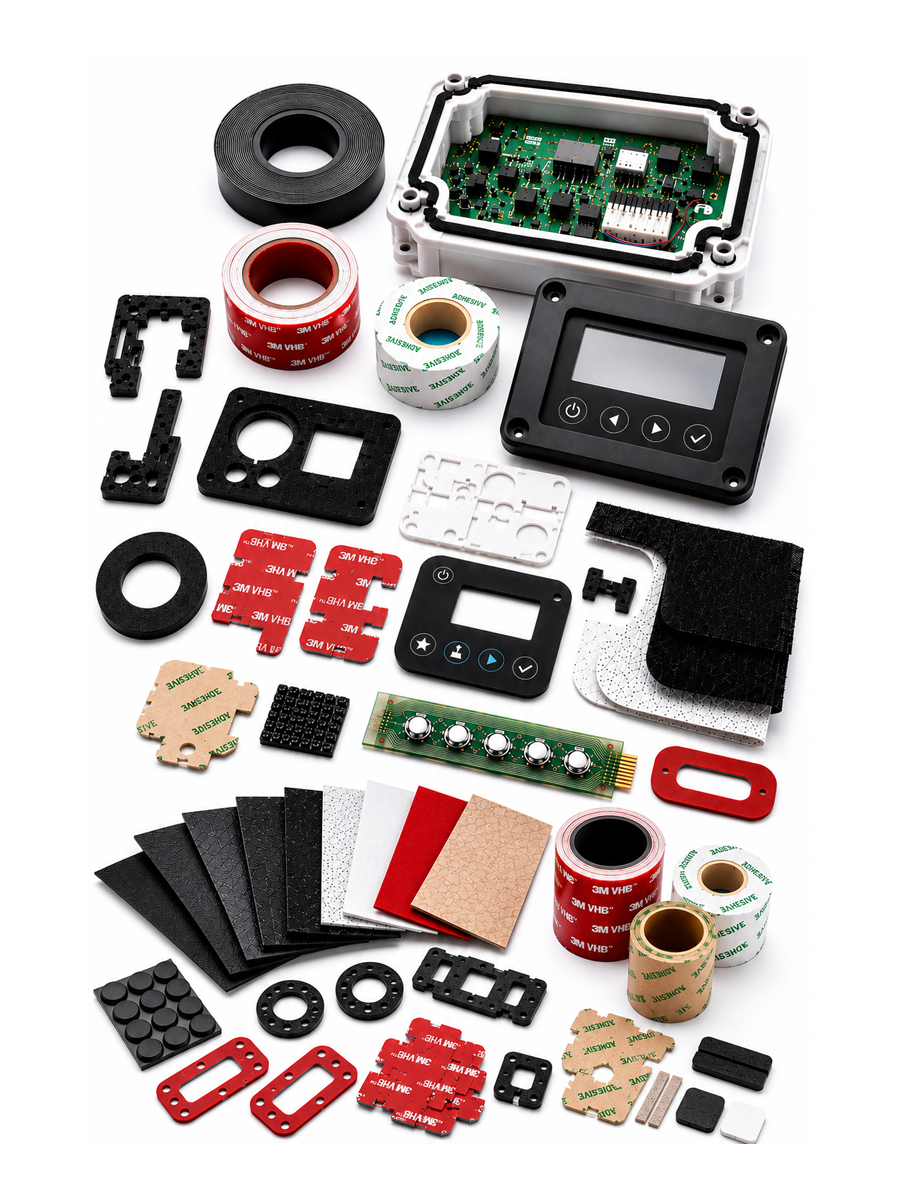
Material Systems
Performance starts with the material stack.
The right die-cut component depends on more than shape. Material choice, adhesive behavior, liner, thickness, compression, release characteristics and downstream assembly conditions all affect whether the part performs as intended.
Foams and Spacers
Cushioning, compression, gap filling, gasketing and controlled stack height.
Adhesive Systems
Transfer tapes, double-coated tapes, VHB-style components and specialty bonding layers.
Films and Laminates
Polyester, polycarbonate, protective films, insulating layers and specialty substrates.
Functional Materials
Hook-and-loop, recloseable fasteners, shielding films, conductive layers, medical-grade materials and application-specific constructions.
Converted to Function
Built for fit, function, consistency and assembly.
RLG Engineered supports precision converted components that need to fit the product, support the assembly process and perform consistently across qualified production runs.
Gaskets and Seals
Die-cut components designed around fit, compression, sealing surfaces and the operating environment.
VHB Tape Components
High-bond adhesive parts converted for mounting, joining, reinforcing and durable assembly applications.
Foam Parts
Foam components for cushioning, spacing, gasketing, vibration management and product protection.
Adhesive Components
Custom die-cut adhesive parts with liners, tabs, kiss-cuts, multi-layer builds and assembly-ready presentation.
Hook-and-Loop Fasteners
Converted hook-and-loop and recloseable fastening components for product assemblies, removable panels and serviceable parts.
Medical and Diagnostic Components
Specialty die-cut parts for device-adjacent, diagnostic, wearable, skin-contact and controlled-use applications.
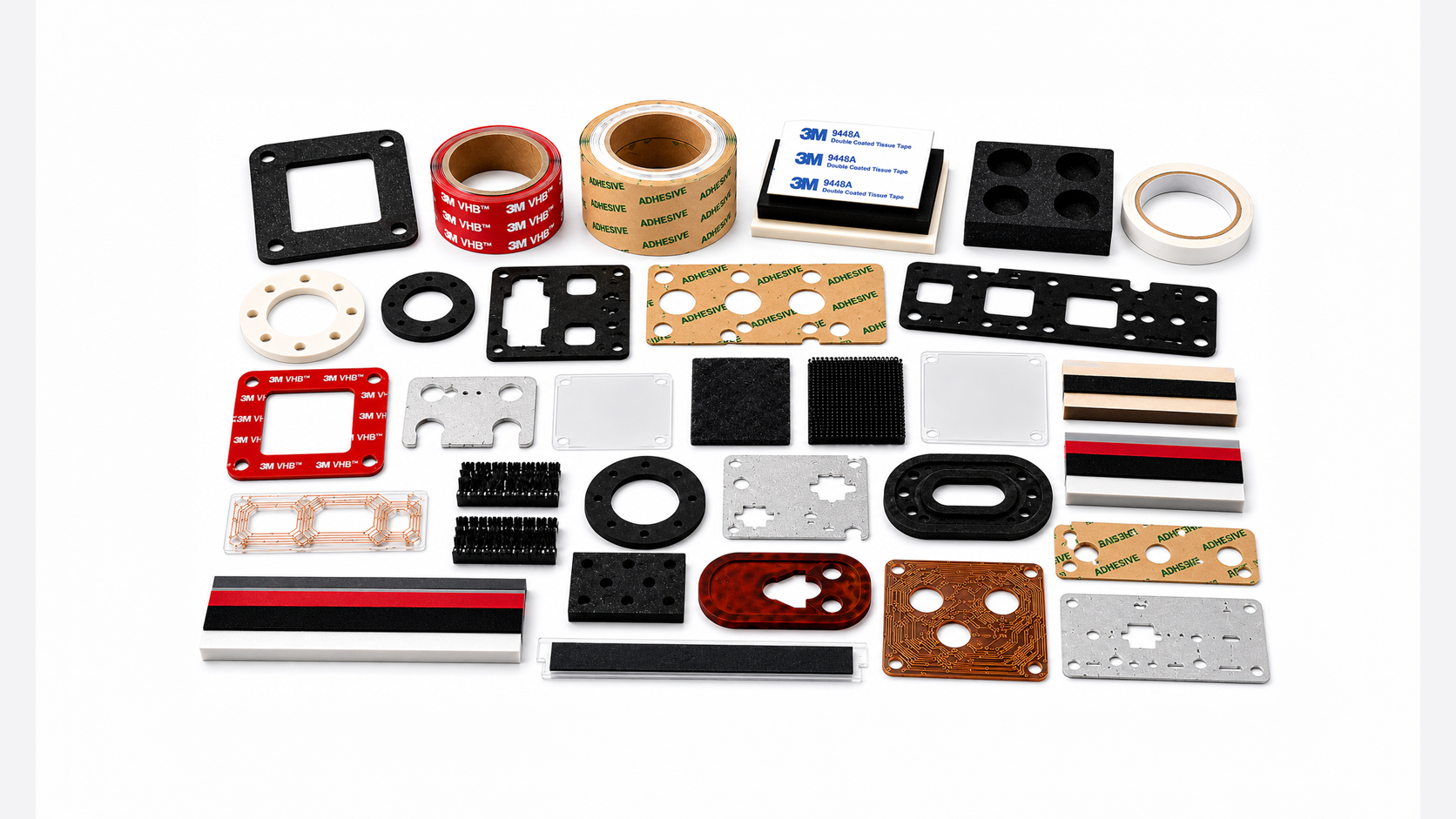
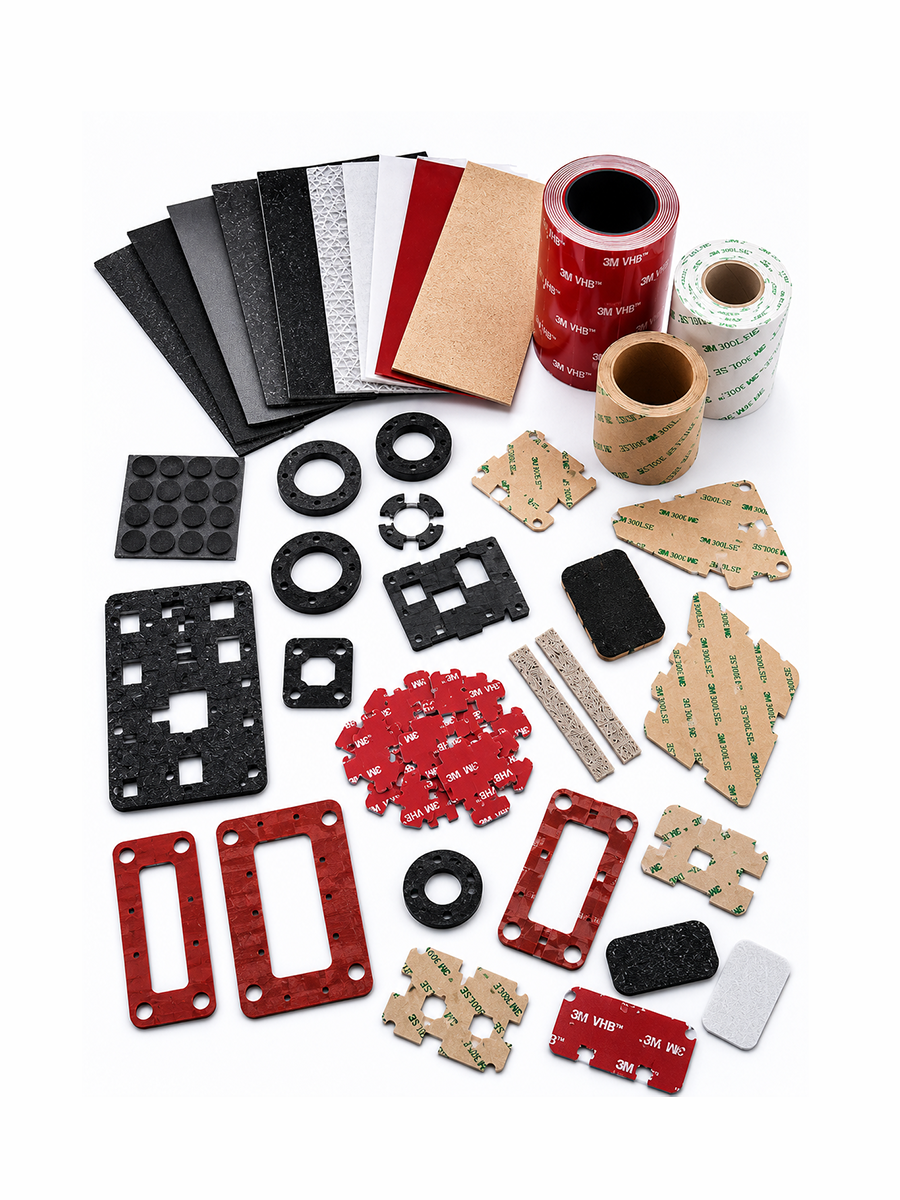
The Application Comes First
The construction should follow the function.
A die-cut part is only successful when it performs in the assembly. That means the surface, tolerance, material behavior, environment and production process all need to be considered before the part goes into repeat production.
Surface and adhesion compatibility
Surface energy, texture, coatings and cleaning processes can determine whether an adhesive component succeeds.
Compression and recovery
Foams, gaskets and seals may need to compress, recover and maintain performance through repeated use.
Tolerance and registration
Part geometry, liner presentation, kiss-cut depth and repeatability all matter when components enter an assembly workflow.
Exposure and durability
Heat, cold, moisture, chemicals, abrasion and outdoor exposure can all influence material and adhesive selection.
Assembly method
Hand application, automated assembly, kitting, liner removal and part presentation can change the best construction.

Why It Matters
Performance depends on more than the material.
Material selection is only one part of the requirement. The best die-cut components are engineered around form, fit, function, assembly, tolerance, documentation and repeatability.
Material fit
Foam, film, adhesive, liner and laminate selection should match the final application.
Converting control
Cut method, tolerance, registration and part presentation affect production consistency.
Assembly readiness
Kitting, liner tabs, sheets, rolls and part spacing can support how teams install the component.
Repeatability
Qualified programs need a stable process that can move from prototype to scalable production.
Before Production
The right solution starts before the tool is made.
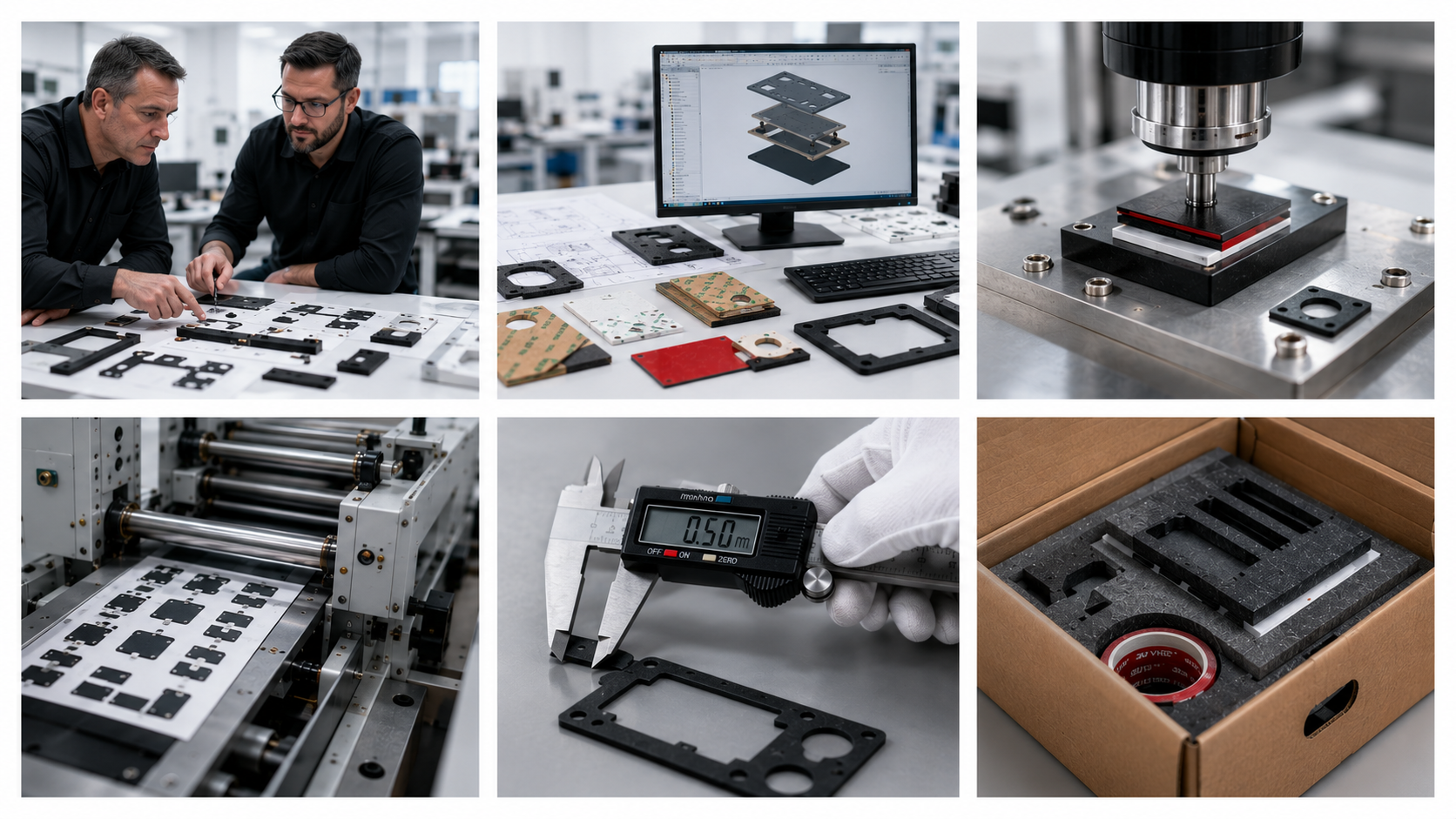
RLG Engineered helps evaluate drawings, CAD files, samples, materials, tolerances and assembly requirements before moving into repeatable production.
Application review
Understand what the part does, where it lives and how it will be assembled.
Material evaluation
Match foams, films, adhesives, liners and specialty materials to the requirement.
Prototype and test
Support form, fit and functional validation before locking the production approach.
Convert and assemble
Die cut, laminate, slit, kit and present components for practical production use.
Scale production
Move from approved samples to repeatable supply with documentation and process control.
Application Range
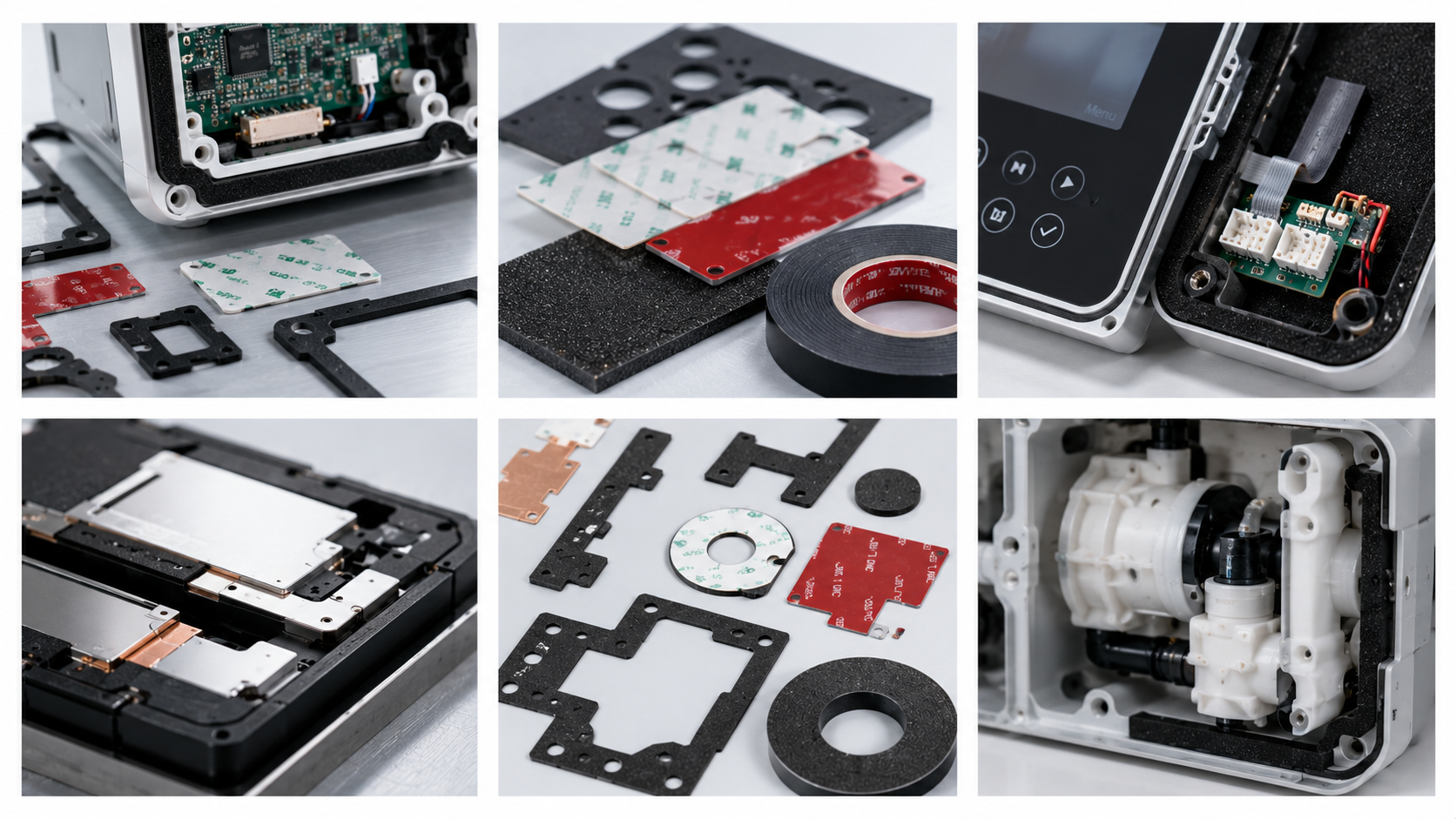
Applications for precision die-cut parts and converted materials.
Precision converted components support products and assemblies where fit, performance, reliability and manufacturability matter. The same part family can serve very different requirements depending on the material stack and application.
Medical and Diagnostic Devices
Skin-contact materials, diagnostic components, wearable parts, device-adjacent foams and assembly aids.
Electronics and Semiconductor
Insulating films, adhesive parts, shielding layers, sensor films and component protection.
Industrial Equipment
Gaskets, seals, mounting components, protective layers and assembly-ready functional parts.
Automotive and Transportation
VHB tape components, foam pads, seals, vibration-management parts and durable adhesive assemblies.
Appliance and HVAC
Foam gaskets, labels-as-components, adhesive parts, filters, spacers and assembly support materials.
Consumer and OEM Products
Custom adhesive pieces, fastening components, protection layers and ready-to-install parts for product programs.
Precision Die-Cut Parts FAQ
Questions worth answering before production.
The right die-cut component is defined by what the part must do, where it will be used and how it will be assembled.
What are precision die-cut parts?
Precision die-cut parts are functional components converted from materials such as foams, films, adhesives, tapes, liners and specialty substrates. They can support bonding, sealing, spacing, cushioning, insulation, shielding, protection or assembly inside a finished product.
What materials can be die cut?
Common materials include foam, polyester, polycarbonate, adhesive transfer tape, double-coated tape, VHB-style tape, hook-and-loop, recloseable fasteners, rubber-like materials, protective films, conductive layers, liners and application-specific specialty materials.
What is the difference between flatbed, rotary and laser die cutting?
Flatbed, rotary and laser die cutting each support different part geometries, materials, tolerances and production needs. RLG Engineered can help determine which process best fits the application, volume, tooling strategy and production requirements.
Can RLG help with prototypes or samples?
Yes. Prototypes and samples can help validate form, fit, function, material choice, adhesive behavior and assembly method before moving into full production tooling or a qualified supply program.
What information helps quote a precision die-cut part?
Helpful information includes drawings, CAD files, samples, dimensions, tolerances, material requirements, substrate or surface details, exposure conditions, annual volume, assembly method and whether the part is used for bonding, sealing, spacing, cushioning, protection or another function.
Can multiple materials be laminated into one component?
Yes. Many precision die-cut components use multi-layer constructions that combine foams, films, adhesives, liners, protective layers or specialty materials. The right stack depends on the part function, assembly process and performance requirements.

Part of RLG Engineered
When the requirement extends beyond a single component.
Precision die-cut parts often sit beside other engineered needs: durable identification, UL labels, graphic overlays, membrane switches, asset tracking, serialization and kitting. RLG Engineered helps connect those requirements into one broader platform.
Talk With RLG Engineered
Need a precision die-cut part built around a real product requirement?
Bring us the drawing, material question, surface, tolerance, assembly process or performance challenge. RLG Engineered can help turn it into a manufacturable, repeatable component.