Trying to meet retailer requirements?
Start with Walmart-driven programs, supplier expectations, Auburn testing considerations and implementation support.
Jump to retail requirements
Resource Label Group helps brands integrate RFID functionality into labels and packaging with the technical support, testing, encoding, inspection and production scale needed to move from requirement to real-world implementation.
RFID projects do not all begin in the same place. Some brands are responding to a retailer mandate. Others want better inventory visibility, authentication, item-level traceability or a broader connected packaging strategy.
Start with Walmart-driven programs, supplier expectations, Auburn testing considerations and implementation support.
Jump to retail requirementsLearn how RFID supports item-level identification, supply chain visibility, replenishment and operational control.
Jump to RFID basicsSee where RFID fits within a larger connected packaging and GS1 Sunrise 2027 strategy.
Jump to connected packagingCompare plain tags, printed RFID labels, prime label insertion, carton insertion and specialty constructions.
Jump to RFID formatsRFID labels use radio frequency identification technology to give a product, case, pallet or asset a unique digital identity that can be captured without direct line-of-sight scanning.
An RFID solution typically includes a tag or inlay, antenna, reader or interrogator and a data system that turns scan activity into useful product information. For packaging teams, the practical question is not only which technology works. It is how that technology can be integrated into the label, package and production process.
The RFID component that carries the unique product identity.
The device that captures the RFID signal in the right system environment.
The software layer that turns product movement into usable information.
RFID tags can vary by frequency, read range, power source and application. For most retail and supply chain programs, UHF RFID is often the practical starting point, while NFC, HF and LF RFID may fit more specialized use cases.
Compare RFID tag types and frequencies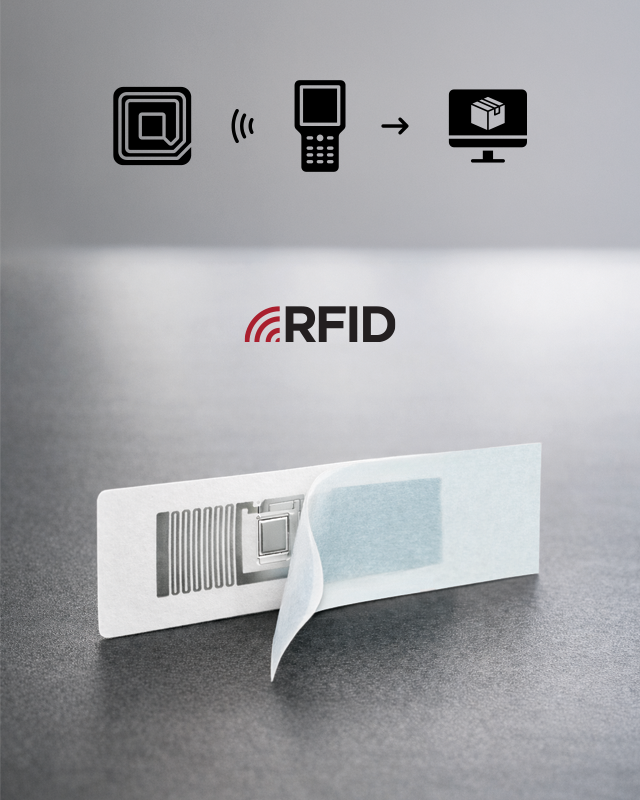


RFID can help brands and retailers capture product movement more efficiently across distribution, storage, shelf and point-of-sale environments.
Retailer-driven RFID programs often require specific inlays, placement guidance, testing protocols and production discipline before products move into market.
RFID can support track-and-trace, anti-counterfeiting, product identity, chain-of-custody visibility and connected packaging strategies.
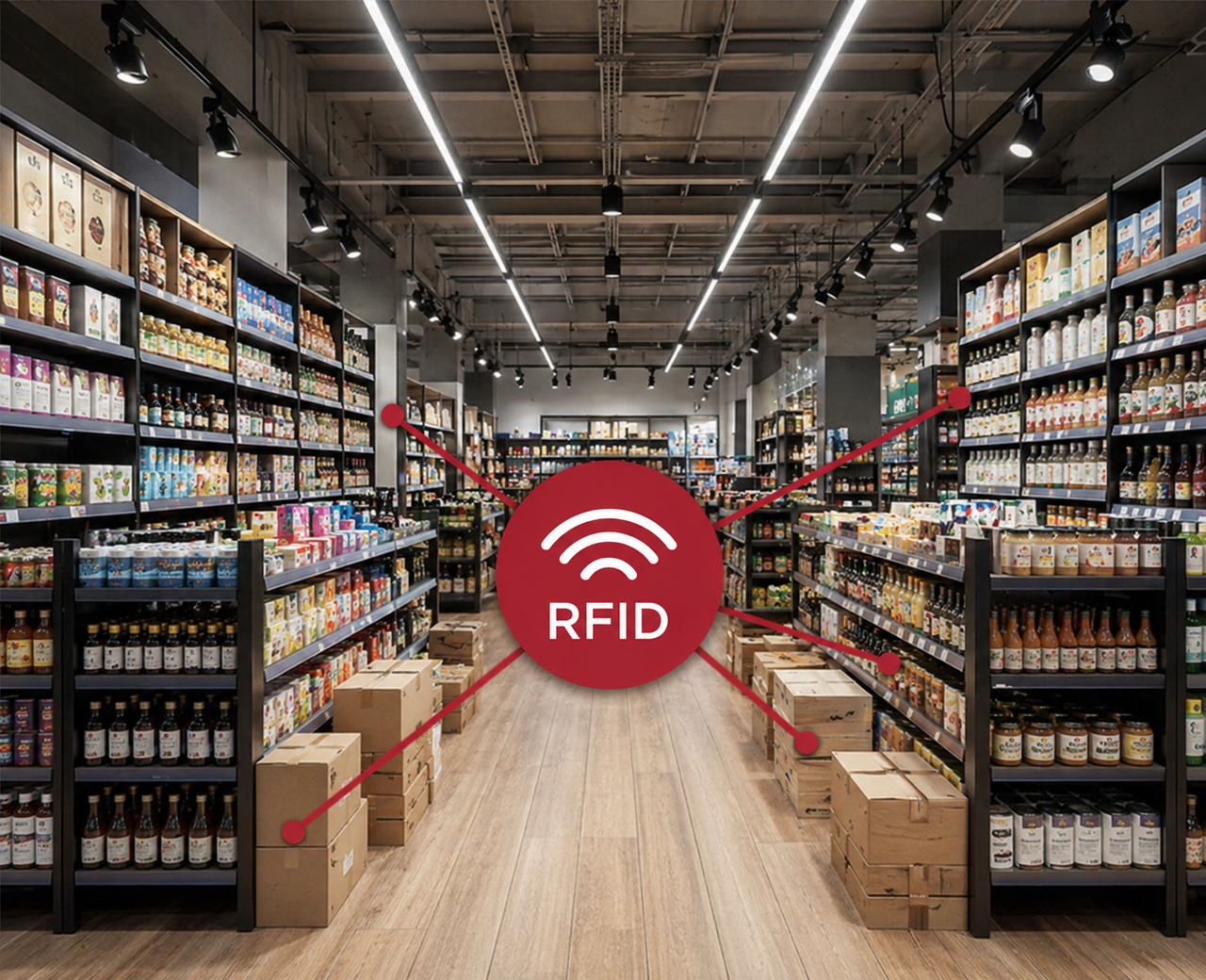
Retail RFID adoption has accelerated as major retailers look for better inventory accuracy, faster replenishment, stronger omnichannel execution and more reliable product visibility.
For suppliers, that shift can create urgent packaging, labeling, approval and production questions. RLG supports brand owners through product screening, RFID implementation guidance, tag placement, inlay recommendations, sample development and preparation for Auburn RFID lab evaluation when required.
Brands may need to identify impacted SKUs, review retailer playbooks, select approved RFID components, validate placement, prepare samples, complete lab submissions and scale production without disrupting packaging operations.
The right RFID construction depends on the product, package material, retailer requirements, application process, read environment and brand presentation. RLG can support a range of RFID-enabled formats, from basic RFID tags to integrated label and packaging solutions.
| RFID Format | Best Fit | Advantages | Considerations |
|---|---|---|---|
| Plain RFID Tags | Simple compliance or secondary label applications. | Efficient first step, flexible sourcing and lower added cost. | May require a second label or application step and can disrupt brand presentation. |
| Printed RFID Labels | Secondary RFID labels that need product identifiers or brand-aligned color. | Can better match packaging than a plain tag while carrying required RFID elements. | Still may require secondary application and adhesive review. |
| RFID Behind Prime Labels | Products where RFID functionality should be integrated into the existing label system. | Preserves brand image and can avoid added secondary label application steps. | Product contents, liquids, metals and placement can affect read performance. |
| Folding Carton Insertion | Cartoned products where RFID can be incorporated into the package structure. | Supports discreet integration without changing the front-facing label design. | Requires package-format review and placement validation. |
| Specialty RFID Solutions | Difficult applications such as trigger bottles, liquids, metal surfaces, unique shapes or hang tags. | Allows engineering around real-world performance constraints. | May require custom development, prototyping and additional validation. |

Effective RFID implementation requires careful alignment between the RFID component, package material, product contents, label construction, adhesive, placement, application method and read environment.
Liquids, metals, dense materials, curved containers, trigger bottles, small labels and decorative finishes can all influence RFID performance. That is why early screening, prototyping, placement guidance and validation are critical parts of a smart RFID project.

RLG helps brands work through the practical RFID decisions that can make or break implementation: product contents, package structure, tag placement, encoding requirements, testing expectations and production scale.

Liquids, metals, foils, curves, small containers and specialty materials can all affect RFID performance. RLG helps evaluate the construction before production.
RFID can be built into printed labels, prime labels, cartons, header cards, blister cards and specialty constructions depending on the application.
Support can include RFID encoding, locking, validation, inspection and data-handling workflows that align to the customer program.
From prototypes and samples to scaled manufacturing, RLG helps turn RFID requirements into a production path brands can actually use.
RFID is one part of a larger movement toward connected packaging, item-level identity and richer product data. The right technology depends on whether the goal is retail inventory visibility, consumer interaction, authentication, compliance, traceability or supply chain intelligence.
Supports inventory visibility, retail compliance, supply chain tracking and item-level identification without line-of-sight scanning.
Supports intentional smartphone interactions, authentication and connected consumer experiences.
Supports GS1 Digital Link, product information, regulatory content, traceability and consumer education.
Supports traceability, recalls, authentication, lifecycle records and product-level data management.
GS1 Sunrise 2027 is not an RFID mandate. It is part of the broader move toward richer product data through 2D barcodes. RFID, NFC and 2D codes can each support connected packaging, but they solve different problems and may work together in a larger strategy.
Different markets use RFID in different ways. This section highlights common applications, with deeper links to industry-specific articles and market pages.
Support retailer requirements, inventory visibility, replenishment, omnichannel fulfillment and item-level product identification.
Explore RFID in retailAdd RFID functionality while protecting premium package design, label aesthetics and shelf presence.
Explore RFID for beauty packagingSupport authentication, traceability, patient safety, inventory visibility and product lifecycle tracking.
Explore smart labeling for healthcareConnect product identification, labeling, UDI-related workflows and traceability needs across regulated environments.
Explore medical device labelingSupport durable identification, asset tracking, petroleum product applications, parts visibility and demanding product environments.
Explore industrial labelsUse RFID, NFC, 2D codes and serialization to connect physical products to digital records and lifecycle data.
Explore smart label tracking
Every RFID project is different, but most successful implementations follow a disciplined path: identify requirements, screen products, develop samples, validate performance and move into production with clear expectations.
Clarify whether the driver is a retailer mandate, inventory initiative, authentication need, supply chain program or connected packaging strategy.
Review impacted SKUs, package formats, label materials, product contents, application methods, retailer requirements and likely RFID placement options.
Create RFID samples, evaluate form factors, review tag placement and prepare application recommendations for customer review and required testing.
Confirm demand requirements, production approach, encoding needs, inspection expectations, pricing and implementation timing.
Finalize testing or lab submission steps, then move into RFID label production with the appropriate encoding, locking, inspection and delivery plan.
RFID is a broad radio frequency identification technology used to identify and track items. NFC is a short-range form of RFID designed for intentional close-range interactions, such as smartphone taps, product authentication and connected consumer experiences.
RFID is usually the stronger fit for operational visibility, bulk reading, inventory management and supply chain tracking. NFC is better suited for secure, intentional user interactions such as tapping a phone to verify authenticity, access digital content or connect with a post-purchase experience.
Not always. RFID can often be integrated behind a label, into a secondary label, inside a carton or into another packaging component. The right approach depends on package design, performance requirements, application method and testing results.
Yes, but those applications require careful engineering. Liquids, metals, foils and dense materials can affect read performance, so tag selection, spacing, placement, orientation and validation are especially important.
Yes. Several major retailers require UHF RFID tags encoded with EPC data for certain product categories. These programs may reference GS1 EPC standards, approved inlays and Auburn RFID Lab validation requirements.
ARC certification validates an RFID inlay design against standardized performance requirements. ALEC approval validates the use of an approved inlay within a specific product and retail application, confirming that the RFID construction performs in its final intended use.
In many cases, yes. RFID can often be integrated into an existing label or packaging format to reduce disruption. Some applications still require a secondary label, custom construction, placement adjustment or production process change.
RFID and NFC tags typically store a unique identifier. In retail environments, UHF RFID tags commonly store EPC data that links to product information in backend systems. NFC tags may store small amounts of additional data, such as URLs or authentication information, depending on the chip and application.
RFID and NFC data can connect to middleware, ERP, WMS, MES, CRM or cloud-based systems. When a tag is read, its unique identifier can update inventory records, trigger workflows, support authentication or connect to product lifecycle data.
Brands should clarify the business driver, impacted SKUs, retailer or compliance requirements, package materials, product contents, application process, data needs, testing requirements and production timeline before choosing a final RFID construction.
Whether you are responding to a retailer requirement, building a connected packaging strategy or exploring RFID for inventory and traceability, RLG can help you evaluate the right construction, performance requirements and production path.