Add depth customers can see and feel.
Use embossing to give logos, typography, patterns and design details more physical presence while creating a polished, tactile brand experience.
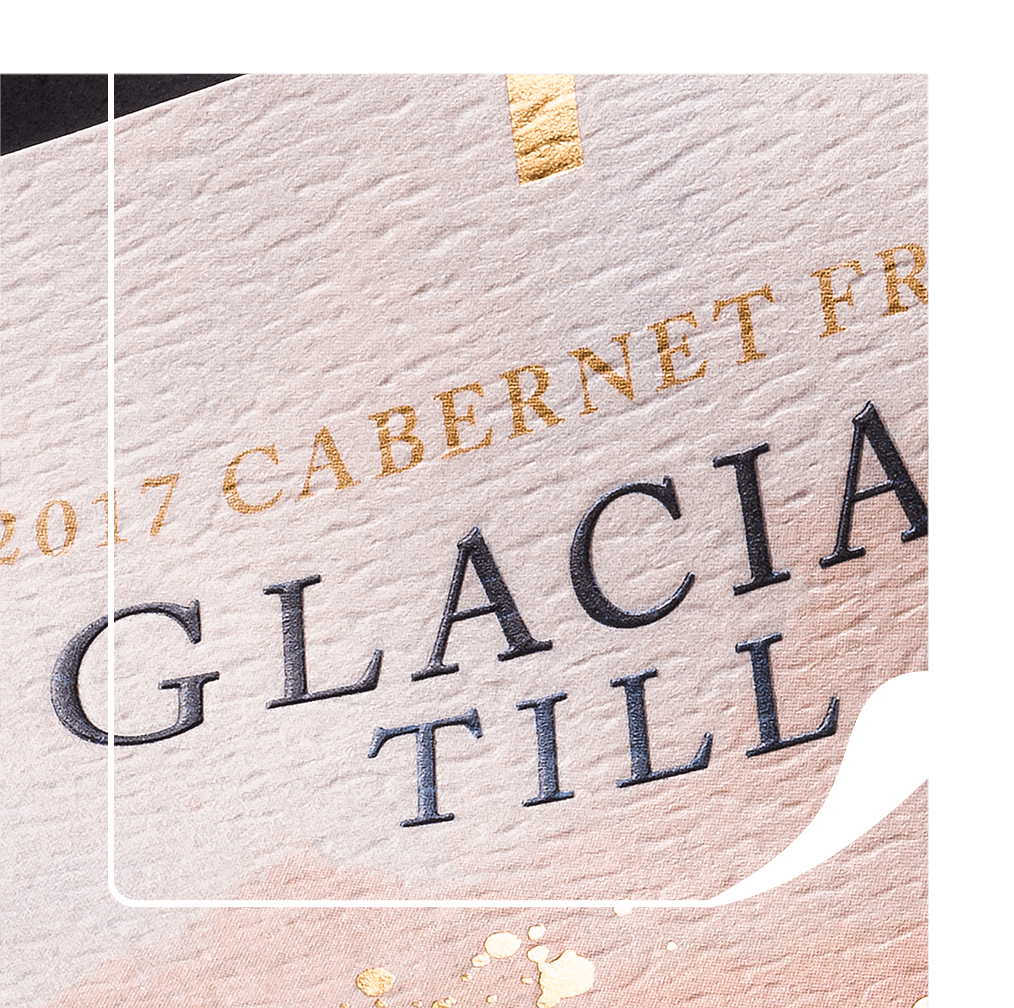
Embossing transforms selected areas of a label into dimensional design elements. Used with purpose, it creates visual hierarchy, adds tactile interest and gives customers a clear reason to notice and engage with the package.
Whether the effect is subtle or sculptural, embossing makes the package feel more intentional, distinctive and inviting to pick up.
Direct attention
Raise a logo, product name or key illustration so the most important detail stands out first.
Add tactile value
Create a physical surface change that customers can feel when they pick up the package.
Show craftsmanship
Use dimensional detail to reinforce quality, care and intentional design.
Build recognition
Use repeatable raised forms to make signature brand elements more memorable.
Raise the design—or press it inward.
Embossing raises selected elements above the label surface, while debossing presses them inward to create a recessed impression. Both effects rely on custom tooling developed around the artwork, material and intended depth.
Embossing is often used for logos, lettering, seals and illustrations. Debossing can create a more restrained, engraved-looking impression. The right choice depends on the brand expression and how the label construction will hold the detail.
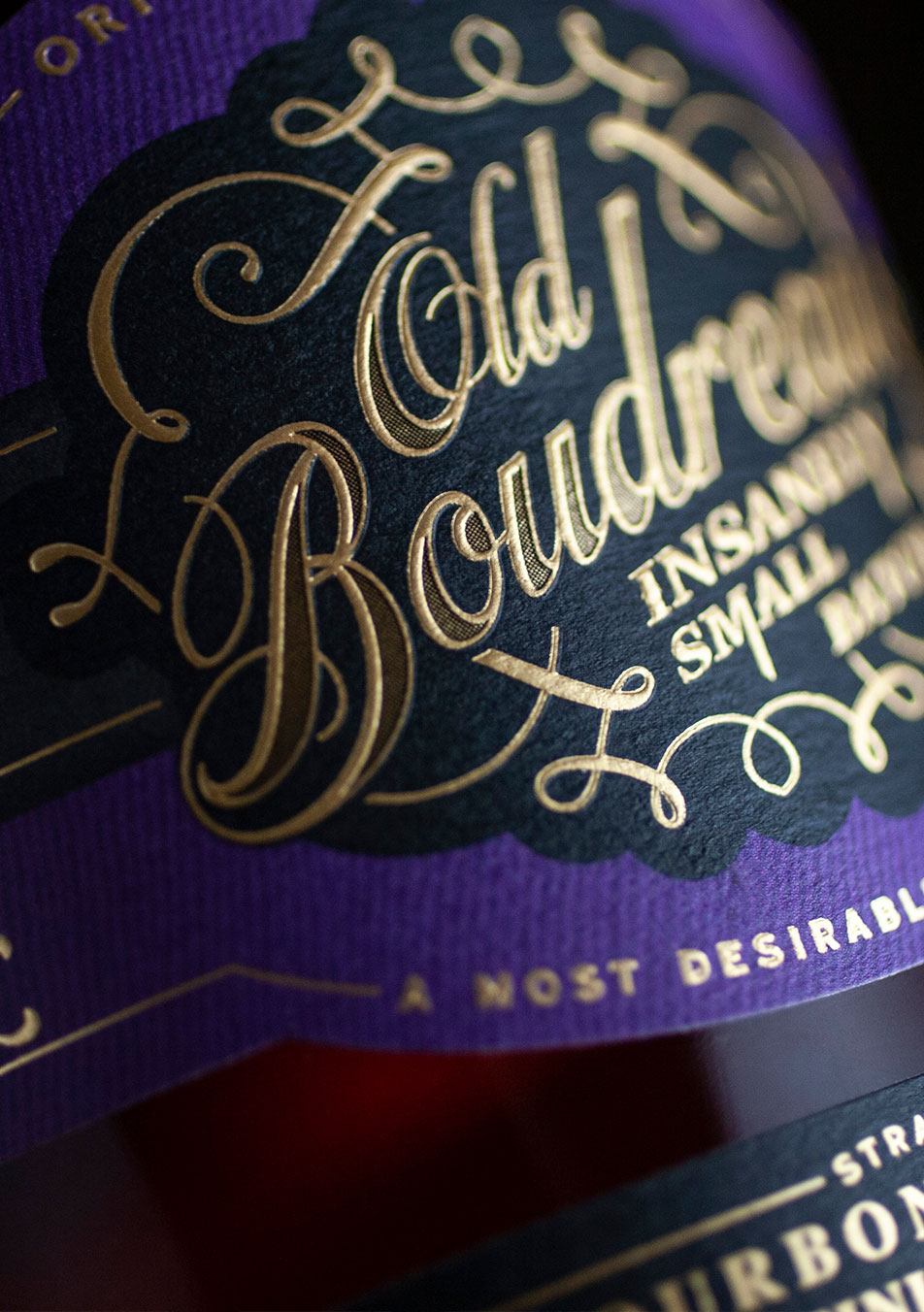
Different embossing styles create different visual effects.
Depth, edge shape and tooling complexity all influence how the finished label looks and feels. These common approaches help define the right level of dimension for the design.
Flat emboss
Crisp and directWell suited to logos, borders and typography that benefit from clean, defined elevation.
Rounded emboss
Softer dimensionAdds a curved profile that can make forms feel smoother, fuller and more tactile.
Sculpted emboss
Layered reliefUses multiple levels to shape illustrations, seals and more complex dimensional artwork.
Deboss
Inset detailCreates a recessed impression for a restrained, engraved or letterpress-inspired effect.
Combined relief
Depth and contrastUses raised and recessed areas together to create more complex surface movement.
Design for a clean, durable impression.
Embossing performs best when the artwork, tooling and label material are developed as one system. Involving the converter early helps protect fine details, maintain registration and choose a relief depth the construction can hold.
Raise the details that matter most rather than adding relief everywhere.
Very small type and thin lines may need adjustment to emboss cleanly.
Open space around raised elements helps the dimensional effect read clearly.
Paper thickness, strength and formability influence how much relief is practical.
Curves, seams and tight diameters can affect how embossed detail performs after application.
Complex artwork may require custom dies and additional prepress consideration.
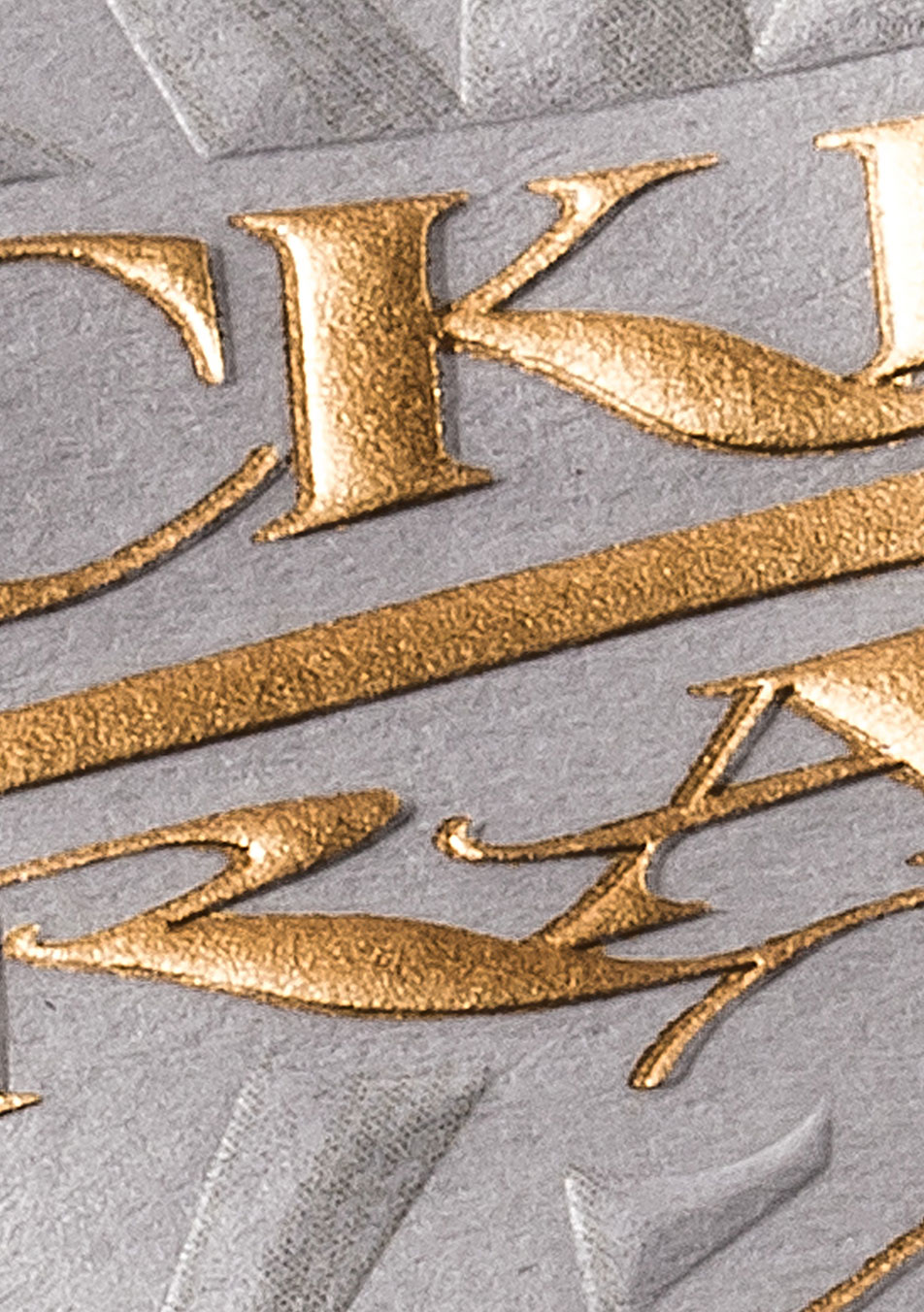
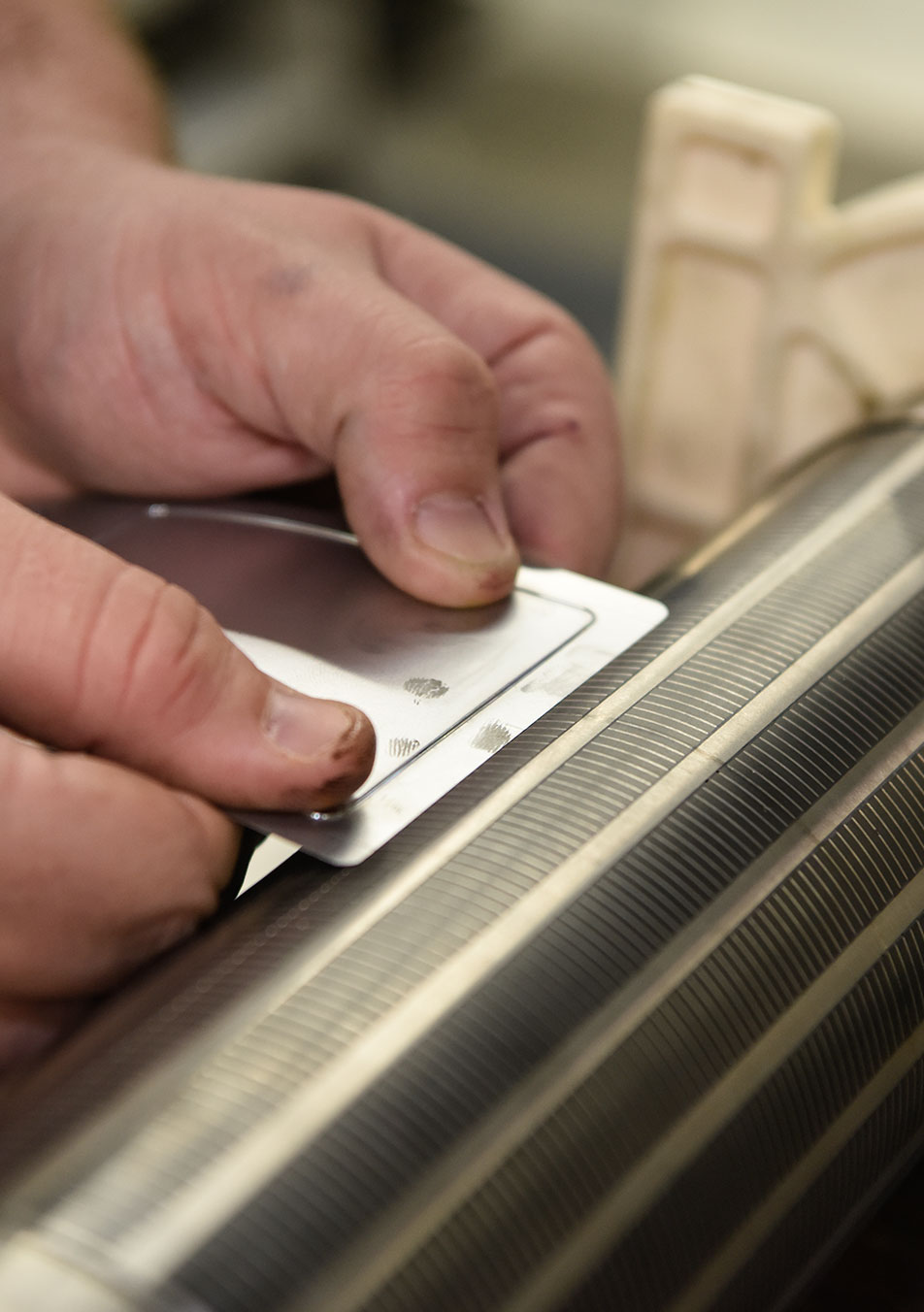
Build the finish around the role each detail needs to play.
Embossing can stand alone or work with print and selective finishing to create stronger contrast. The best combinations support the artwork without overwhelming it.
Texture can become part of the brand system.
Pattern embossing applies a repeated texture across part or all of the label surface. It is used to imitate the look and feel of expensive papers or to create a distinctive custom texture.
The pattern can be organic, geometric, structural or technical, depending on the intended effect. It can also be limited to selected areas to create contrast between smooth and dimensional surfaces.
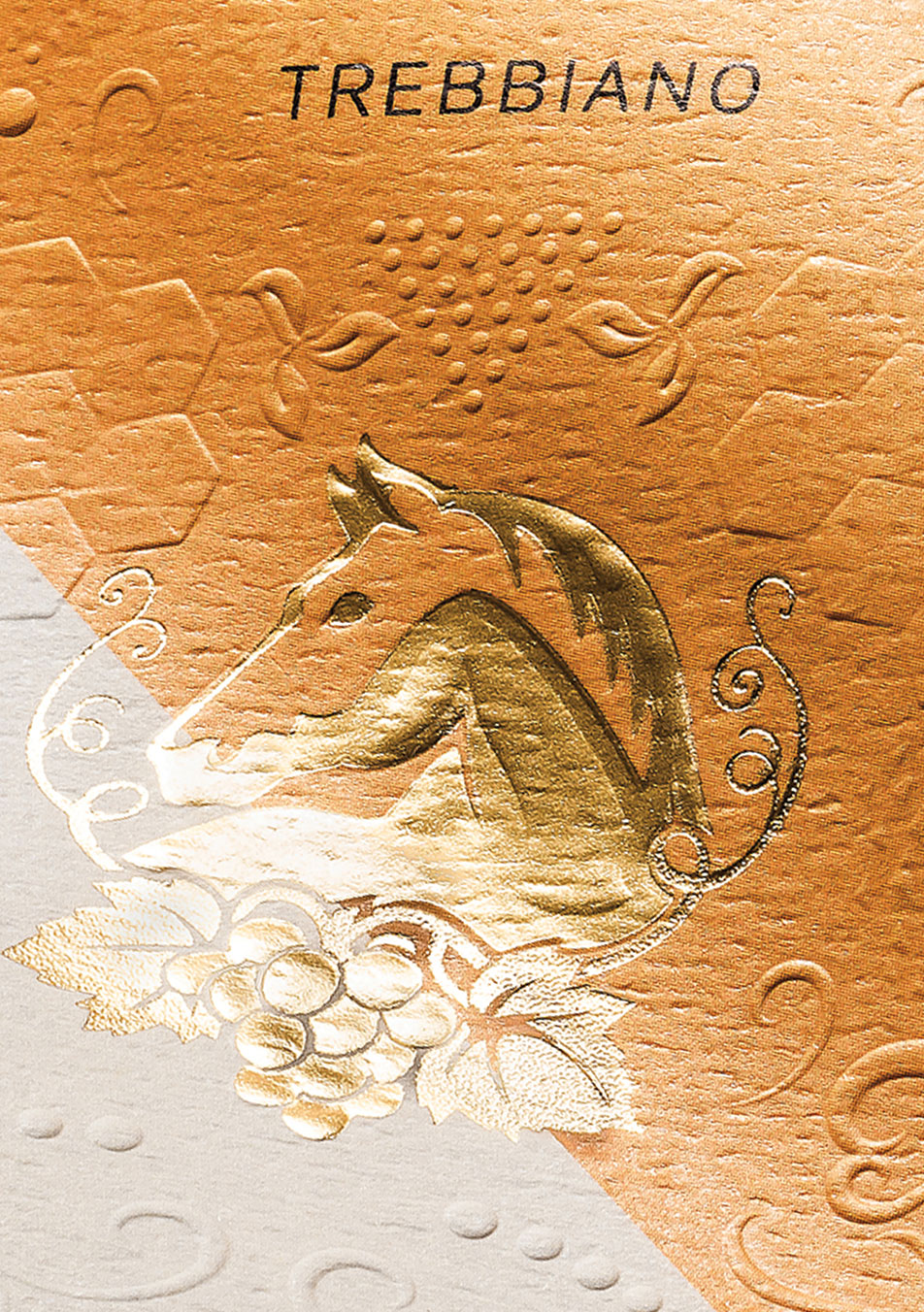
Use embossing wherever physical detail supports the brand.
Embossing is commonly applied to pressure-sensitive labels for premium and specialty products across many markets. It can also work alongside custom die-cut shapes, screen-printed effects and other forms of premium label decoration.
Plan the effect around the product.
Tooling, material, relief complexity and run length all influence cost and feasibility. RLG can help determine the right embossing approach for the visual effect, production volume and budget. For additional ideas, explore 10 ways to give your products a more professional look.
Give the right detail more presence.
Bring your artwork, material questions and production goals to RLG. We’ll help shape an embossing approach that looks intentional, performs reliably and supports the package as a whole.