Need a durable industrial label?
Start with custom industrial labels engineered for difficult surfaces, chemicals, abrasion, moisture, temperature, long service life, variable data and repeatable production.
Explore industrial durable labels

RLG Engineered helps OEMs, product teams and technical buyers solve the application problems behind durable labels, overlays and die-cut components: difficult bonding surfaces, harsh environments, tight tolerances, supplier qualification, documentation needs and repeatable production.
Engineered product opportunities rarely start with a standard SKU. They usually start with a specific problem: a label is peeling, a part has to bond to a low-energy surface, a gasket needs tighter tolerance, a warning label has to survive chemicals or a customer-qualified construction needs documented repeatability.
Start with the failure mode or performance requirement, then work backward into materials, adhesives, printing, converting, documentation and production format.
Start with custom industrial labels engineered for difficult surfaces, chemicals, abrasion, moisture, temperature, long service life, variable data and repeatable production.
Explore industrial durable labelsReview overlays, keypad overlays, dead-front graphics, display windows, textures, embossing and interface layers where repeated touch, clarity, alignment and surface durability matter.
Explore graphic and control panel overlaysLook at gaskets, seals, foams, custom die-cut VHB tape components, hook-and-loop, spacers, thermal interfaces and multi-layer parts that need to arrive ready for assembly.
Explore precision die-cut partsStart with the performance factors that affect material choice, adhesive selection, testing, qualification, inspection and repeatable production.
Review performance factorsA prime label can often be judged by shelf impact and print quality. An engineered product has to satisfy the application. It may need to bond to a difficult surface, withstand abrasion, pass a customer qualification process, meet regulatory expectations, fit a drawing, support assembly or become part of the finished product.
That changes the conversation. The right answer depends on the material stack, adhesive, coating, print method, die-cut process, tolerance, environment, documentation package and how the customer will apply, inspect or assemble the part.
Identify, seal, bond, insulate, cushion, protect, conduct, communicate, decorate or support user interaction.
Indoor, outdoor, wet, hot, cold, chemical exposure, UV, abrasion, cleaning, vibration or repeated handling.
Drawings, tolerances, FAIs, CoCs, UL files, qualification steps, inspection plans and supplier approval can all shape the production path.
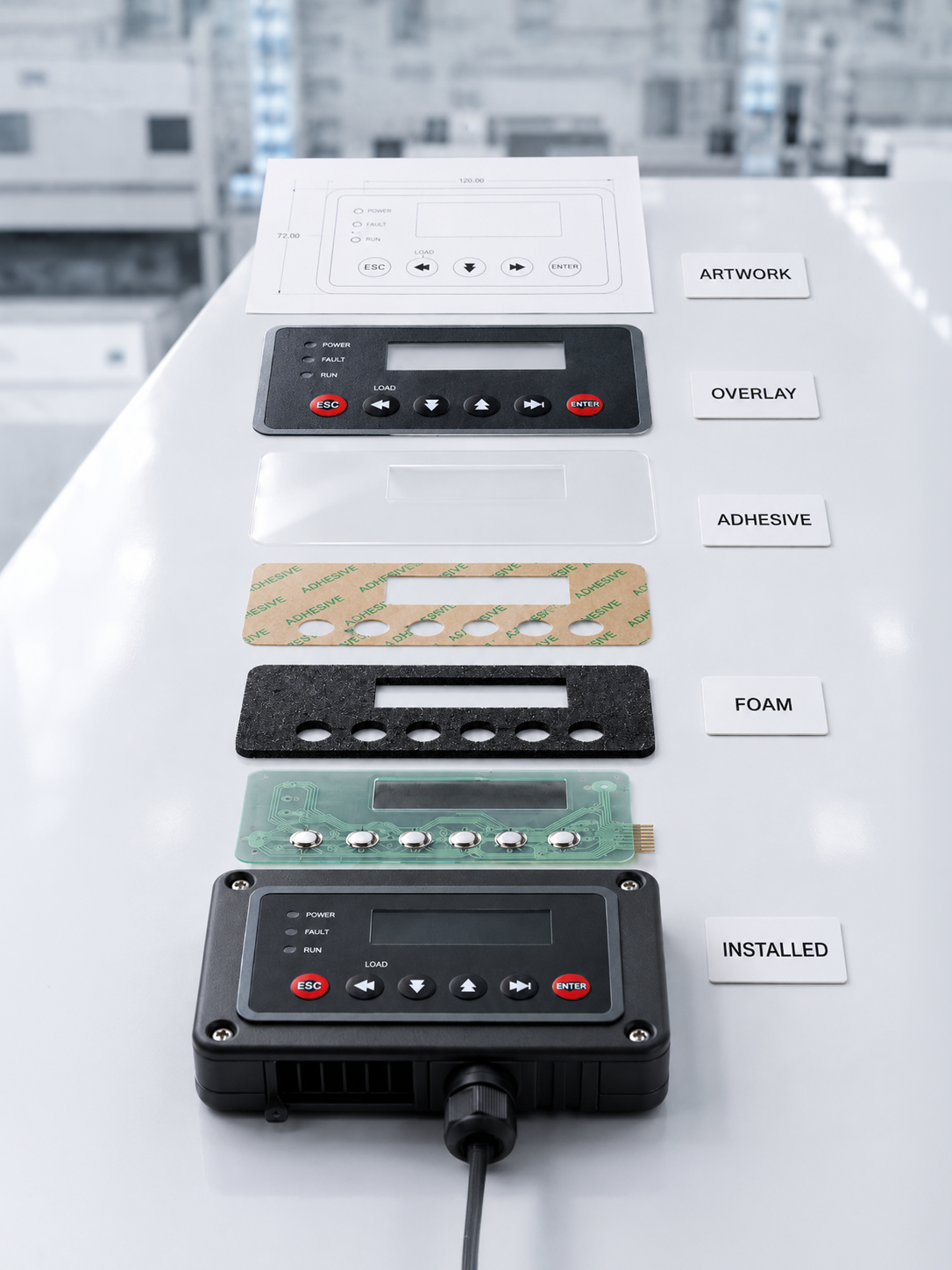
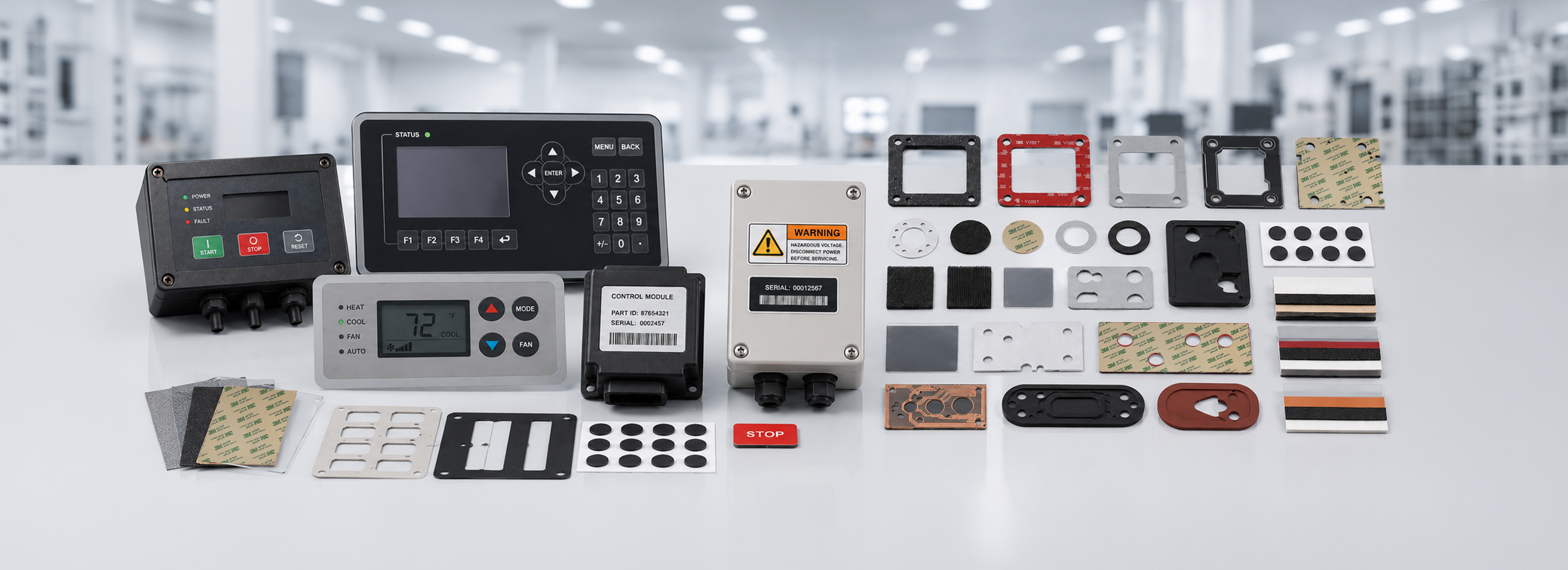
RLG Engineered supports visible and hidden components, from durable identification and compliance labels to functional die-cut parts that become part of the customer’s product assembly or production line.
| Product Family | Common Examples | Why It Matters | Typical Requirements |
|---|---|---|---|
| Industrial Durable Labels and Compliance | Custom industrial durable labels, UL labels, safety and warning labels, industrial identification labels, asset labels, wire and terminal block labels, pallet markers and weatherproof and outdoor-rated labels. | Critical information must stay put, stay legible and stay accurate through handling, exposure, cleaning, abrasion and the expected product life. | Substrate fit, adhesive compatibility, legibility, abrasion resistance, variable data, serialization, CoCs, FAIs, UL constructions or agency requirements. |
| Graphic Overlays and Interface Components | Graphic overlays, keypad overlays and faceplates, display windows, dead-front graphics, backlit overlays, textures, embossed interface elements and membrane switch components. | The part becomes the user touchpoint, connecting brand, operation, instruction and product experience while protecting the printed interface over repeated use. | Polycarbonate, polyester, hard coatings, selective adhesive, embossing, display alignment, LED windows, tactility, cleaning resistance and repeated-use durability. |
| Precision Die-Cut Parts and Components | Gaskets, seals, foam parts, hook-and-loop fasteners, spacers, cushioning, mounting and isolation components, plus custom die-cut 3M™ VHB™ tape components. | Hidden parts can drive product performance, assembly speed, sealing, bonding, vibration control, spacing and dimensional consistency. | Tolerances, material stack, adhesive placement, liner strategy, part presentation, kiss cutting, lamination, nesting and ready-for-line delivery. |
| Domed Labels and Durable Branding | Domed labels, logo labels, product badges and premium identification components for equipment, tools, vehicles and durable goods. | Branding components need visual impact plus long-life resistance to impact, moisture, chemicals, UV, cleaning and repeated handling. | Urethane doming, optical clarity, print durability, adhesive compatibility, outdoor exposure, edge quality and consistent finish quality. |
| Specialty Functional Layers | EMI/RFI shielding films, conductive layers, optical diffusers, venting membranes, barrier films and multi-layer laminations. | These components bridge mechanical, electrical, optical and environmental performance requirements. | Material partnerships, stack design, lamination, thickness control, die-cut precision, clean handling and application-specific validation. |
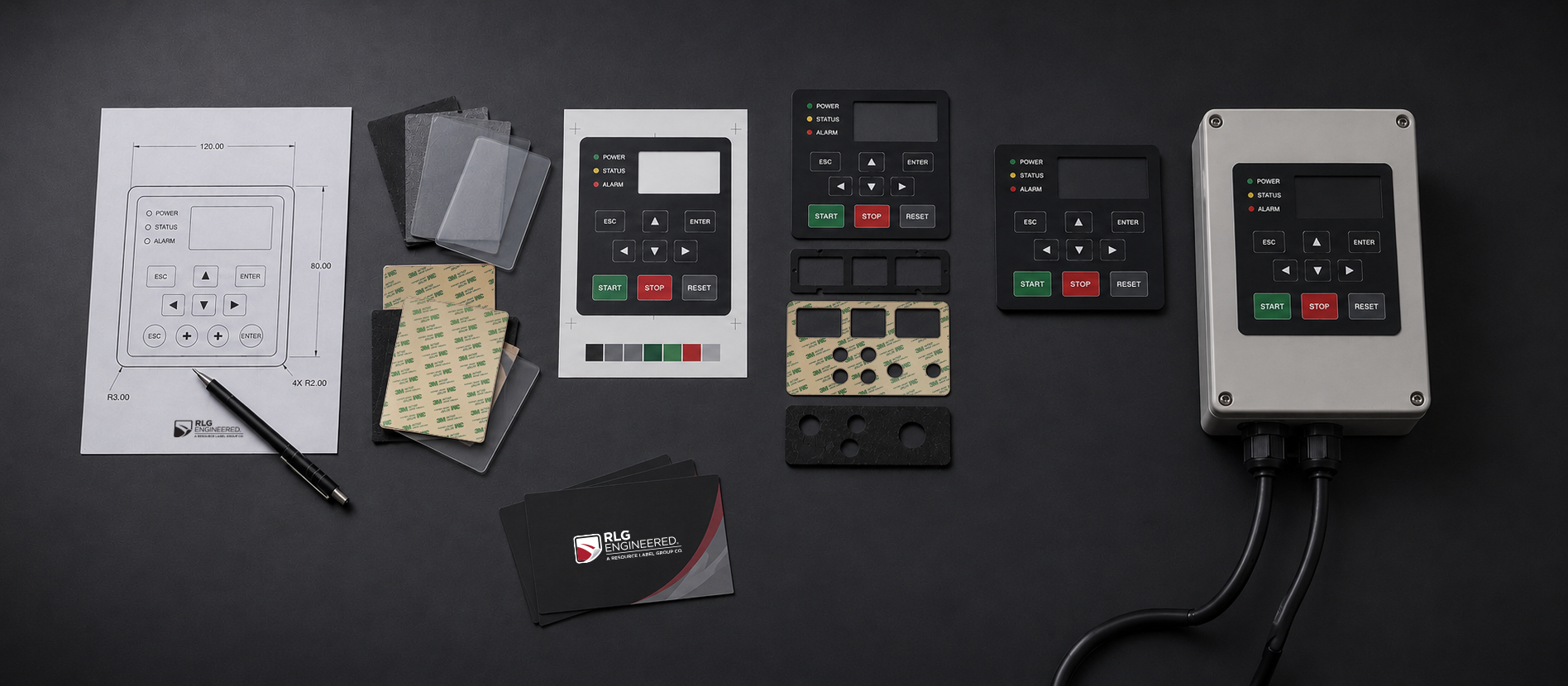
The right engineered product starts with the use case and the consequence of failure. Materials, adhesives, coatings, inks, laminates and converting processes must work together on the actual surface, in the actual environment and in the way the customer will apply the part.
That is why early review matters. A component that looks simple on a drawing may still need specialized adhesive performance, dimensional stability, chemical resistance, secondary printing, documented inspection or a production format that supports fast, consistent assembly.
When material, adhesive, tolerance, documentation or durability requirements are still being evaluated, RLG can help identify trade-offs before the part is locked into a customer specification and expensive to change.
Across the RLG Engineered network, customers can access print, screenprint, digital, wide-format, lamination, specialty materials, precision die cutting, doming, kitting and engineered pressure-sensitive constructions supported by quality, documentation and site-specific compliance capabilities.
Films, foams, tapes, adhesives, liners, laminates, coatings and specialty materials selected around the actual surface, exposure and assembly method.
Flatbed, rotary, semi-rotary, digital flatbed and laser die cutting options for a wide range of part geometries, tolerances and presentation formats.
Screenprint, flexographic, digital and specialty print options for overlays, durable labels, interface graphics and long-life identification.
Support for variable data, serialization, CoCs, FAIs, UL-related work, customer audits and supplier qualification needs.
Engineered product programs often involve more than part geometry. They can require supplier qualification, quality-system alignment, agency recognition, documented production, first-article review and serialized traceability.
RLG Engineered supports applications where parts must perform through handling, exposure, compliance requirements, assembly conditions and repeated use.
Durable labels, overlays, die-cut components, traceability elements and equipment components and identification parts for regulated workflows.
Built around documentation and reliabilityIndustrial durable labels, safety labels, durable identification, overlays, nameplate-style labels, wire markers and long-life operational information.
Built for exposure and legibilityIndustrial durable labels, UL labels, regulatory markings, domed labels, overlays, logo labels and product identification built for long service life.
Built for long service lifecustom die-cut VHB tape components, gaskets and seals, domed labels, durable branding and outdoor-use identification components.
Built for bonding and exposureInterface graphics and overlays, membrane switch components, domed labels, durable branding and product identification.
Built for interface durabilityFunctional parts, warning labels, durable markings, specialty adhesives and repeatable components for qualified programs.
Built for qualified programs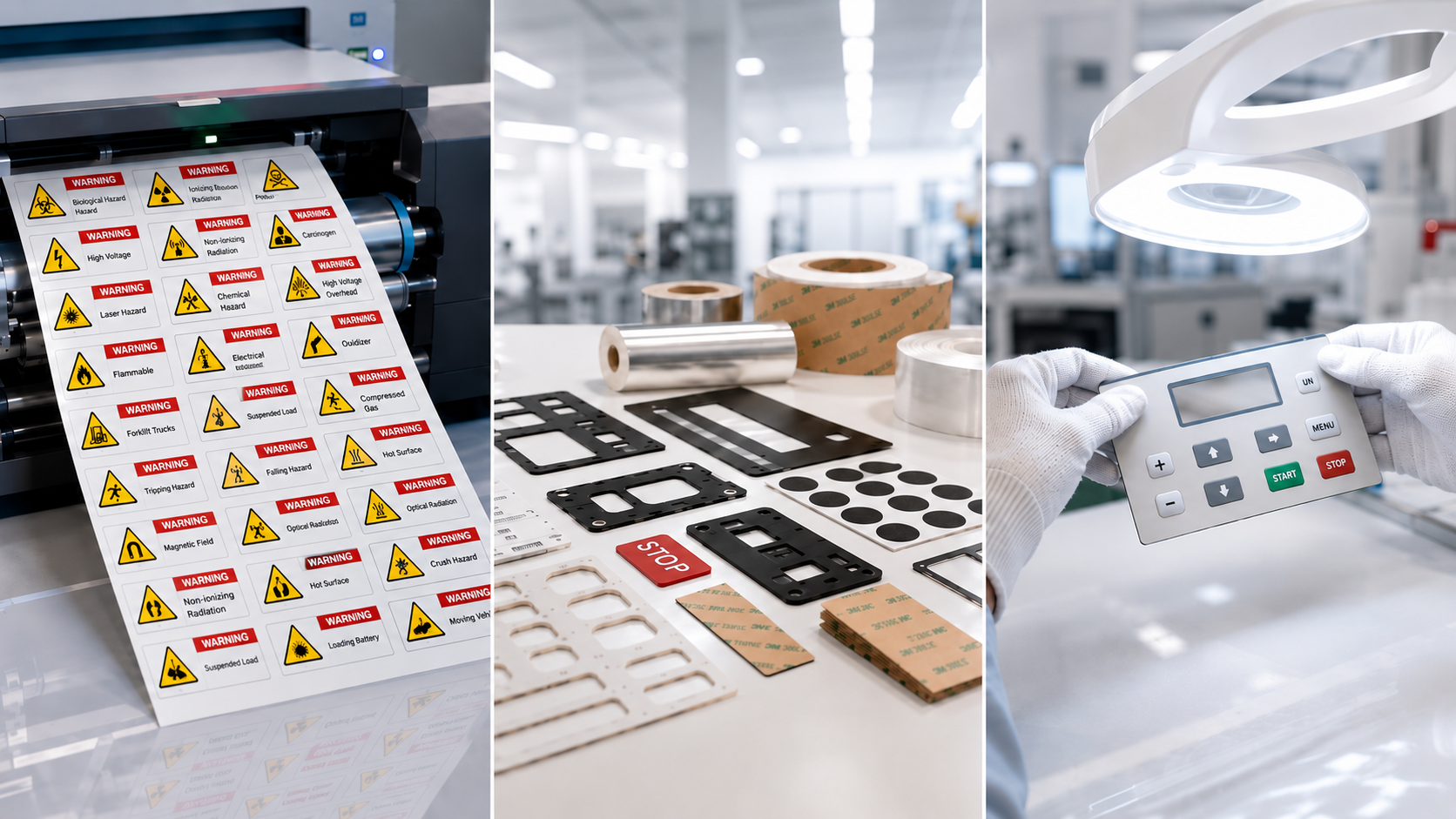
RLG Engineered brings together site-level expertise across Cellotape, Coast Label and Cypress. The value is not just capacity. It is application fit, process knowledge, quality-system support and a broader path to a manufacturable, qualified solution.
Technical manufacturing for documented, traceable applications where engineering review, certifications, supplier qualification or repeatable process control are part of the requirement.
Strong fit: UL labels, regulatory labels, overlays and keypad overlays, RFID/NFC smart products, kitting, engineered blanks and specialty materials.

Durable label solutions with practical speed and precision for outdoor durability, abrasion resistance, regulatory information, product identification and long-term performance.
Strong fit: industrial durable labels, UL labels, durable regulatory labels, industrial identification, dissolvable labels, custom die-cut VHB tape components, kitting, consecutive numbering and engineered pressure-sensitive constructions.

Durable constructions for demanding applications exposed to abrasion, impact, UV, moisture, chemicals, repeated handling or tough outdoor environments.
Strong fit: industrial durable labels, graphic overlays, durable logos, keypads, nameplate-style labels, domed labels, UL recognized labels, thick plastic parts and specialty durable constructions.
For engineered products, certification needs often depend on the site, construction, customer requirement and documentation path. This snapshot helps show how the RLG Engineered network supports quality, UL and serialized label programs when engineered products require documented production, customer qualification or compliance review.
| Site | ISO 9001 | ISO 13485 | UL Durable Construction | UL Mark | UL Mark with Variable Data / Serialized |
|---|---|---|---|---|---|
| Cellotape | ✓ | ✓ | ✓ | ✓ | ✓ |
| Coast Label | ✓ | ✓ | ✓ | ✓ | |
| Cypress MultiGraphics | ✓ | ✓ | ✓ |
RLG Engineered can route the project toward the site, process, certification path and technical support that best fit the application instead of forcing every opportunity through one narrow production path. That matters when a part must be qualified once, produced consistently and trusted over the life of the customer program.
Every engineered product is different, but successful programs usually follow a disciplined path: understand the requirement, evaluate the construction, prototype where needed, validate performance and scale production with clear expectations.
Clarify the part function, environment, substrate, assembly method, drawing, tolerance, compliance requirements, documentation needs and production volume.
Evaluate films, foams, adhesives, coatings, laminates, liners, printing needs, inspection expectations and converting options against the real use case.
Create samples or proofs for fit, form, function, visual review, adhesive behavior, customer qualification or early production planning.
Confirm performance expectations, production method, variable data, inspection needs, CoCs, FAIs, UL-related details or customer-specific documentation.
Move into production with the right part presentation, packaging, kitting, release strategy, inspection rhythm and ongoing supply plan.
Engineered products are labels, overlays, die-cut parts and functional components designed around a specific application requirement. They may need to identify, seal, bond, cushion, protect, communicate, control, pass inspection or support assembly.
Standard labels are often driven by print, branding and application. Engineered products are driven by performance factors such as materials, adhesives, tolerances, durability, compliance, documentation, line presentation and how the part functions in the final product.
Helpful inputs include drawings, samples, target dimensions, substrate, surface material, exposure conditions, adhesive requirements, compliance needs, inspection expectations, annual volume, application method and whether the part is decorative, functional, regulatory or part of the final assembly.
Yes. RLG can help evaluate films, foams, adhesives, coatings, liners, laminates and specialty materials based on the intended environment, application surface, production method, assembly process and performance expectations.
Yes. RLG supports UL durable constructions, UL Mark programs, regulatory labels, variable data, serialization, Certificates of Conformance and First Article Inspections depending on the site, construction, customer requirement and documentation path.
RLG supports membrane switch projects through graphic overlays, faceplates, interface layers and related durable components. Full membrane switch assemblies may require partner or outsourced support depending on the project.
In many cases, yes. Prototyping or sample development can help confirm fit, form, function, material choice and application performance before full production tooling or program approval.
Common markets include medical and diagnostic equipment, industrial equipment, automotive, truck, tractor, marine, appliance, HVAC, electronics, fitness, recreation, energy, renewables and OEM or tier supplier programs.
Early involvement creates room to optimize the material stack, adhesive, tolerance, part presentation, documentation, inspection approach and production method before the design is locked and harder to change.
You can review Resource Label Group quality and certification information on the RLG certifications page. For engineered product applications, certification needs may vary by site, product construction, customer requirement, documentation path and qualification process.
Whether you need durable identification, a functional overlay, a precision die-cut component or help evaluating a complex material stack, RLG Engineered can help move the project from application problem to manufacturable, documented solution.