Sustainable Label Solutions
Sustainable labels start with the right packaging decision.
Resource Label Group helps brands evaluate label materials, adhesives, liners, inks and decoration methods that support sustainability goals without sacrificing shelf impact, application performance or supply chain efficiency.
A Better Starting Point
Sustainable labels are not just a material swap.
A label can help or hurt the sustainability profile of a package. The right answer depends on what the package is made from, how it is decorated, how it is used, how it enters the recovery stream and what claim the brand wants to make.
PET, HDPE, PP, glass, aluminum, compostable packaging and reusable containers each create different label requirements.
Facestock, adhesive, ink, coating, liner and application conditions all matter.
Sustainability goals still need to work on press, on the line, on shelf and in the customer’s hands.
What Are You Trying to Improve?
Different sustainability goals require different label decisions.
The strongest sustainability projects begin by defining the intended outcome. From there, RLG helps match the package, label construction and production path to the goal.
Improve recyclability
Evaluate label materials, adhesives and ink systems that support the recycling path for the full package.
Support reuse
Choose label solutions that work for reusable containers, wash cycles and relabeling workflows.
Reduce material use
Explore thinner materials, lighter constructions and smarter specifications that use only what is needed.
Reduce liner waste
Look at liner choices, liner recycling opportunities and material streams that are often overlooked.
Add recycled content
Consider materials with post-consumer recycled content or renewable inputs where they fit the application.
Support responsible claims
Align material choices, documentation and consumer communication with the claim you intend to make.
Package Fit Comes First
The right sustainable label depends on the package.
A recyclable label construction for one container may be the wrong choice for another. RLG helps brands evaluate the package, decoration method and recovery path before selecting the label system.
Material compatibility, label separation, washable inks and sorting visibility can all influence the recycling path.
Polyolefin packaging may require different label and ink choices than PET, especially when components are recovered together.
Premium decoration, material reduction and responsible sourcing may be bigger priorities than traditional label recyclability.
Compostable label claims need to be evaluated with the container, adhesive, ink and applicable testing path.
Labels may need to stay readable during use and then remove cleanly during washing, relabeling or return cycles.
The Details Matter
Ink, adhesive and liner choices can make or break the outcome.
The label material gets most of the attention, but the rest of the construction often determines whether the sustainability goal is realistic.
Designed for recyclability
RLG helps evaluate pressure-sensitive and shrink sleeve constructions that support design-for-recycling goals, including material compatibility, adhesive behavior, ink systems and package sorting considerations.
Designed for real-world performance
Sustainability cannot stop at the specification sheet. Labels still need to convert, apply, perform, communicate and protect brand presentation in real operating conditions.
Solution Pathways
A practical portfolio for sustainable label and packaging goals.
RLG brings together materials, supplier relationships, print capabilities and technical support to help customers move from sustainability intention to workable label solutions.
Recyclability-focused pressure-sensitive labels
Film label constructions, adhesives and ink systems selected to support package recovery and design-for-recycling goals.
Sustainability-minded shrink sleeves
Material, coverage, perforation and ink choices that can improve the fit between full-body decoration and the package recovery path.
Linerless label solutions
Labels without silicone release liner that can reduce liner waste, fit high-volume food packaging workflows and allow more labels per roll for longer runs.
RLGreen RinseAway labels
Reusable-container labels that stay in place during use, then wash away with water during normal cleaning to help reduce peeling, residue and label scraps.
Enviroliner label materials
Environmentally focused liner options made with post-consumer waste, created to help reduce label waste and support landfill diversion goals.
PCR and renewable-content options
Label materials and liners with recycled or renewable content where performance, availability and application requirements align.
Material reduction and liner programs
Downgauged materials, thinner liners, more efficient roll configurations and liner recycling opportunities that reduce waste before the product reaches shelf.

RLGreen
Guidance for where you are now and where you need to go next.
RLGreen is Resource Label Group’s sustainability solutions team. We help customers clarify goals, understand tradeoffs and identify label and packaging options that can move sustainability initiatives forward without losing sight of production realities.
What we help evaluate
- Package material and decoration method
- Label facestock, film, paper and liner options
- Adhesive and ink system behavior
- Recycling, reuse and material reduction goals
- Claim support and consumer communication paths
Supply Chain Accountability
Measured progress supports better packaging partnerships.
Enterprise brands increasingly expect manufacturing partners to support sustainability beyond a single product claim. RLG uses recognized platforms, certifications, target-setting frameworks and responsible sourcing practices to help measure internal progress, evaluate supplier alignment and support greater accountability across operations, sourcing and sustainability efforts.
 RLGREEN
Reporting and accountability
These platforms, certifications and target-setting frameworks help RLG track progress, benchmark performance and support the documentation enterprise customers may need from their label and packaging partners.



Our Sustainability Goals
At Resource Label Group, sustainability is central to our mission. We commit to advancing environmental stewardship across our operations daily. Our goals are clear:
- We actively participate in the Carbon Disclosure Program for all our operations. Our target is to elevate our scores to an “A” level across climate, forest and water categories.
- We engage with the independent EcoVadis sustainability platform, where our objective is to achieve Platinum level recognition.
- We maintain full transparency across our certified paper sources and continuously monitor responsible sourcing. By 2030, our goal is to ensure that 100% of our sustainable paper specifications are carried by all RLG locations.
- By 2030, we aim to transition 80% of our locations to be landfill-free.
- We are committed to transitioning 100% of our customer offerings to sustainable specifications by 2030.
- We hold an active certification with the Sustainable Green Printing Partnership (SGP).
-
The Science Based Targets initiative (SBTi) has approved Resource Label Group’s near-term science-based emissions reduction target. RLG’s target covers scope 1, 2 and selected scope 3 emissions through 2031. View the SBTi Target Dashboard.
Claims and Communication
Sustainability claims should be built on the actual package.
Terms like recyclable, recycled content, compostable, renewable and responsibly sourced can be valuable when they are accurate. They can also create risk when they are assumed too early.
Design for recycling
RLG can help customers evaluate how label construction choices may affect design-for-recycling goals and package recovery.

Consumer instructions
RLG can help brands understand how label and package decisions may relate to consumer-facing recycling communication paths where appropriate.

Avoid easy assumptions
Material choices, end markets, regulations and claim language can change. Legal, compliance and sustainability teams should review final package claims before launch.
Free Guide
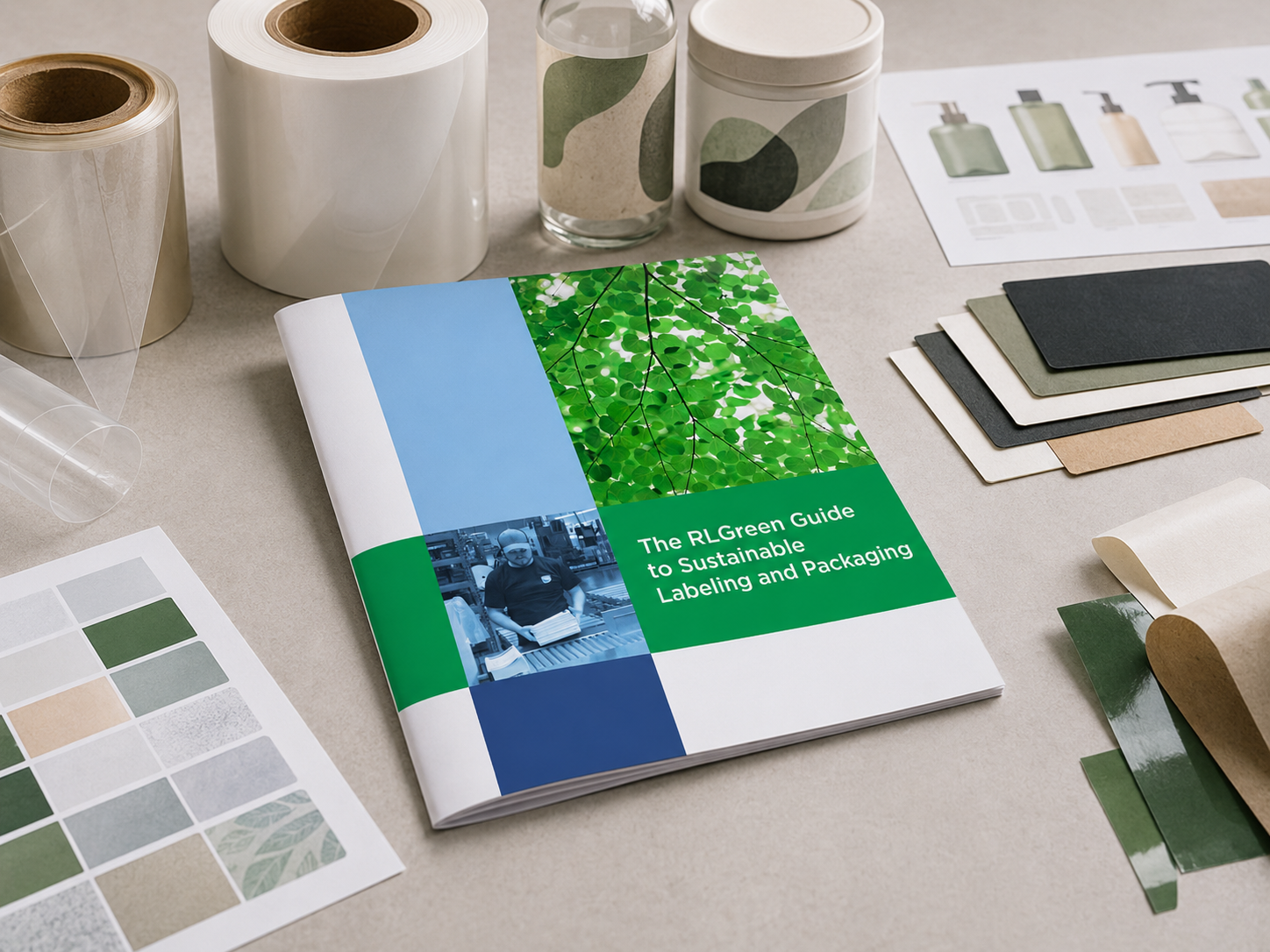
Get the RLGreen Guide to Sustainable Labeling and Packaging.
Use the guide as a starting point for understanding sustainable label options, packaging tradeoffs and the questions your team should ask before choosing a direction.
Sustainable Label FAQ