
RLG Engineered | Weatherproof & Water-Resistant Labels
Weatherproof & water-resistant labels engineered for outdoor, wet and harsh environments.
Durable label constructions built around real exposure: moisture, UV, abrasion, chemicals, cleaning, temperature change, outdoor use and the surfaces that make adhesion harder than it looks.
Environmental Performance
Environmental exposure should drive the label construction.
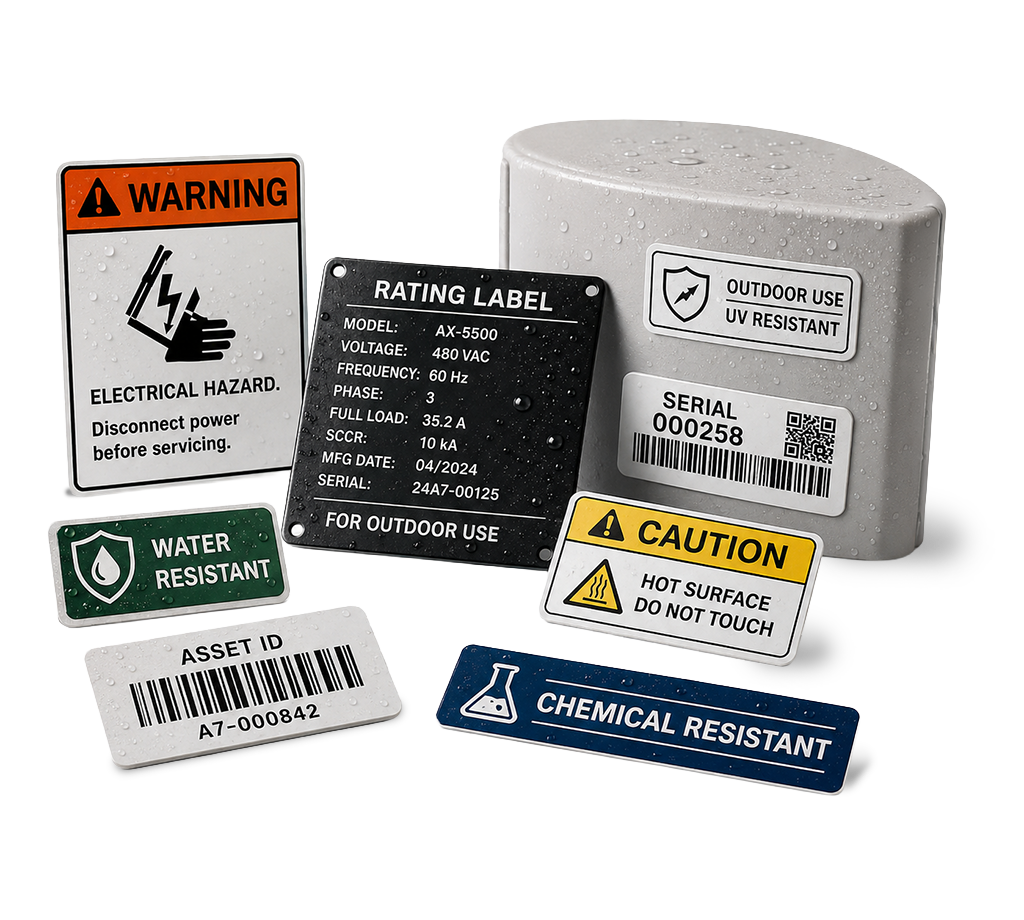
Weatherproof, water-resistant and waterproof labels all start with the same question: what does the label need to survive? A label on outdoor equipment, a refrigerated display case, a marine component, a chemical drum or a washdown surface may each require a different material stack.
RLG Engineered helps customers evaluate the surface, environment, adhesive requirement, print durability, application method and expected service life before recommending a construction.
The goal is not simply to make the label “tough.” The goal is to keep the information readable, attached and useful for the life of the application.
That can include durable product identification, safety labels, service labels, rating labels, outdoor-use markings, waterproof labels, water-resistant labels, chemical-resistant labels, abrasion-resistant labels and variable-data identification.
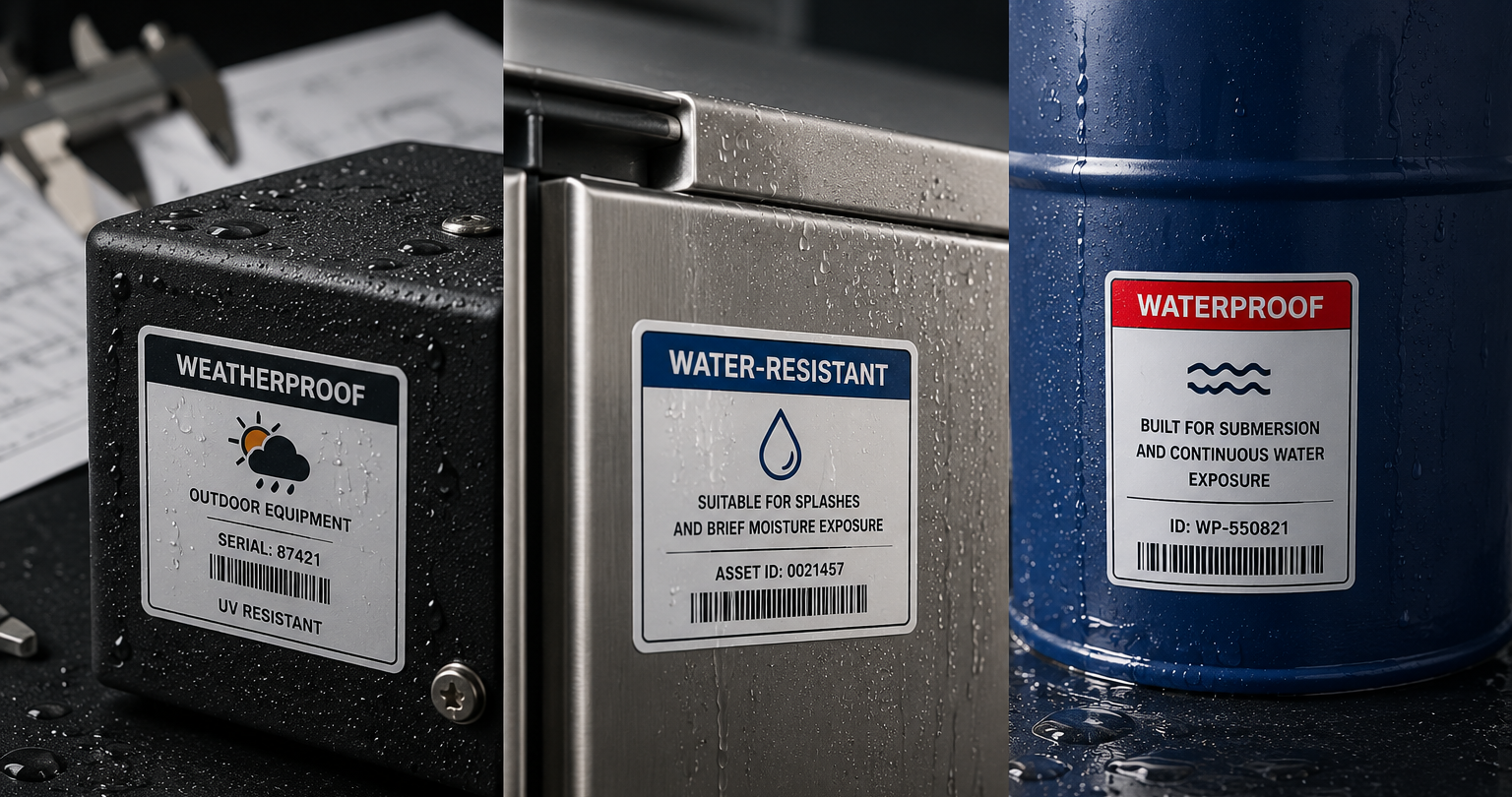
Weatherproof, Water-Resistant or Waterproof
The right label depends on the type and duration of exposure.
Not every wet or outdoor application needs the most aggressive construction. The best solution balances exposure risk, product life, surface difficulty, production needs and cost.
Weatherproof Labels
Built for outdoor conditions such as UV, rain, humidity, temperature swings, abrasion and field use.
Water-Resistant Labels
Designed for moisture, splashes, condensation, cleaning cycles or limited wet exposure.
Waterproof Labels
Used when the construction must withstand heavier water contact or potential submersion scenarios.
Harsh-Environment Labels
Specified when moisture combines with chemicals, abrasion, heat, cold, UV or difficult application surfaces.
Construction Factors
Labels exposed to the environment need more than a strong face material.
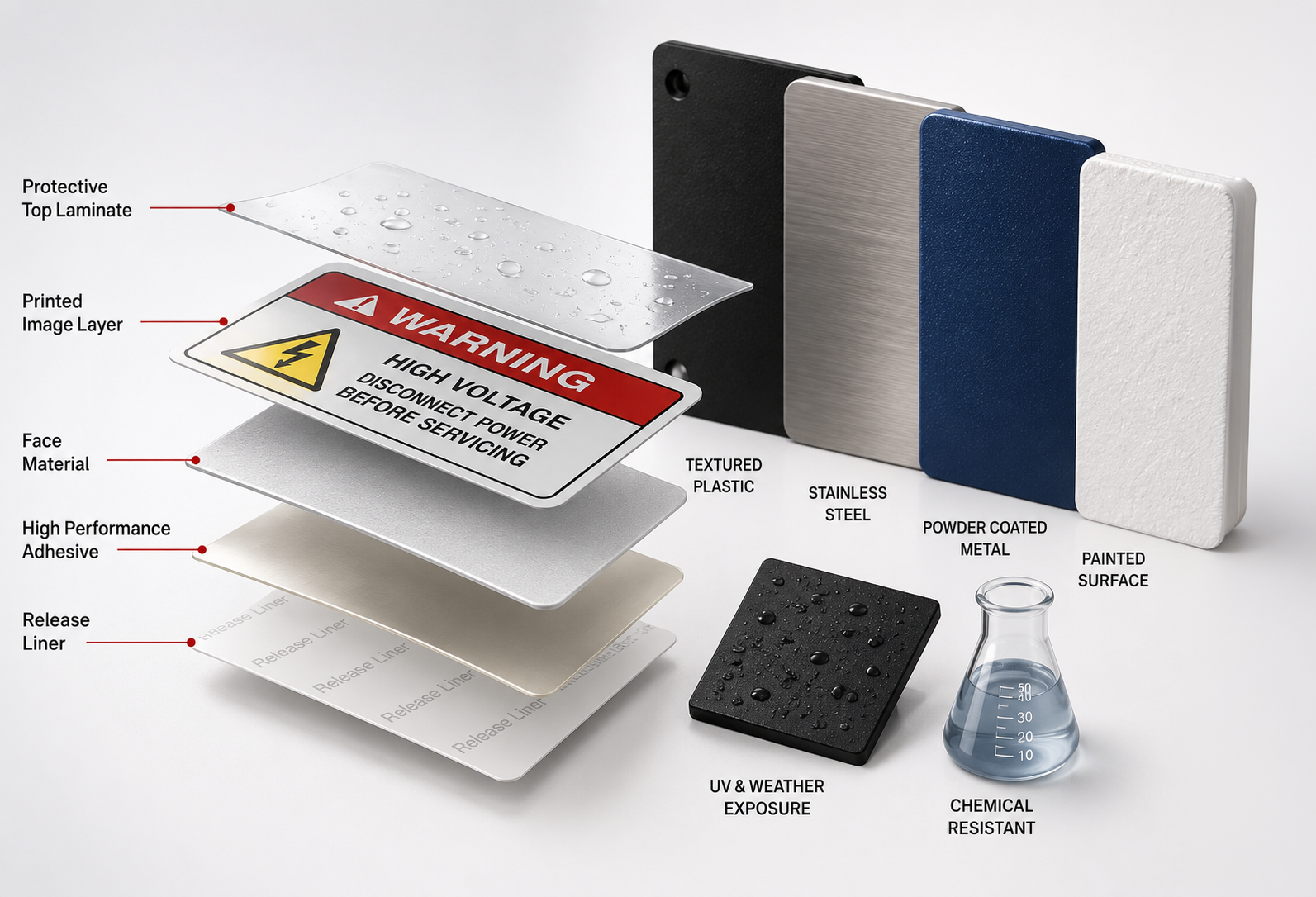
A weatherproof label succeeds when materials, adhesives, inks, coatings, laminates, liners and production format are selected around the actual exposure and application surface.
Face Material
Polyester, vinyl, polypropylene, polycarbonate, anodized aluminum and specialty films can each support different durability needs.
Adhesive System
Adhesion can depend on surface energy, texture, powder coating, curvature, application temperature, cleaning and moisture exposure.
Print Protection
Ink system, overlaminate, varnish or other protection can help preserve readability against handling, abrasion, UV and chemicals.
Application Surface
Metal, plastic, glass, painted parts, textured finishes and low-energy materials can each change the construction path.
Temperature Range
Labels may need to survive heat, cold, freeze-thaw conditions, refrigerated environments or hot equipment surfaces.
Data and Legibility
Barcodes, QR codes, serial numbers, warning information and service data need to stay readable in the field.
Performance Framework
The label must match the environment, not just the artwork.
A weatherproof or waterproof label is only successful when the full construction stays attached, readable and fit for purpose under the actual exposure conditions.
Failure Points
Where outdoor and wet-use labels typically fail.
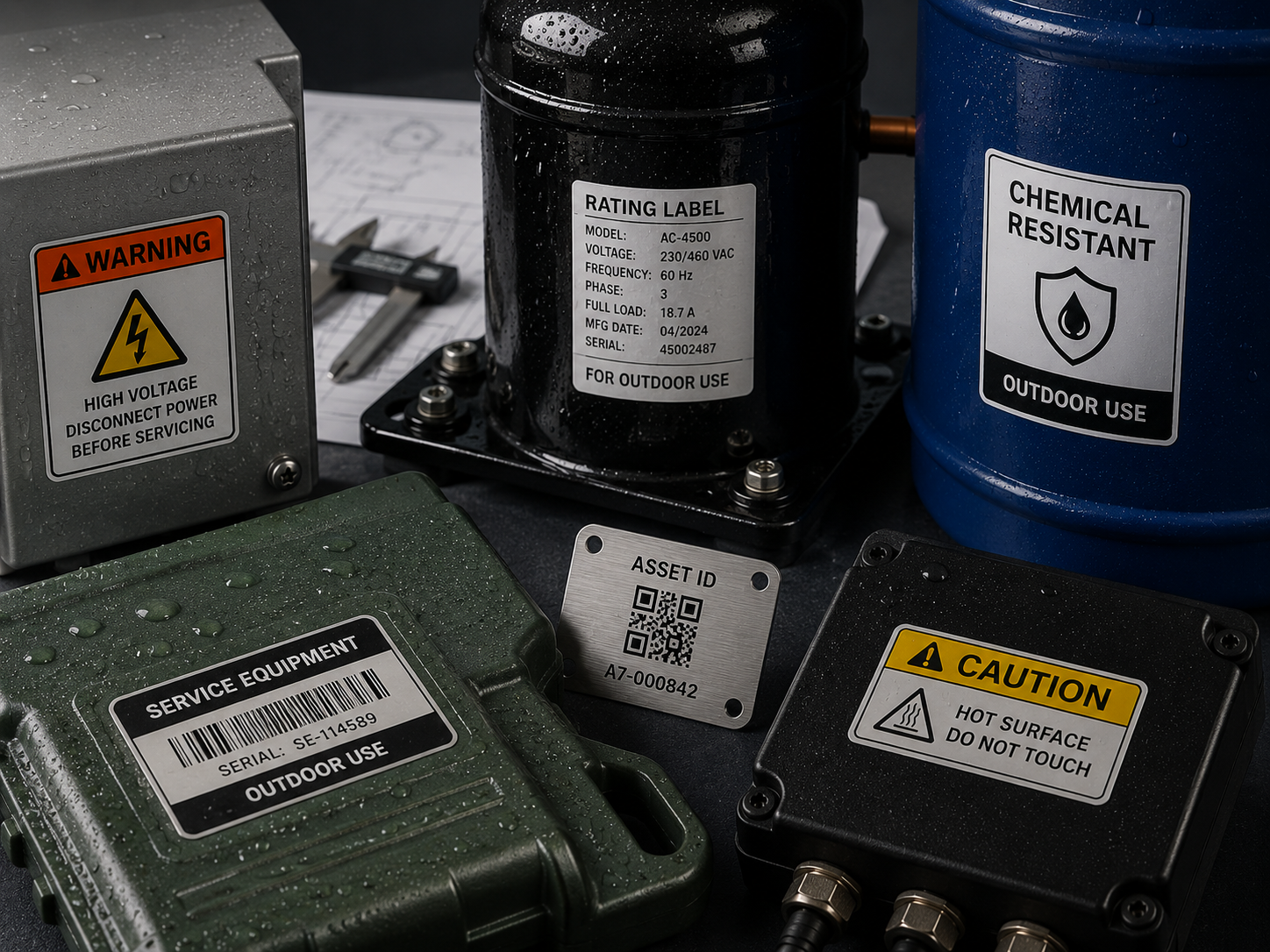
Weatherproof label problems often begin when the construction is chosen from a generic material assumption instead of the real application. A label may look right on day one but fail after exposure, cleaning, field use or repeated handling.
Edges lift or adhesive fails
Moisture, low surface energy, cleaning, texture, curvature or application temperature can undermine the bond.
Print fades or becomes unreadable
UV, abrasion, chemicals or handling can reduce legibility when print protection is not matched to the environment.
Material cracks, shrinks or distorts
Temperature swings, outdoor aging or incompatible materials can affect label appearance and performance.
Data stops scanning
Barcode, QR, serialized or asset labels lose value when contrast, placement or surface damage affects readability.
The label is overbuilt
Some applications need water resistance, not full waterproof performance. The right fit avoids unnecessary complexity and cost.
Application Range
Weatherproof labels have to perform wherever the product lives.
RLG Engineered supports outdoor labels, water-resistant labels, waterproof labels and durable harsh-environment constructions across a range of product, equipment and operating environments.
Industrial Equipment
Durable product identification, warning information, service labels and rating labels for machinery and field-use equipment.
HVAC, Appliance and Plumbing
Product identification, regulatory markings, service information and outdoor-unit labels exposed to moisture and long service life.
Marine and Boating
Labels and decals exposed to water, UV, salt air, handling and outdoor storage conditions.
Automotive, Truck and Tractor
Durable branding, service labels, warning labels and component identification exposed to weather, abrasion and chemicals.
Chemical and Drum Labels
Waterproof and chemical-resistant label constructions for containers, drums and industrial chemical environments.
Electrical and Utility Equipment
Outdoor-use identification, safety labels and durable markings for panels, enclosures, utilities and equipment housings.
Lawn, Garden and Outdoor Products
Branding, safety and product identification that must survive sun, moisture, abrasion and repeated handling.
Refrigerated and Cold Environments
Water-resistant and cold-temperature constructions for condensation, cold handling, refrigerated displays and storage conditions.
RLG Engineered Approach
Specify the exposure before specifying the label.
Many weatherproof label requests start with a broad material requirement. RLG Engineered starts with the use case: where the label will live, what it will touch, how long it needs to perform and what failure would mean for the product or customer.
That approach helps identify whether the application needs a durable outdoor label, a water-resistant label, a waterproof label, a chemical-resistant label or a broader harsh-environment construction.
For programs involving compliance labels, safety information, asset tracking, serialized data or customer-qualified constructions, RLG can also support documentation, inspection and repeatable production expectations.
The result is a label construction that is selected for the environment around the label, not just the image printed on it.
Development Process
The right construction starts before artwork goes to press.
Weatherproof and water-resistant label programs benefit from early review of surface, exposure, materials, adhesive behavior, production format and long-term readability expectations.
Define Exposure
Clarify moisture, UV, abrasion, chemical, temperature, handling and service-life requirements.
Review Surface
Evaluate substrate, surface energy, texture, coating, curvature, cleaning and application conditions.
Select Construction
Match face material, adhesive, print system, protection and liner strategy to the application.
Prototype or Test
Use samples, fit checks or qualification steps where surface or exposure risk needs review.
Produce and Support
Move into repeatable production with packaging, part presentation, variable data or documentation needs aligned.

Related RLG Engineered Solutions
When environmental durability connects to a broader requirement.
Weatherproof and water-resistant labels often connect to durable identification, safety and compliance labeling, asset tracking, UL labels and engineered production needs.
Weatherproof Label FAQ
Questions worth answering before production begins.
The right label depends on the environment, surface, exposure time, application method and consequences of failure.
What is the difference between weatherproof, water-resistant and waterproof labels?
Weatherproof labels are generally designed for outdoor exposure such as UV, rain, humidity and temperature change. Water-resistant labels are built for moisture, splashes or limited wet exposure. Waterproof labels are used when heavier water contact or potential submersion must be considered.
What materials are used for weatherproof labels?
Common options include polyester, vinyl, polypropylene, polycarbonate, anodized aluminum and specialty films. The right choice depends on the surface, exposure, print requirements, adhesive needs and expected service life.
Can weatherproof labels support barcodes or QR codes?
Yes. Durable barcode, QR, serial and variable-data labels can be built for outdoor, wet or harsh environments when print system, contrast, protection, placement and scanning workflow are considered together.
Are waterproof labels always necessary for wet environments?
Not always. Some applications only require water resistance for splashes, condensation or cleaning exposure. A more aggressive waterproof construction may be appropriate when the label must withstand heavier water contact, extended wet exposure or potential submersion.
Can RLG help select the adhesive?
Yes. RLG can help evaluate adhesive options based on surface energy, material, texture, coating, curvature, cleaning process, application temperature, moisture and expected product life.
Can weatherproof labels include safety or compliance information?
Yes. Weatherproof label constructions can support safety, warning, rating, service, compliance and identification information where the message must remain attached and readable in outdoor or wet-use environments.
Talk With RLG Engineered
Need labels built for exposure, moisture or outdoor use?
Bring us the surface, exposure, lifecycle expectation, compliance need or field-use challenge. RLG Engineered can help turn the requirement into a durable label construction.