
RLG Engineered | Safety & Compliance Labels
Safety and compliance labels engineered for critical product communication.
Durable safety labels, warning labels, GHS labels, regulatory markings and compliance-driven identification systems built to remain readable, attached and useful through real operating conditions.
Safety Communication
Safety information only works when it stays visible.
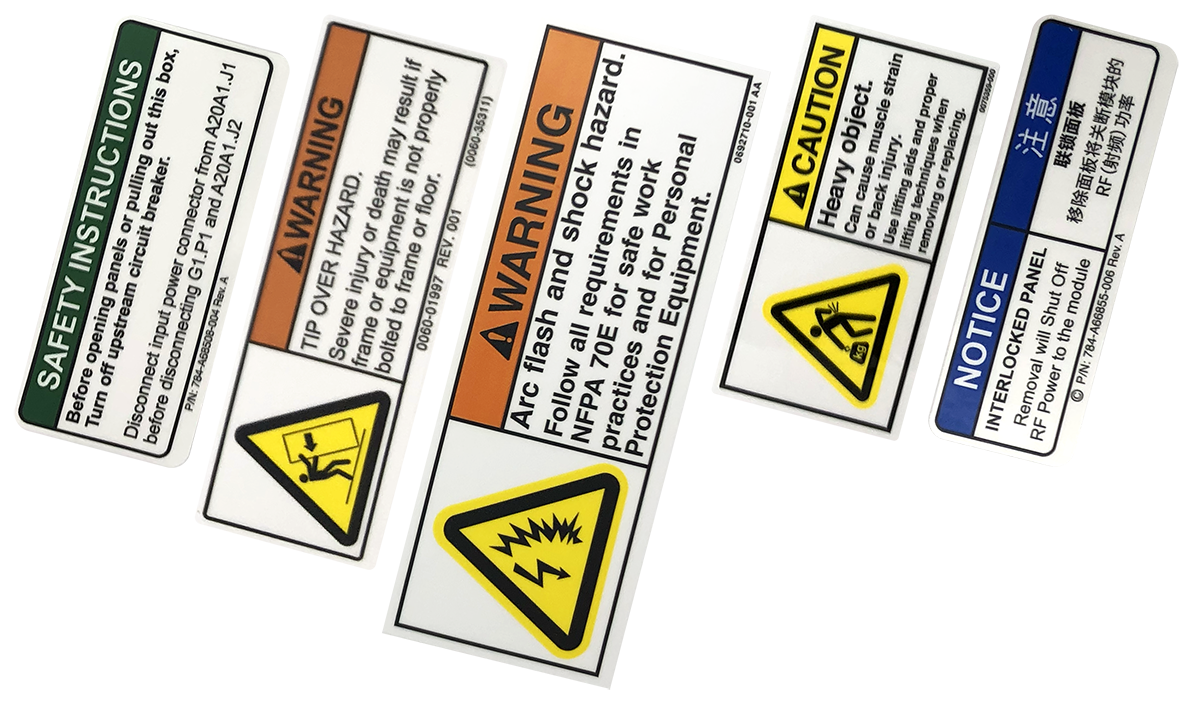
Safety and compliance labels are often small parts of a larger product, but the information they carry can be critical. They communicate hazards, operating instructions, regulatory information, chemical risks, inspection status and product details that users, technicians, auditors and downstream teams rely on.
RLG Engineered treats these labels as durable product components, not generic warning stickers. The right construction depends on the message, the surface, the environment, the expected service life and the consequence of label failure.
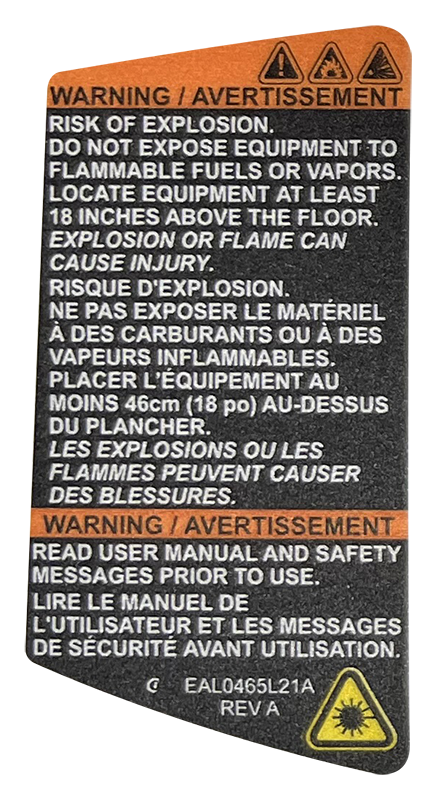
That may mean an ANSI-style warning label for equipment, a GHS label for chemical hazard communication, a rating label, an inspection label, a serialized compliance label or a durable instruction graphic that needs to survive cleaning, abrasion, UV, moisture, heat or repeated handling.
RLG helps connect the label format, material, adhesive, print method, finishing, variable data and documentation path to the application so critical information stays with the product where it belongs.
Built Around the Risk
Different safety and compliance needs require different label constructions.
The right safety label begins with what the label needs to communicate and where it needs to perform. A short-life warehouse label, outdoor equipment warning label, chemical container label and UL-related marking may all require different materials, adhesives, print systems and production controls.
Hazard Communication
Warning, danger, caution, notice and instructional labels that help communicate risk clearly.
Regulatory Fit
Labels built around required marks, symbols, language, legibility and documentation needs.
Durable Performance
Materials selected for exposure, cleaning, abrasion, weathering, heat, moisture and handling.
Production Control
Variable data, inspections, color expectations, kitting and repeatable release programs.
Label Types
Safety, warning and compliance labels for real product environments.
RLG Engineered supports safety and compliance label programs across product identification, hazard communication, equipment marking, workplace safety, chemical labeling and regulated production environments.
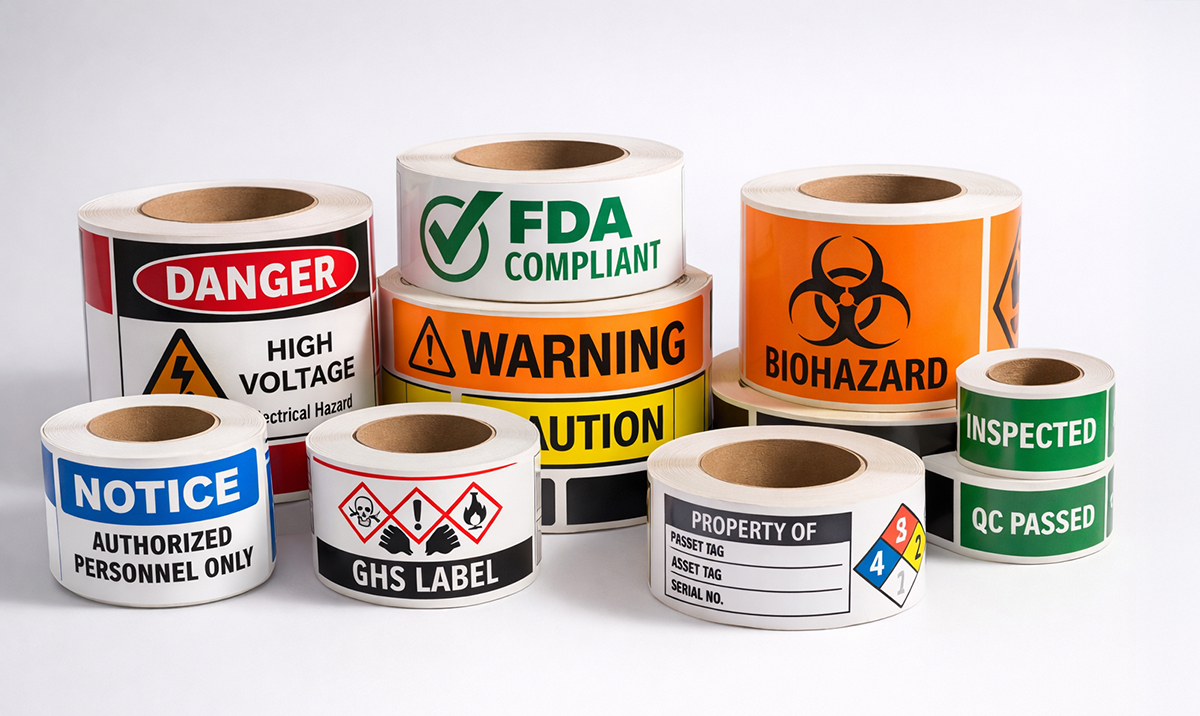
Danger, Warning and Caution Labels
Durable labels for hazards, pinch points, high voltage, hot surfaces, moving parts, lockout guidance and other safety communication needs.
Instructional and Notice Labels
Operating instructions, service reminders, installation guidance and user-facing information designed to remain readable through product use.
GHS and Chemical Hazard Labels
Labels for chemical containers, drums and industrial environments where hazard communication, durability and variable information need to work together.
Agency and Compliance Markings
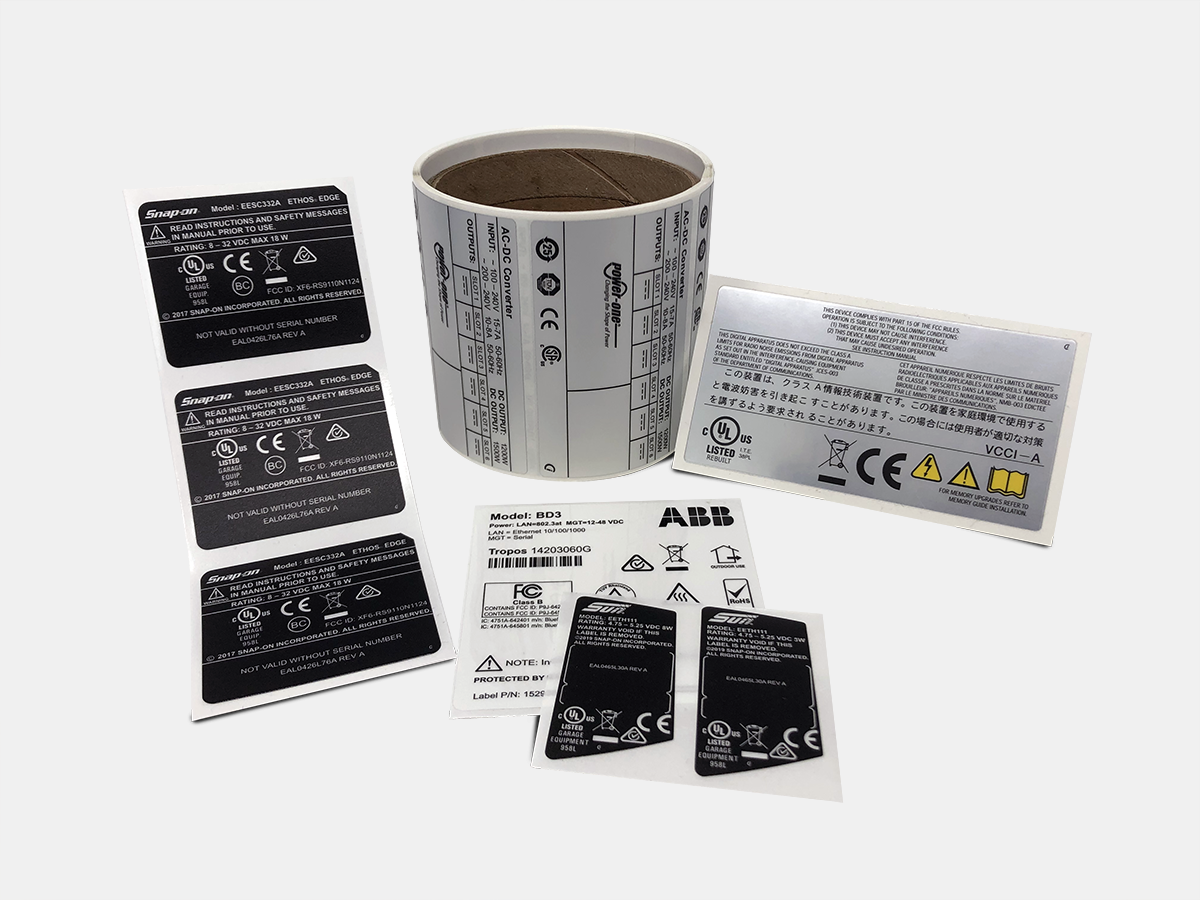
Compliance-driven product markings, rating labels and related durable identification needs. See also UL Labels & Compliance Marking Systems.
Inspection and Service Labels
Calibration, inspection, maintenance, QA, service status and asset records that support operational accountability.
Serialized and Variable Data Labels
Barcodes, QR codes, serial numbers, lot information and traceability elements tied to products, equipment or records. See also Asset Tracking & Identification.
Compliance Without Overclaiming
The label must match the requirement, not just the artwork.
The message, material, adhesive, print system, color expectations, surface and environment all affect whether the label will remain useful after production, installation, cleaning, service and field use.
Certification-ready applications
Some safety and compliance labels require site-specific review, agency recognition, supplier qualification, documentation or serialized production control.
GHS and Chemical Hazard Labels
Hazard communication labels need durability and data discipline.
GHS labels are part of a larger hazard communication system. They may include pictograms, signal words, hazard statements, precautionary information, product identifiers, supplier information and variable data tied to the material or container.
For RLG Engineered, the opportunity is not just printing a compliant-looking label. It is helping align the construction with the container, chemical exposure, handling environment, print method, variable information and production workflow.
Container and surface fit
Drums, pails, bottles, totes and industrial containers may each require different label materials and adhesives.
Chemical and abrasion exposure
Cleaners, solvents, oils, handling and outdoor storage can affect the label face, print system and adhesive performance.
Variable information
Lot, batch, product identifier, supplier, barcode, QR code or other data may need to be printed or updated as part of the workflow.
Color and symbol clarity
Warning panels, pictograms, contrast and legibility need to remain clear throughout the label’s intended use.
Print method and supply format
Preprinted, secondary-printable, thermal-transfer or stock-and-release programs can support different chemical labeling workflows.
Performance Factors
Safety labels have to survive the environment around the risk.
When a label communicates a hazard, instruction or compliance requirement, performance cannot be treated as an afterthought. The construction should be selected around the surface, exposure and service conditions.
Surface and adhesion
Powder-coated metal, textured plastic, stainless steel, curved housings and low-energy surfaces can change the adhesive strategy.
Outdoor and weather exposure
UV, moisture, temperature swings and weathering may require weatherproof and water-resistant label constructions.
Chemicals and cleaning
Solvents, oils, disinfectants, washdown and routine maintenance can affect ink, coating, overlaminate and adhesive selection.
Abrasion and handling
Operator contact, service work, equipment movement, shipping and repeated handling can reduce legibility if the construction is underbuilt.
Heat and service life
Appliance, HVAC, electrical, welding and industrial environments may require labels built for heat, long service life and product reliability.
Print and color expectations
Warning panels, hazard symbols, branding, barcodes and variable data need to remain clear and consistent through production and use.
Line presentation
Kits, sheets, rolls, part numbering, liner strategy and release format can help assembly teams apply the right label in the right place.
Documentation and traceability
Some programs require controlled records, inspections, serialized output, CoCs, FAIs or other customer-specific documentation.
Application Range
Where safety and compliance labels have to perform.
RLG Engineered supports product and equipment applications where safety communication, compliance marking and durable identification need to stay visible through use, service and environmental exposure.
Industrial Equipment & Machinery
Warning labels, instructional graphics, durable identification and service information for machinery and manufactured components.
Medical & Diagnostic Equipment
Device labels, instructions, traceability elements and durable markings for regulated or quality-controlled product environments.
Electrical & Control Systems
High-voltage warnings, enclosure labels, operating marks, wire identification and UL-related marking support.
Chemical & Industrial Materials
GHS labels, container labels, drum labels, secondary-printable labels and hazard communication for chemical workflows.
HVAC, Appliances & Plumbing
Rating, safety, service, refrigerant, caution and product identification labels built for long service life.
Transportation, Marine & Outdoor Equipment
Safety warnings, durable markings and outdoor-use identification for vehicles, trailers, marine equipment and field assets.
RLG Engineered Process
The right label starts before the artwork goes to press.
Safety and compliance label programs are strongest when the message, environment, construction and production workflow are reviewed together before manufacturing begins.
Define the requirement
Confirm the hazard, label purpose, required content, environment, surface, service life and application method.
Review standards and expectations
Consider customer specifications, ANSI-style formatting, GHS content, agency marks or documentation needs.
Select the construction
Align films, adhesives, inks, coatings, overlaminates, liners and print methods to the application.
Prototype or validate
Use samples, proofs, inspections or first-article reviews to reduce risk before larger production runs.
Produce and support
Support repeat production through kitting, variable data, controlled release, documentation and supply programs.

Related RLG Engineered Solutions
When safety and compliance labels are part of a broader product requirement.
Safety and compliance labels often connect to durable identification, UL labels and compliance marking, asset tracking, weatherproof constructions and production-ready engineered label programs.
Safety & Compliance FAQ
Questions worth answering before a safety label program begins.
The right safety and compliance label is defined by the hazard, required information, product environment, application surface and expected service life.
What are safety and compliance labels?
Safety and compliance labels communicate hazards, instructions, regulatory information, inspection status, chemical risks, product ratings or other required information. They may include danger, warning, caution, notice, GHS, rating, inspection, agency or serialized identification labels.
Are safety and warning labels the same thing?
Warning labels are one type of safety label. A broader safety and compliance label program can also include instructional labels, GHS labels, regulatory markings, rating labels, inspection labels, service labels and traceability labels.
Can RLG support GHS labels?
Yes. RLG can support GHS and chemical hazard label applications where the label construction, container surface, exposure, variable data and production method need to be reviewed together.
What makes a safety label durable?
Durability depends on the complete construction: face material, adhesive, ink, coating, overlaminate, liner and print method. The right choice depends on the surface, environment, service life, cleaning exposure and handling conditions.
Can safety labels include variable data?
Yes. Safety and compliance labels may include serial numbers, lot information, barcodes, QR codes, inspection data, product identifiers or secondary-printable areas depending on the application and workflow.
Can RLG support UL or agency-related labels?
Yes. RLG supports UL labels and compliance marking systems depending on the site, construction, customer requirement and documentation path.
Talk With RLG Engineered
Need safety and compliance labels built for the real product environment?
Bring us the message, surface, exposure, compliance requirement, variable data need or production challenge. RLG Engineered can help turn it into a durable safety and compliance label solution.