Face material
Film, foil or specialty substrate selected for dimensional stability, conformability and exposure.
Industrial Label Solutions
Industrial labels engineered to remain bonded, legible and useful through demanding surfaces, handling, chemicals, abrasion, moisture, temperature and long service life.
Complete Construction
A durable industrial label is not defined by one film or one aggressive adhesive. It succeeds when the facestock, print method, protective layer, adhesive, liner and production format work together on the actual surface and in the actual environment.
That system may need to remain readable through years of handling, repeated cleaning, temperature variation, abrasion, chemical contact, outdoor exposure or ongoing barcode scanning. The right construction starts with those operating conditions, not with a generic material name.
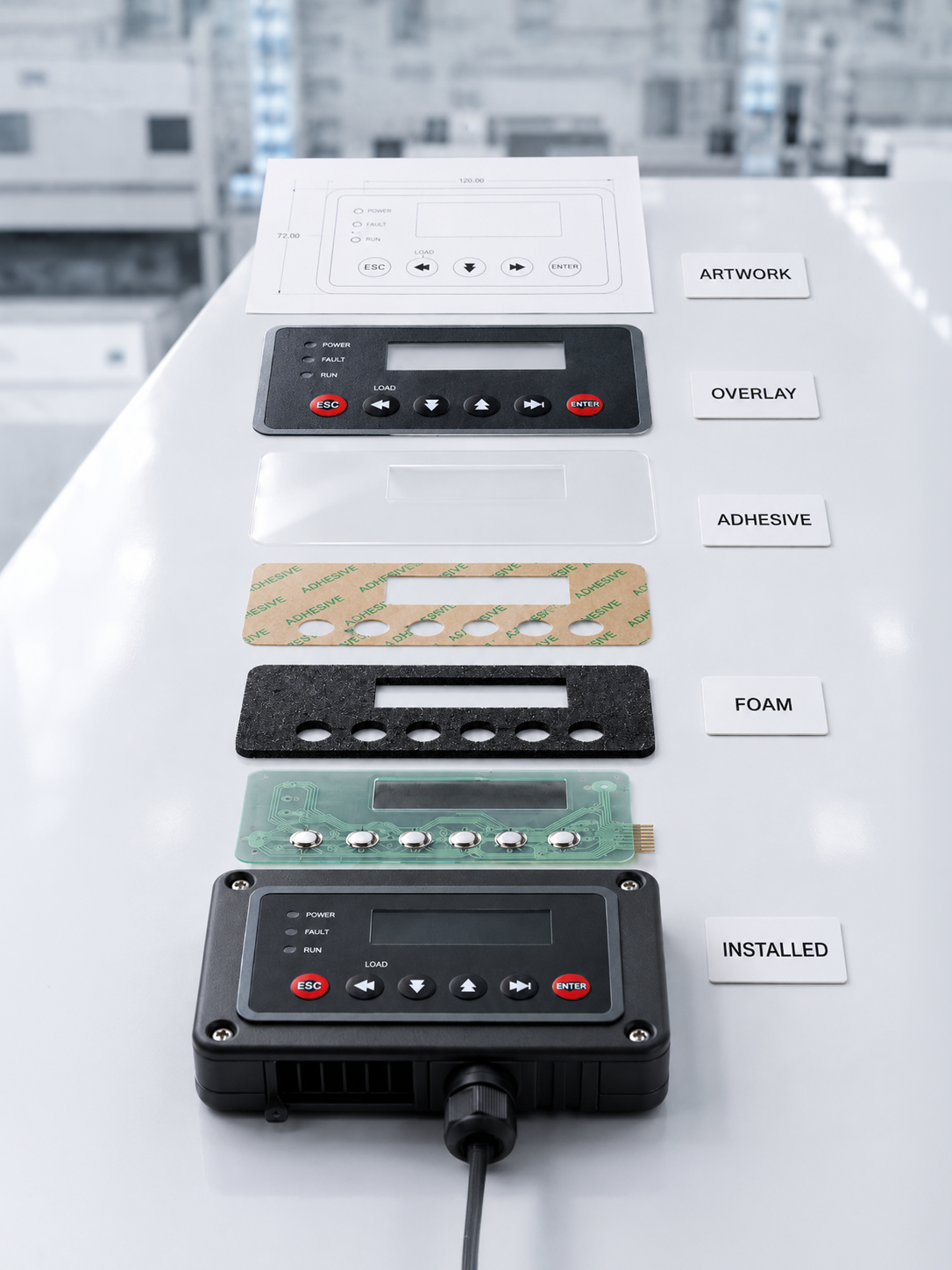
Film, foil or specialty substrate selected for dimensional stability, conformability and exposure.
Graphics, ratings, instructions, variable data and codes produced for the required use life.
Laminate, coating or print system chosen for abrasion, chemicals, UV, cleaning and handling.
Matched to surface energy, texture, coating, curvature, application temperature and service conditions.
Designed for dispensing, application, print compatibility, handling and production-line efficiency.
Start With the Failure Risk
Industrial labels carry product identity, ratings, safety information, instructions, traceability and service data. A label failure can therefore become a production, compliance, maintenance or customer-experience problem rather than a simple cosmetic issue.
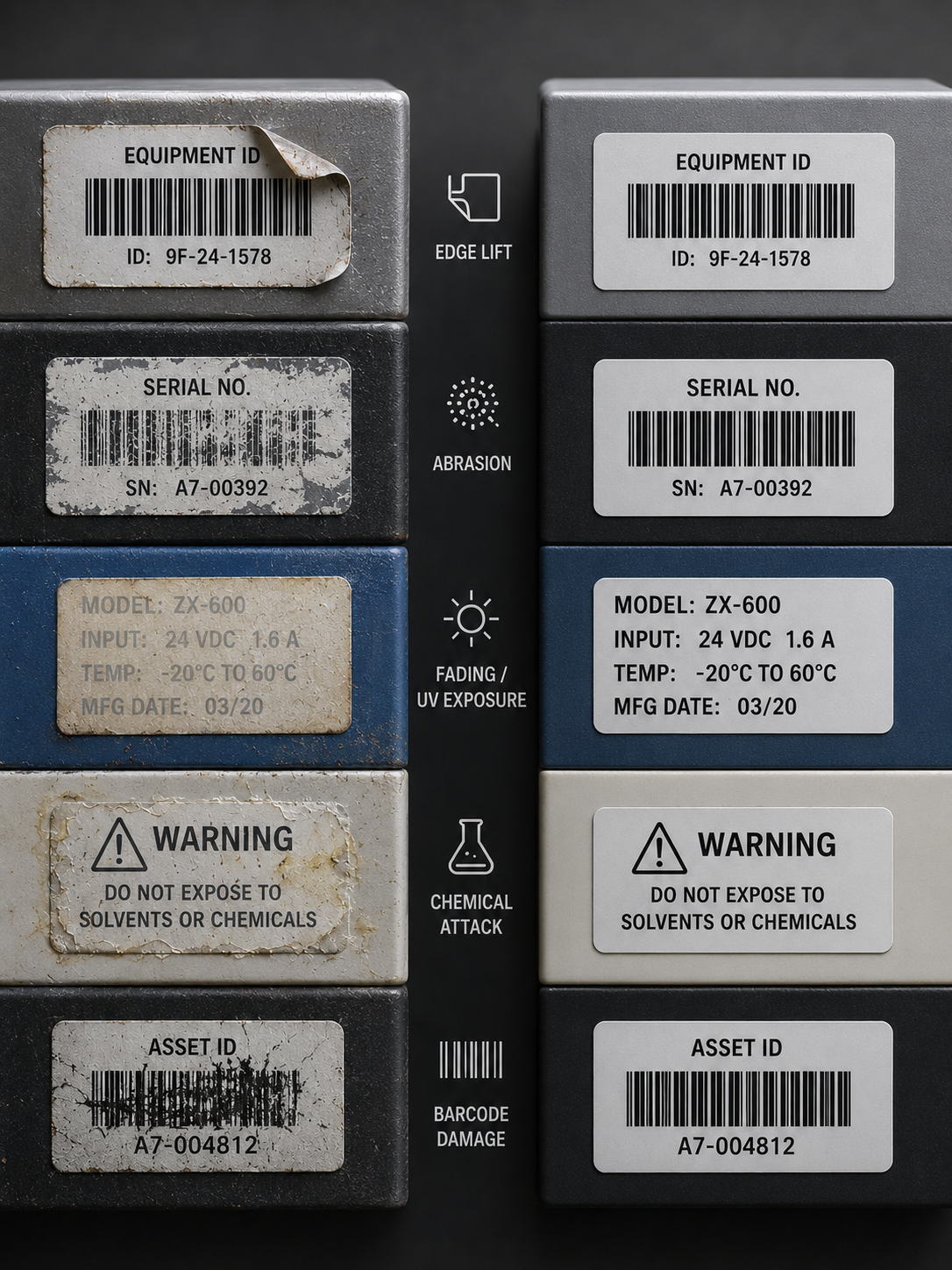
Adhesive mismatch, contamination, texture, coatings, curvature or poor application conditions can prevent a secure bond.
Abrasion, chemicals, cleaners, UV, heat and repeated handling can attack printed information or protective layers.
Low contrast, surface damage, distortion or print-system mismatch can compromise scanning and traceability.
Material substitutions, tolerance variation or inconsistent production can affect an approved application over time.
Surface and Adhesion
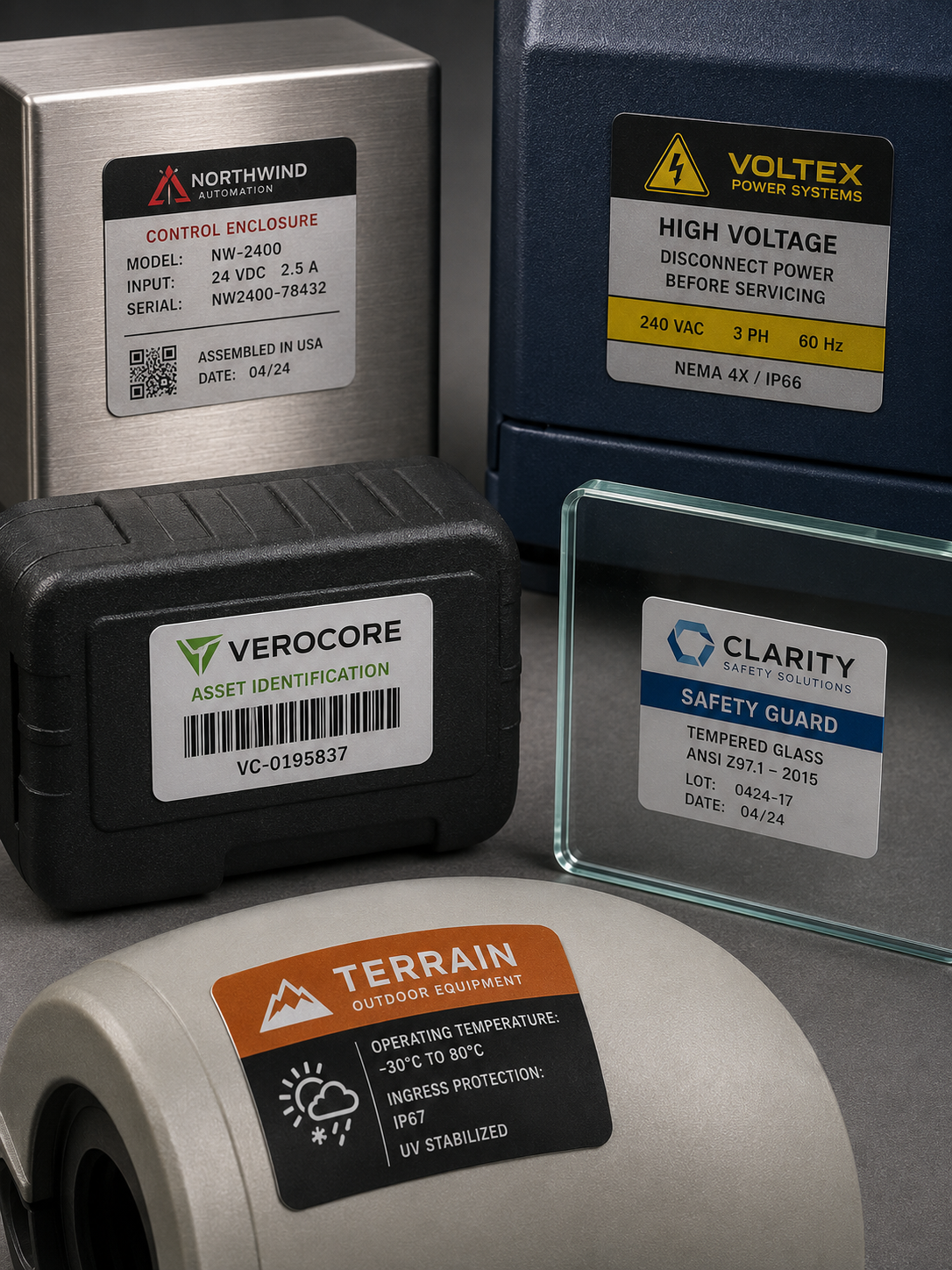
Two visually similar pieces of equipment can require very different adhesive systems. Bare and painted metals, powder-coated surfaces, glass, textured housings, curved parts and engineered plastics each create different wet-out, contact and long-term adhesion conditions.
Surface energy, coatings, mold-release agents, oils, cleaning methods, application pressure and application temperature can all affect performance. Early review helps determine whether the construction needs a high-performance permanent adhesive, a conformable material, a thicker adhesive layer or a different application process.
Environmental Exposure
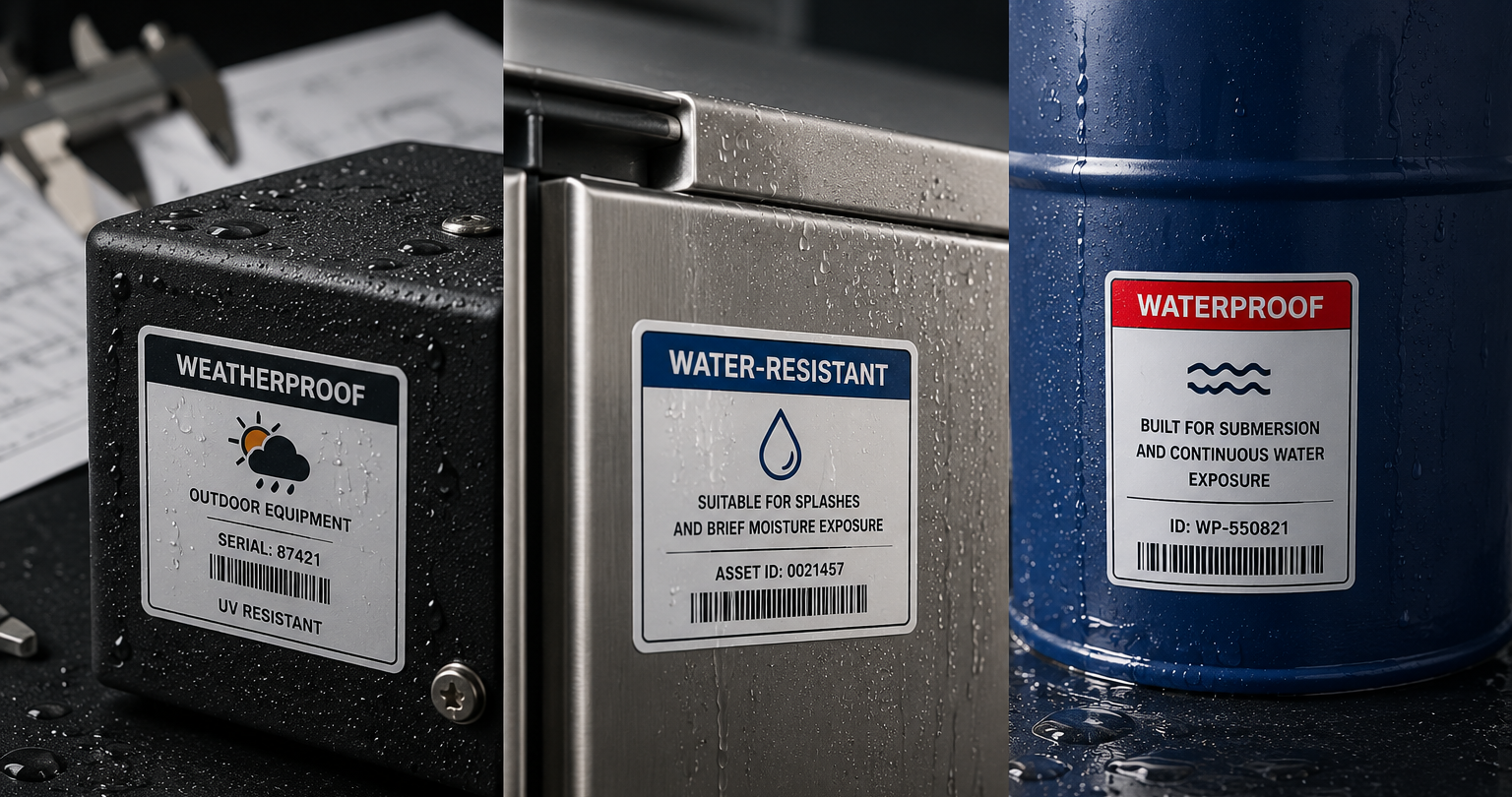
The right material stack depends on the type, intensity and duration of exposure, along with how the label will be handled, cleaned, scanned and inspected.
Materials and Protective Options
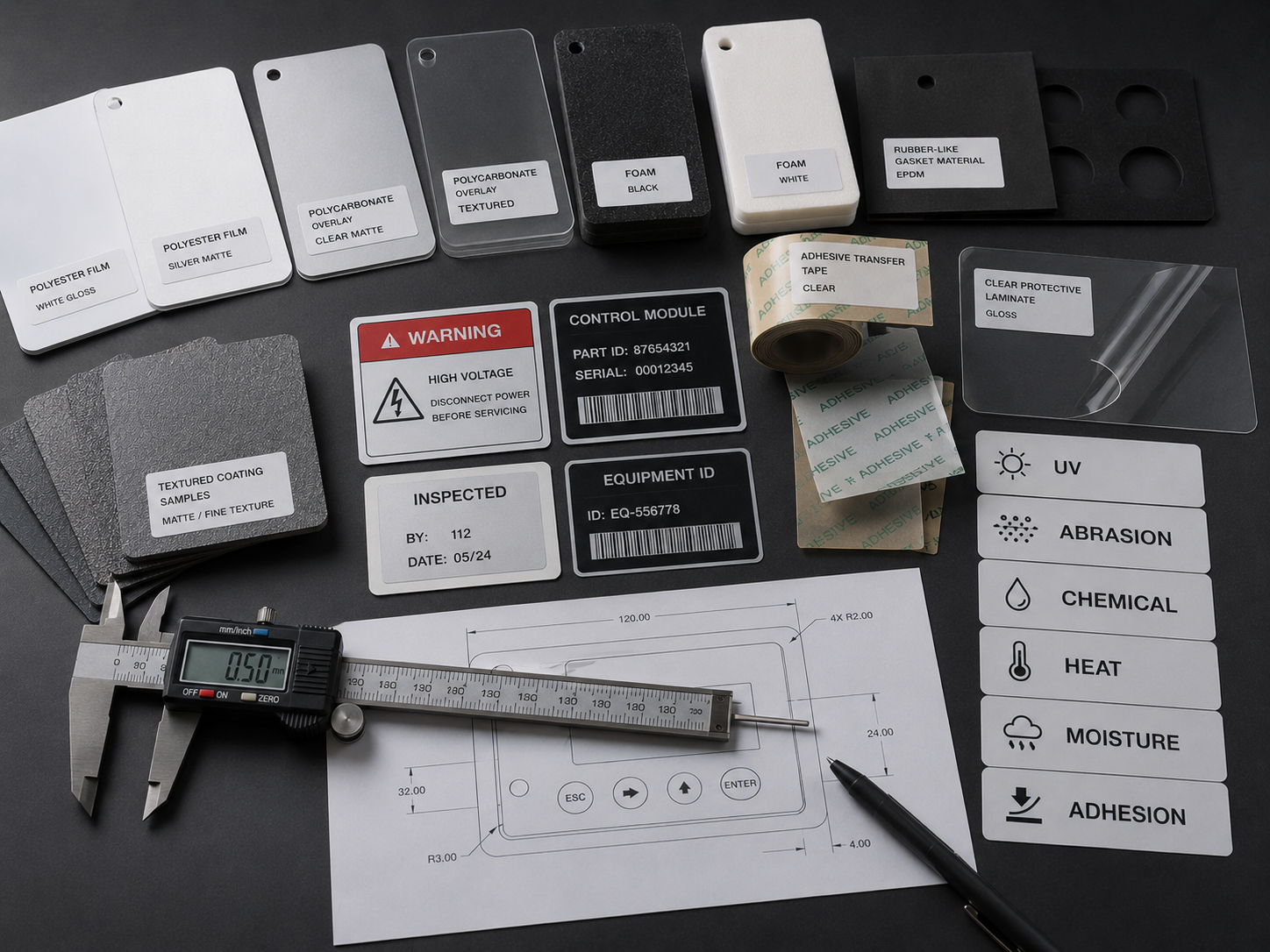
Industrial labels can be built from polyester, vinyl, polycarbonate, polypropylene, foil and other specialty materials, then paired with permanent adhesives, overlaminates, hard coatings or application-specific print systems.
The right answer depends on the surface, environment, print content, desired appearance, variable-data method, application process and expected service life. A premium film alone cannot compensate for the wrong adhesive or insufficient graphic protection.
Polyester, vinyl, polycarbonate, polypropylene and specialty film options for stability, conformability and exposure.
Permanent adhesive systems selected around surface energy, texture, coating, temperature and handling.
Laminates, varnishes, coatings and print systems that help preserve graphics, barcodes and variable information.
Identification Formats
The label construction should support the information, scanning workflow and lifecycle requirements of the application.
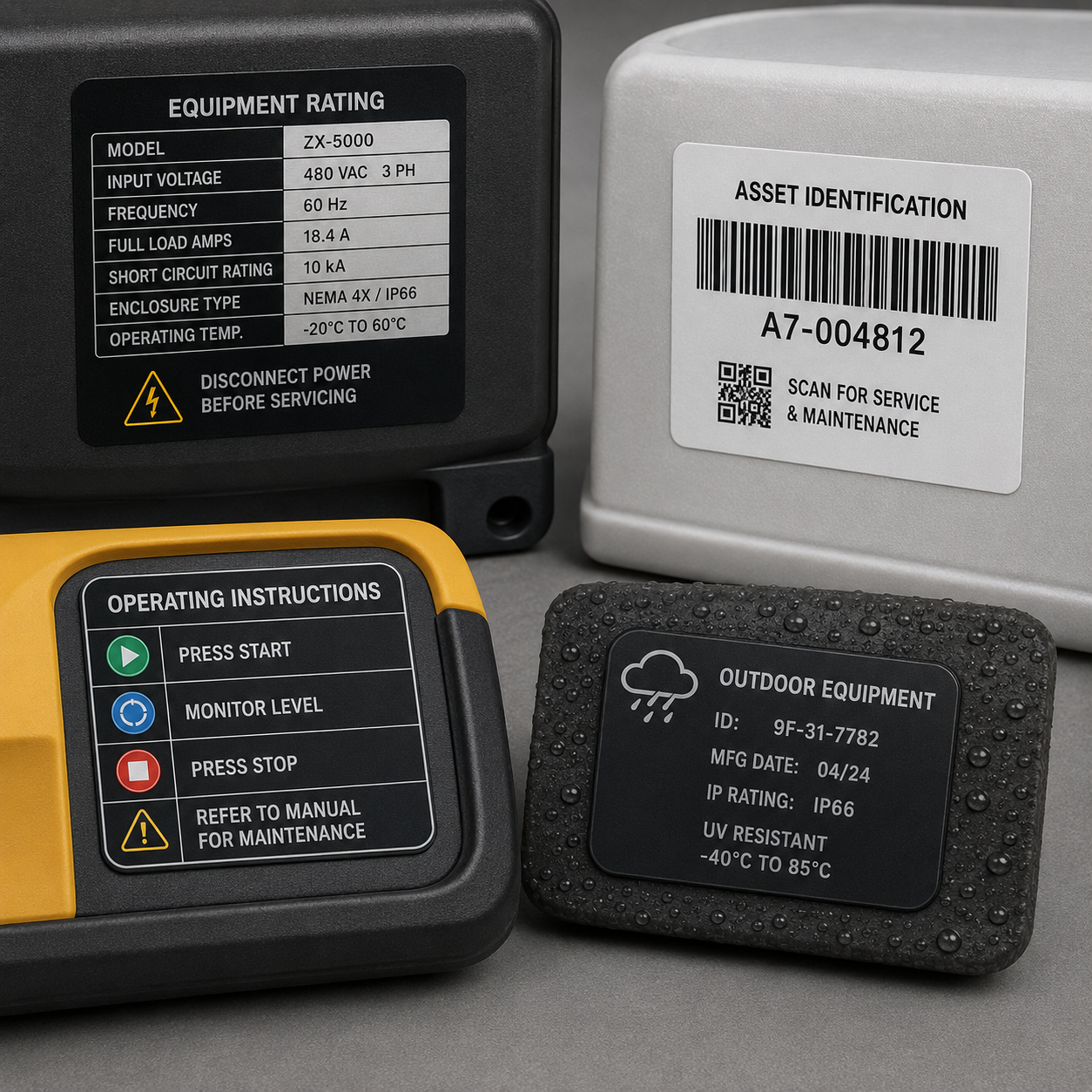
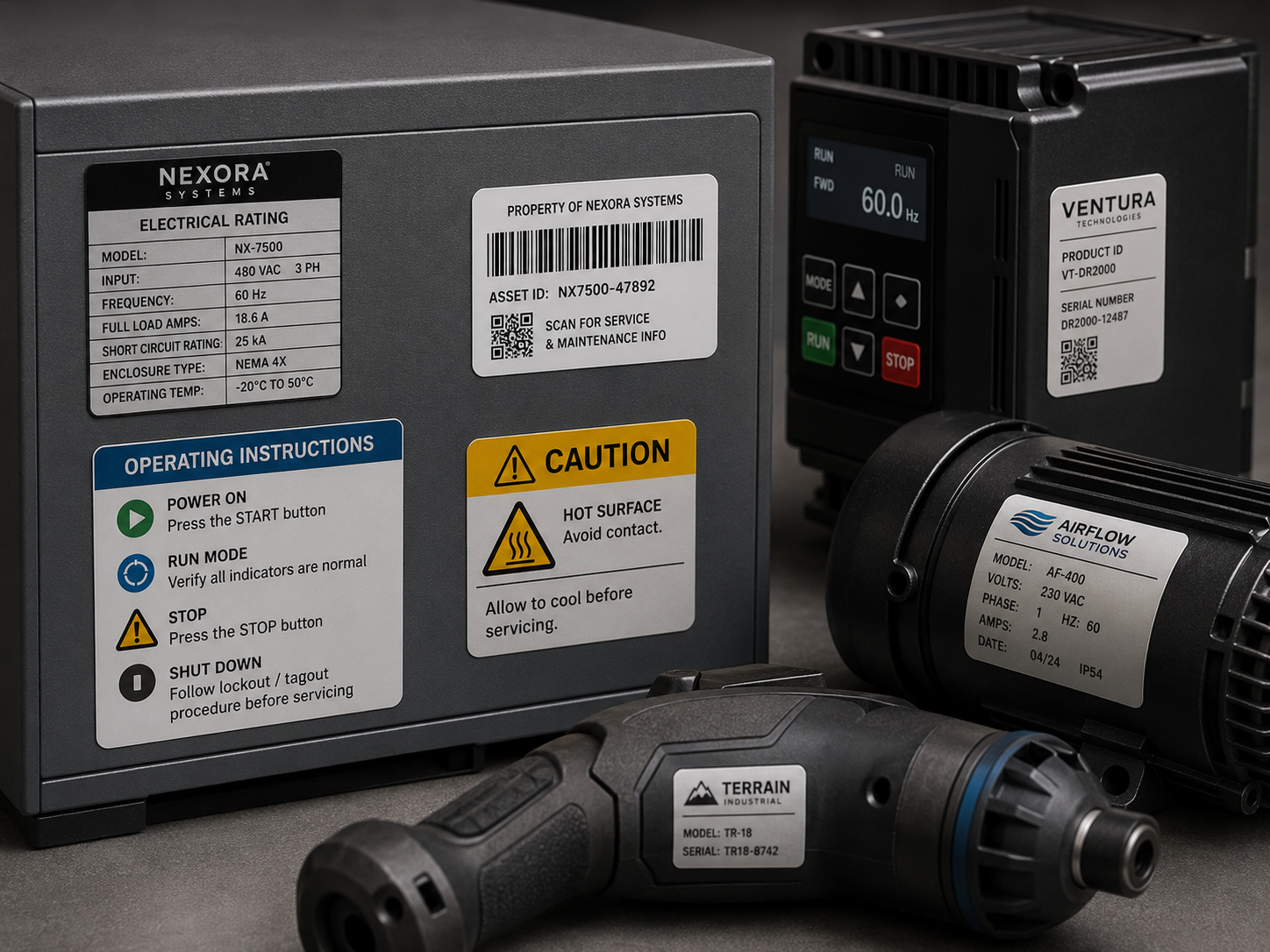
Model, brand, configuration and long-life identity for equipment, tools, appliances and OEM products.
Electrical ratings, operating limits, specifications, certifications and required technical information.
Variable data, QR codes, barcodes, serial numbers and lifecycle identifiers for traceability and service.
Use, maintenance, installation and service information that must remain attached and readable.
Danger, warning, caution, hazard and instruction labels connected to specific product and workplace risks.
Long-life logos, product graphics and visual identification integrated into industrial products and equipment.
Applications and Markets
Custom industrial labels support OEM, equipment, transportation, electronics and facility applications that require reliable adhesion, long-term legibility and repeatable production.
Rating labels, operational markings, service information, model identification, durable branding and long-life equipment graphics.
Component labels, service labels, serialized identification and durable information exposed to heat, oils, chemicals, vibration, UV and moisture.
Product identification, ratings, operating information, device labels, serial data and interface markings for compact or long-service-life housings.
Development and Qualification
A durable-label program benefits from early application review, material evaluation and testing before the construction becomes difficult or expensive to change. From prototypes and qualification samples through repeat production programs, RLG Engineered supports applications at the scale and control level the program requires.
Clarify surface, environment, service life, print content and consequence of failure.
Select facestock, adhesive, print system, protection, liner and format.
Review adhesion, readability, scanning, handling and customer-specific approval needs.
Manage materials, variable data, tolerances, inspection, packaging and ongoing supply.
Related RLG Engineered Solutions
Industrial durability often overlaps with compliance, outdoor exposure, asset tracking, branding and equipment identification. These related capabilities provide a more focused path when the requirement is already clear.

Part of RLG Engineered
Industrial labels often connect to durable identification, compliance markings, overlays, membrane switches, asset-tracking programs and precision-converted parts. RLG Engineered helps coordinate these requirements around the surface, environment, function and production process.
Industrial Label FAQ
The right industrial label is defined by what it must communicate, where it will be applied and what it must withstand over its expected life.
Durability comes from the complete construction: face material, print system, protective coating or laminate, adhesive, liner and production format. Each element should be selected around the surface, environment, handling and expected service life.
Common options include polyester, vinyl, polycarbonate, polypropylene, foil and specialty films. The correct material depends on dimensional stability, conformability, chemical exposure, temperature, UV, abrasion and print requirements.
Yes, but these surfaces often need careful adhesive selection. Texture, surface energy, coating chemistry, contamination, curvature and application pressure can all affect long-term adhesion.
Yes. Chemical resistance can be engineered through the face material, print method, coating or laminate and adhesive. The specific oils, solvents, detergents, disinfectants or process chemicals should be identified during application review.
Yes. Industrial constructions can support barcodes, QR codes, serial numbers, lot information, rating data and other variable content. Scan method, contrast, print system, surface protection and placement should be considered together.
Industrial durable labels are the broader category and may be designed for indoor or outdoor equipment, chemicals, abrasion, handling, heat, cleaning or long service life. Weatherproof labels focus more specifically on outdoor, wet and environmental exposure.
RLG Engineered can support application review, material evaluation, samples, prototypes and production planning. Qualification requirements vary by customer, environment, construction and regulatory need.
Useful inputs include label dimensions, drawings or artwork, substrate, surface finish, exposure conditions, cleaning chemicals, temperature range, service life, print and variable-data requirements, annual volume and application method.
Start With the Application
Share the equipment surface, operating conditions, information requirements and production needs. RLG Engineered can help define a durable industrial label construction built for the real application.