Pressure-Sensitive Labels
Pressure-Sensitive Labels for Any Product
Pressure-sensitive labels are one of the most versatile ways to brand, identify and protect products across industries. Resource Label Group helps you choose the right material, adhesive, finish and print method for your container, application and customer experience.
Working with us
Custom Labels Built Around Your Product
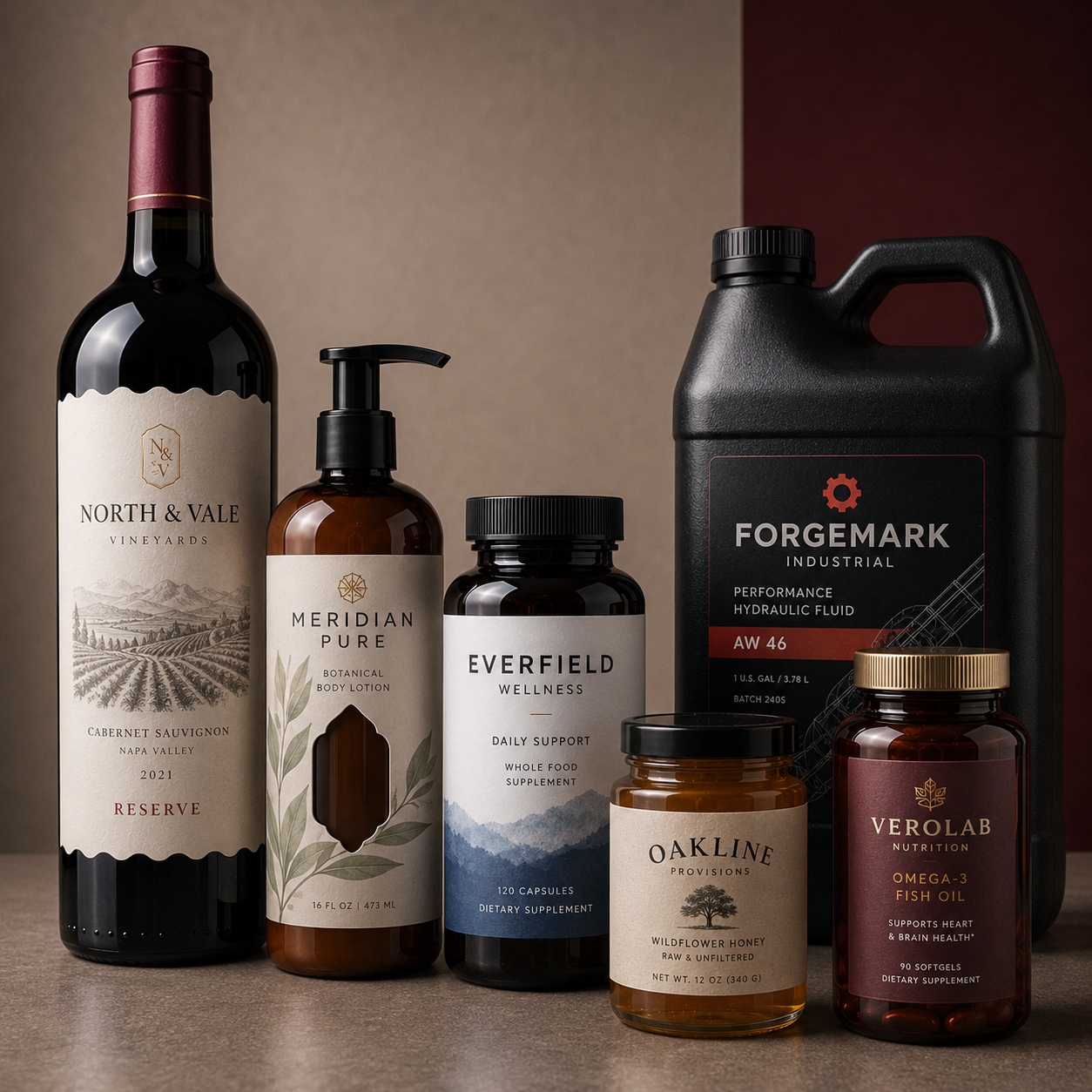
The right pressure-sensitive label does more than stick to a surface. It supports shelf impact, brand consistency, regulatory communication, application efficiency and real-world performance. From premium retail packaging to durable product identification, RLG works with you to develop a label construction that fits your product, your process and your goals.
Whether you need a short digital run, a high-volume flexographic program or a specialty construction with adhesives, coatings or embellishments, we can help you move from idea to production with confidence.
Typical Pressure-Sensitive Label Construction
Label basics
What Are Pressure-Sensitive Labels?
Pressure-sensitive labels, often called PSLs, adhere to a product or package with light to moderate pressure. They do not require heat, solvent or water to activate. The label is typically supplied on a roll, then applied by hand or with labeling equipment.
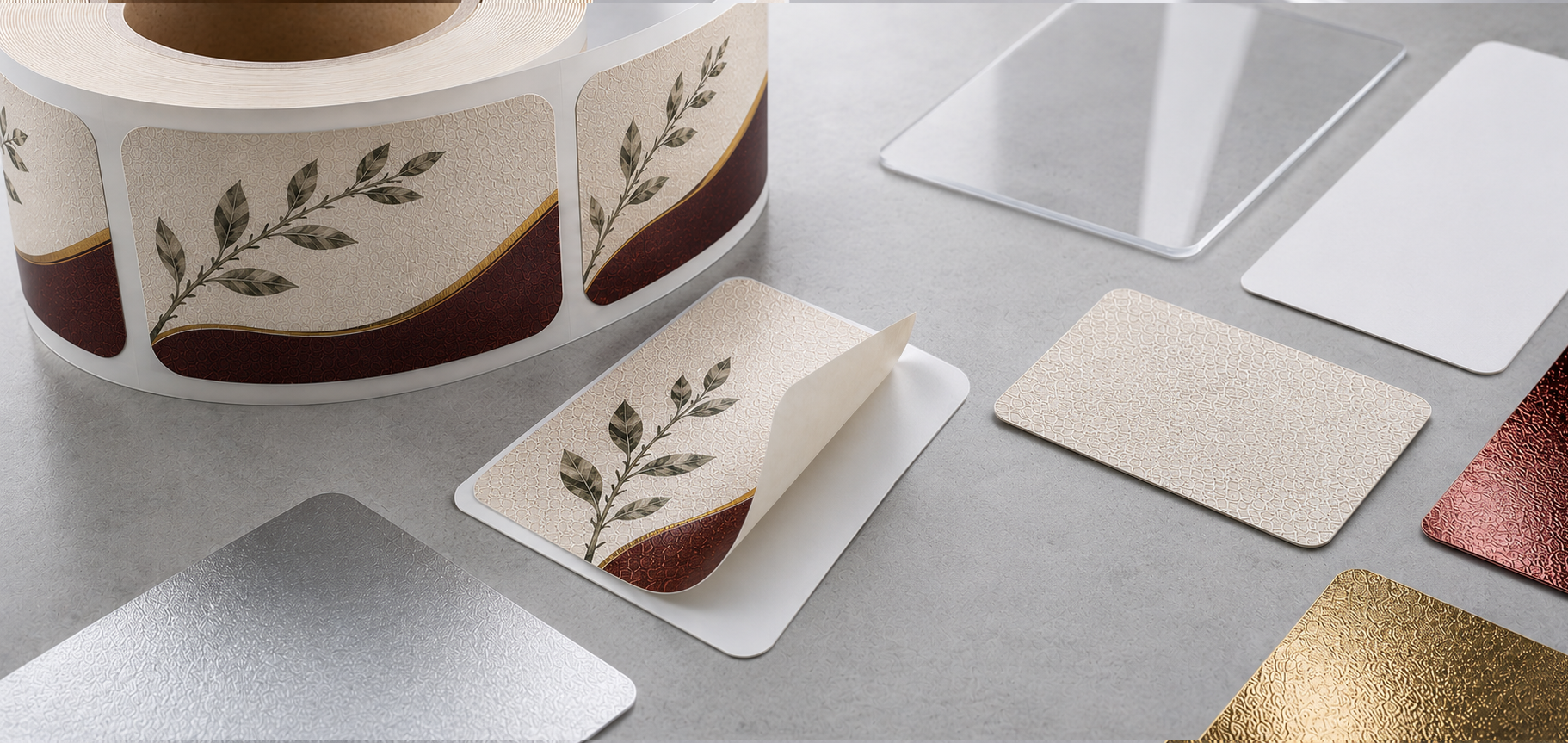
A pressure-sensitive label usually includes a facestock, adhesive, release coating and liner. Depending on the application, it may also include coatings, laminates, varnishes or specialty finishes that help protect the printed label and enhance the final look.
A pressure-sensitive label is a complete construction, not just printed material. The facestock, adhesive, ink system, coating and liner all affect how the label looks, applies and performs.
Applications
Pressure-Sensitive Label Applications
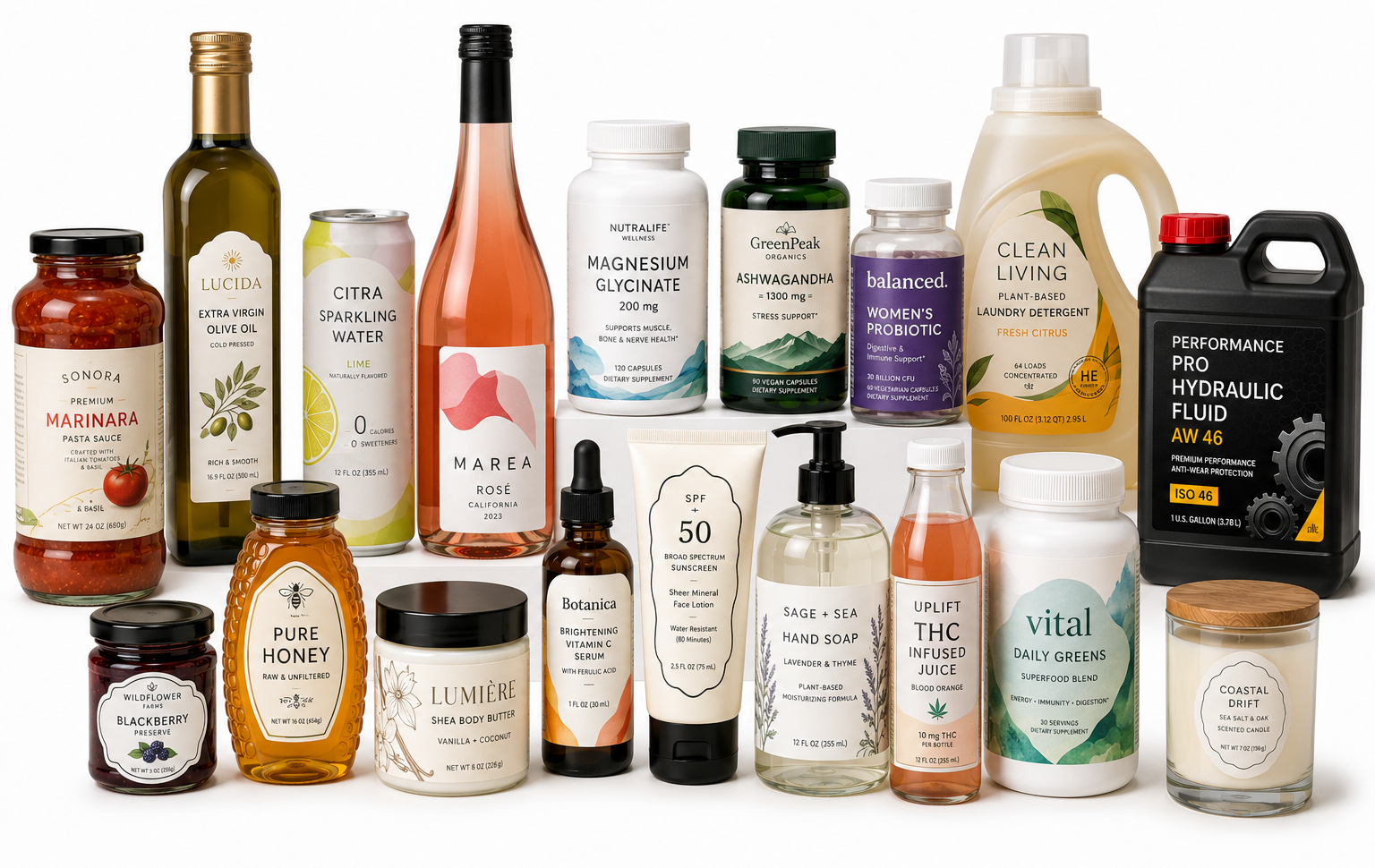
Pressure-sensitive labels are used across a wide range of products because they can be adapted to different container shapes, production environments, brand requirements and performance needs.
Pharmaceutical
Labels designed for regulated packaging, clear communication and dependable execution.
Label advantages
Flexible Labeling for Brand Impact and Real-World Performance
Versatile by design
Use pressure-sensitive labels across many container types, shapes, materials and markets.
Built for brand impact
Choose papers, films, foils, inks, varnishes and embellishments that support your brand.
Engineered for performance
Match the adhesive, facestock and coating to the conditions your product will face.
Scalable for your program
Support short runs, high-volume orders, seasonal launches, variable data and multi-SKU programs.
Label construction
Build the Right Label Construction
Every label has a job to do. RLG helps you evaluate the full label construction so your finished label is aligned with the way your product is made, shipped, stored, displayed and used.
Facestocks
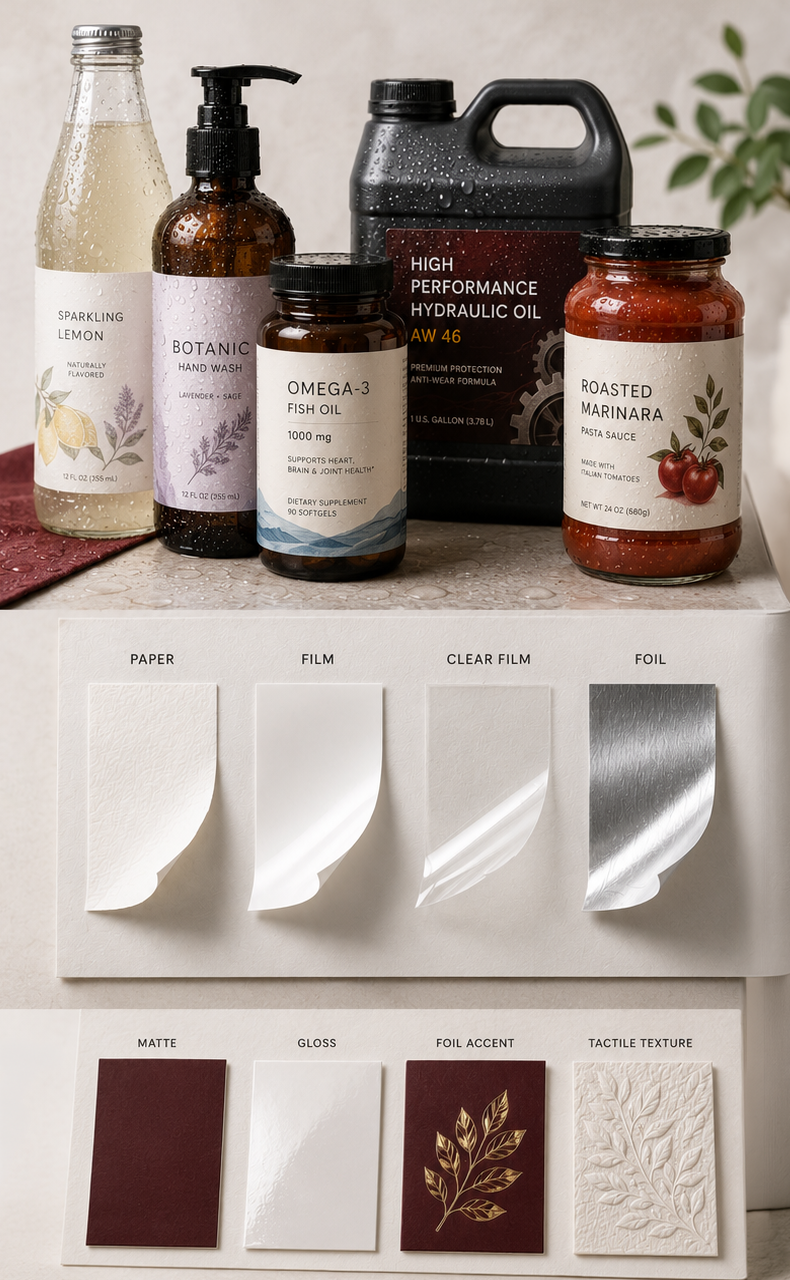
Your facestock is the base material for the printed label. Paper options can support classic, textured or premium looks, while film options can provide added durability, moisture resistance and flexibility. Foil and specialty materials can create metallic effects or distinctive shelf presence.
Adhesives
The adhesive should match the container material, surface energy, application process and end-use environment. Options may include permanent, removable, repositionable, cold-temperature, moisture-resistant or specialty adhesives for more demanding applications.
Liners
The liner protects the adhesive before application and supports dispensing through hand-applied or automated labeling processes. Liner selection can affect application speed, waste handling and production efficiency.
Coatings and laminates
Varnishes, coatings and laminates can protect the printed label from scuffing, moisture, handling and environmental exposure. They can also change the visual or tactile experience with gloss, matte, soft-touch or specialty effects.
Inks and decoration
Ink systems, metallic effects, foil stamping, embossing, screen printing and other embellishments can help create the right balance of brand impact, durability and production efficiency.
Before production
What to Consider Before Choosing a Pressure-Sensitive Label
Choosing the right pressure-sensitive label starts with understanding the full product journey. Your label may need to perform through filling, application, shipping, retail display, consumer handling and disposal.
The earlier these requirements are considered, the easier it is to avoid label lift, scuffing, poor adhesion, wrinkling, ink rub-off or other performance issues.
Container
- Material
- Shape
- Surface texture
- Label size
Application
- Hand or machine applied
- Line speed
- Fill temperature
- Dispensing needs
Environment
- Moisture
- Cold or heat
- Chemicals or oils
- Abrasion
Program
- Run size
- SKU count
- Compliance needs
- Sustainability goals
Printing and finishing
Printing and Finishing Options for Custom Pressure-Sensitive Labels
RLG offers pressure-sensitive label printing and finishing options that support a wide range of brand, performance and production needs.
Performance
Designed for Real-World Label Performance
A label that looks great on press still has to perform in the real world. RLG helps evaluate those conditions before production so the finished label is built for the application, not just the artwork.
Moisture Resistance
For refrigerated, beverage, personal care, household and wet-use applications.
Temperature Exposure
For products exposed to cold storage, hot fill, shipping variation or outdoor environments.
Chemical Resistance
For household, industrial, automotive, beauty and specialty applications.
Application Efficiency
For labels that need to dispense cleanly and apply consistently by hand or automated equipment.
Durability and Handling
For products that face abrasion, repeated touch, shipping friction or demanding use conditions.
Compliance Labeling
For products that require clear ingredient, warning, usage, regulatory or variable information.
Markets
Pressure-Sensitive Labels Across Markets
From premium consumer packaging to highly functional product identification, pressure-sensitive labels can be tailored to the needs of specific markets.
Why RLG
A Label Partner With the Scale and Support to Help You Move Forward
RLG brings together technical label knowledge, broad production capabilities and responsive local support to help customers specify, print and manage pressure-sensitive label programs with confidence.
Whether you are launching a new product, improving an existing label, solving a performance issue or scaling a multi-SKU program, our team can help you make the right label decisions earlier in the process.
Material and adhesive guidance
Digital and flexographic options
Decorative and protective finishing
Market-specific label expertise
Short-run and larger program support
National reach with local support
Frequently asked questions
Pressure-Sensitive Label FAQs
What is a pressure-sensitive label?
A pressure-sensitive label is a label that sticks to a surface with light to moderate pressure. It typically includes a facestock, adhesive and liner, and it does not require heat, solvent or water to activate.
What products use pressure-sensitive labels?
Pressure-sensitive labels are used on bottles, jars, cartons, tubes, containers and many other packaging formats. Common markets include food, beverage, wine and spirits, beauty, nutraceuticals, pharmaceuticals, household products, chemicals and industrial goods.
What materials are used for pressure-sensitive labels?
Common material options include paper, film, foil and specialty facestocks. The right choice depends on your brand goals, container type, application process, performance needs and budget.
How do I choose the right adhesive?
Adhesive selection depends on the container material, surface texture, application temperature, storage conditions and end-use environment. Some labels need permanent adhesion, while others may require removable, cold-temperature, moisture-resistant or specialty adhesives.
Are pressure-sensitive labels waterproof?
Some pressure-sensitive labels can be designed for moisture resistance or wet-use environments, but performance depends on the full construction, including facestock, adhesive, inks, coatings and application conditions.
Can pressure-sensitive labels be used on curved containers?
Yes. Pressure-sensitive labels can be used on many curved containers, but the label shape, material flexibility, adhesive and application process all affect performance.
What is the difference between digital and flexographic pressure-sensitive label printing?
Digital printing is often a strong fit for short runs, fast turnarounds, versioning and multi-SKU programs. Flexographic printing is often efficient for larger-volume or repeat programs. RLG can help determine the right approach for your project.
Can pressure-sensitive labels include foil, embossing or specialty finishes?
Yes. Pressure-sensitive labels can include foil stamping, embossing, tactile coatings, gloss, matte, soft-touch finishes and other decorative or protective effects depending on the design and application.
Can RLG help with label material selection?
Yes. RLG can help evaluate your product, container, application method, environment and brand goals to recommend a pressure-sensitive label construction that fits your needs.
Free guide
Need Help Choosing the Right Label Construction?
Download our pressure-sensitive label guide for a closer look at materials, adhesives, finishes, performance considerations and key decisions that can affect the success of your label program.
Download the GuideReady to Build a Better Pressure-Sensitive Label?
Tell us about your product, package and performance requirements. RLG will help you identify the right pressure-sensitive label construction for your brand, budget and application.