
RLG Engineered | Membrane Switches
Custom membrane switches engineered for reliable product control.
Membrane switches combine circuitry, graphic overlays and tactile response into compact interface assemblies built for durability, repeatability and dependable user interaction.
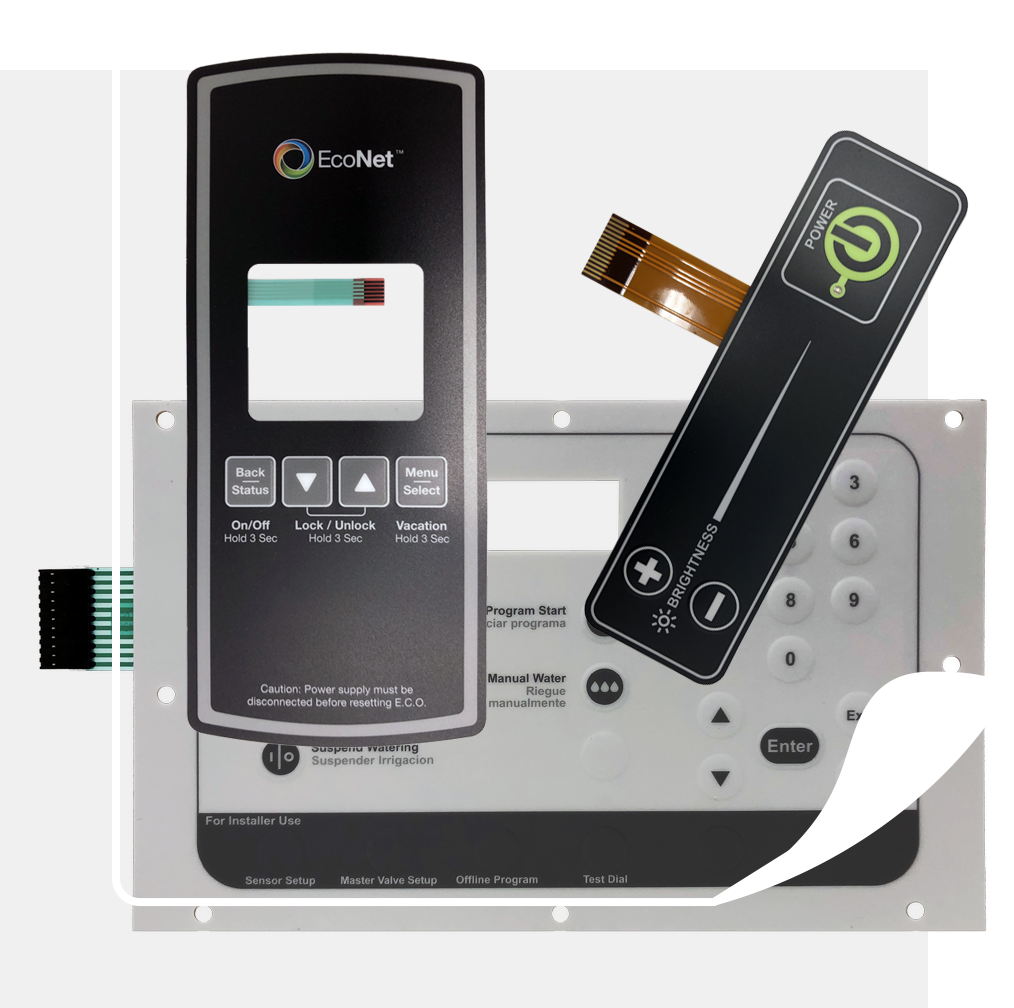
Interface Control
Membrane switches turn product interaction into a reliable assembly.
Membrane switches are low-profile user interface components that bring together printed circuitry, spacer layers, graphic overlays and tactile response. When a user presses a designated area, the circuit is momentarily completed and the device receives the input.
RLG Engineered supports custom membrane switch solutions designed around the application, product housing, user experience and expected operating environment.
The right construction depends on how the product will be used: touch frequency, exposure, button feel, graphic clarity, display windows, LED alignment, adhesive requirements and assembly method.
As part of the broader RLG Engineered platform, membrane switch programs can connect naturally to graphic overlays, precision die-cut components, durable identification and related interface materials.
Built as a System
The switch, overlay and adhesive stack have to work together.
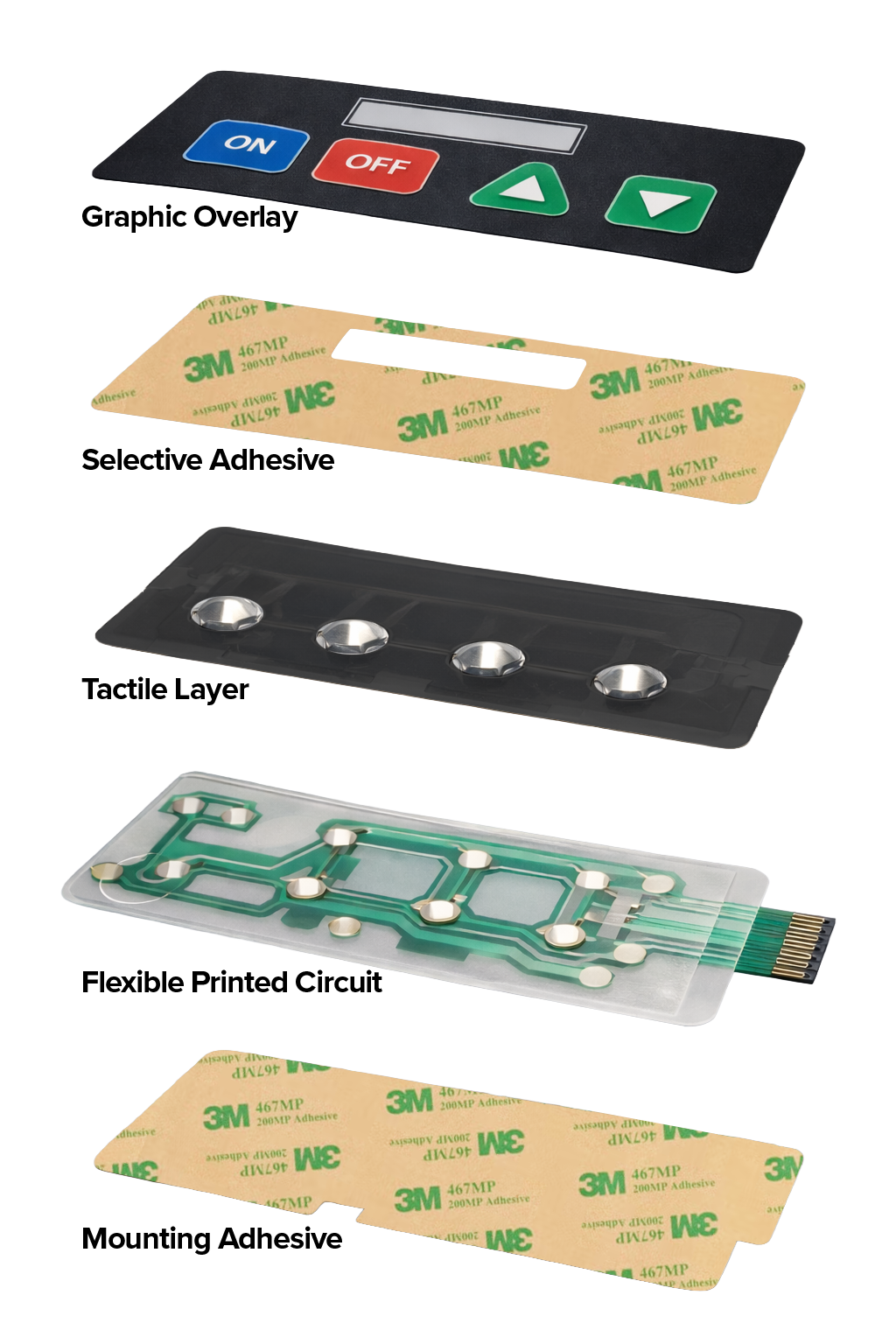
A membrane switch is not simply a printed faceplate. The finished assembly depends on the relationship between the graphic layer, circuit layers, spacers, domes, adhesives, windows and the product surface underneath.
Graphic Layer
Legends, icons, branding, windows and surface finishes that guide the user.
Switch Function
Tactile or non-tactile response, circuit layout and actuator alignment.
Adhesive Fit
Mounting systems selected around housing material, surface energy and assembly needs.
Environmental Protection
Construction choices that help manage moisture, dust, cleaning, abrasion and handling.
Capabilities & Features
Custom membrane switch options built around the interface requirement.
RLG Engineered helps customers evaluate membrane switch design, graphic overlay requirements, tactile response, circuit construction and final assembly needs before production.
Custom Switch Design
Membrane switch constructions developed around product interface, housing, use environment and assembly requirements.
Tactile and Non-Tactile Options
Metal dome, embossed, printed tactile and flat switch configurations based on the desired user response.
Integrated Graphic Overlays
Durable overlays with legends, icons, windows, textures and brand presentation built into the assembly.
Multi-Layer Circuit Constructions
Printed circuit layers, spacer layers and dome configurations developed to support reliable operation.
LED and Display Windows
Clear or selective windows for displays, indicators, LEDs and backlit or dead-front interface areas.
Tight-Tolerance Converting
Die cutting, layer alignment and adhesive placement that help the assembly fit the finished product.
Construction Details
Materials, layers and surface details shape performance.
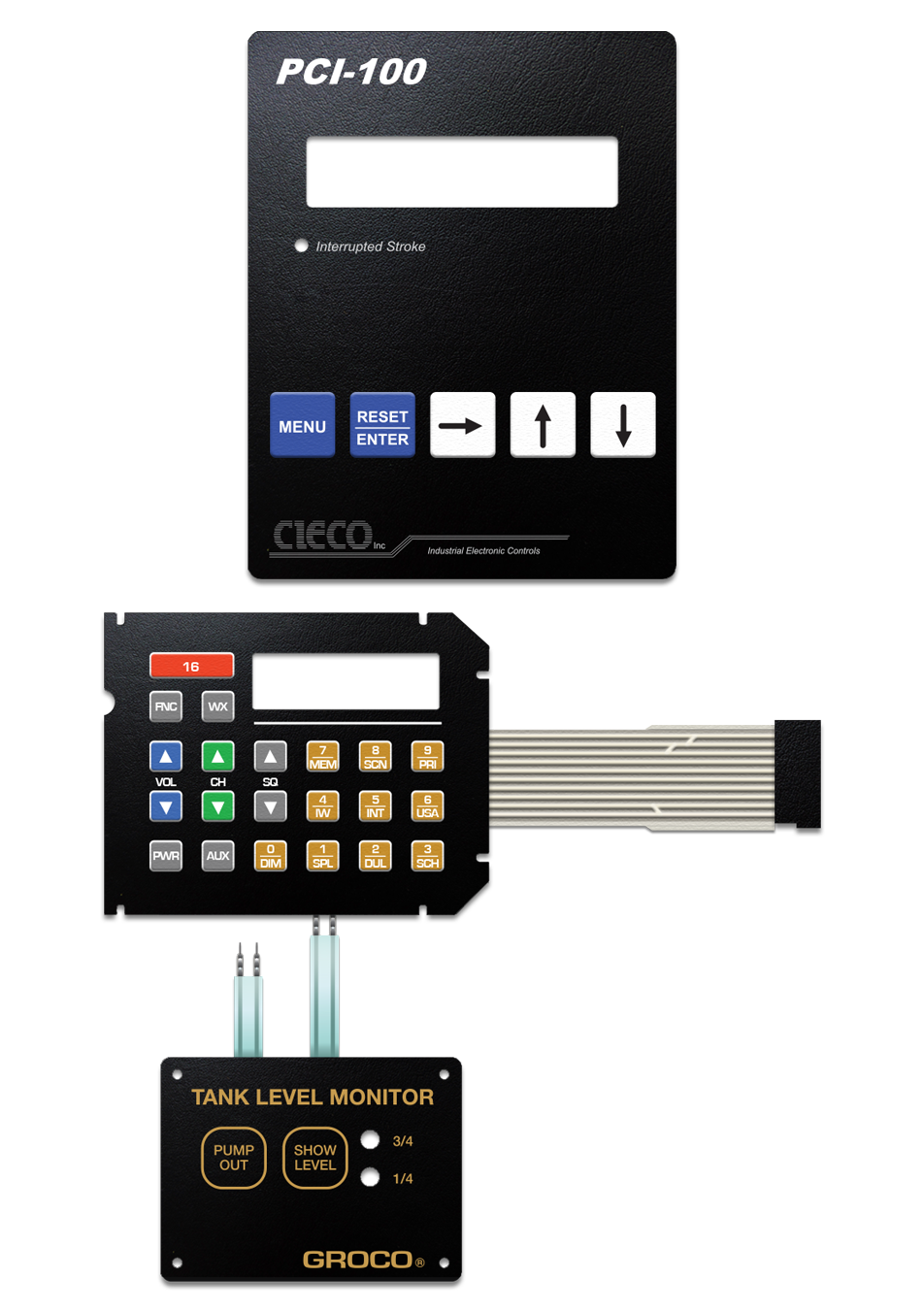
The best membrane switch construction is defined by the product environment and the way the operator will use the interface. Graphic clarity, tactile feel, actuation force, surface finish, adhesive fit and assembly method all influence the final design.
Polyester graphic and circuit layers
PET materials support durability, flexibility and long-term interface performance.
Tactile dome configurations
Metal domes and tactile features can be selected around feedback, force and usage frequency.
Selective windows and display areas
Clear, tinted or selective windows help align the overlay to LEDs, screens and indicators.
Matte, gloss or textured finishes
Surface finishes can influence readability, glare control, touch feel and brand presentation.
Pressure-sensitive adhesive systems
Mounting adhesives are matched to housing material, surface texture and assembly requirements.

Designed for Real-World Use
Reliable interface performance depends on the full use environment.
Membrane switch programs should be reviewed around how the product will be installed, touched, cleaned, exposed, inspected and supported over time.
Applications
Where membrane switches are used.
Membrane switches support products that need a durable, compact interface for reliable control, visual guidance and repeatable user input.
Industrial Equipment & Machinery
Control panels, operator interfaces and machine controls exposed to repeated use and manufacturing environments.
Medical & Diagnostic Devices
Device interfaces requiring clean appearance, repeatable operation and durable graphic presentation.
Electronics & Instrumentation
Low-profile controls, status indicators, display windows and interface graphics for electronic products.
HVAC & Building Controls
Interface panels, operating controls and durable overlays for equipment used in facilities and field environments.
Commercial Appliances
Sealed interface panels and durable control surfaces for products exposed to routine use and cleaning.
OEM Product Assemblies
Custom interface components developed around the finished product, housing and manufacturing process.
Overlay vs. Switch
Graphic overlays and membrane switches work together, but they solve different needs.
A graphic overlay provides the visible interface: legends, icons, windows, branding, texture and protection. A membrane switch adds the functional input layer that registers a user press and triggers device action.
Many projects require both. The overlay must align with the switch zones, display areas, LEDs, adhesive layers and the final housing so the finished assembly looks right and operates reliably.
RLG Engineered can help evaluate whether the application calls for a durable overlay, a membrane switch assembly or a related interface component construction.
Development Path
The right membrane switch starts before artwork goes to production.
Successful membrane switch programs begin with the interface requirement, product housing, use environment and production expectations, then move into construction planning and repeatable manufacturing.
Define the Interface
Review user actions, switch zones, icons, display areas, lighting and product interaction needs.
Review the Environment
Evaluate exposure, cleaning, moisture, dust, abrasion, handling and expected product life.
Plan the Construction
Match overlay materials, circuit layers, spacers, domes, adhesives, finishes and windows.
Prototype or Sample
Confirm appearance, tactility, fit, alignment and assembly approach before production scale.
Produce and Support
Move into repeatable production with the right presentation, inspection rhythm and supply plan.

Related RLG Engineered Solutions
When the interface is part of a broader product requirement.
Membrane switch programs often connect to graphic overlays, precision die-cut parts, durable identification, UL labels and engineered adhesive constructions.
Membrane Switch FAQ
Questions worth answering before production begins.
The right membrane switch is defined by the user interface, product environment, housing surface, tactile needs and production requirements.
What is a membrane switch?
A membrane switch is a low-profile interface assembly made up of graphic, circuit, spacer and adhesive layers. When the user presses a designated area, the circuit closes and sends an input to the device.
How is a membrane switch different from a graphic overlay?
A graphic overlay is the visible interface layer. It provides graphics, icons, windows, texture and protection. A membrane switch includes functional circuitry so the interface can register user input.
Can membrane switches include tactile feedback?
Yes. Membrane switches can use tactile metal domes, embossed areas or other design features to provide feedback when the user presses a control area. Non-tactile options may also be appropriate depending on the application.
What information is helpful before quoting a membrane switch?
Helpful inputs include drawings, dimensions, target housing material, circuit requirements, button locations, desired tactile feel, display or LED window needs, exposure conditions, adhesive requirements and expected production volume.
Can RLG Engineered support related overlay and die-cut components?
Yes. Membrane switch applications often connect to graphic overlays, spacer layers, adhesive components, display windows, durable identification and other engineered interface materials.
Talk With RLG Engineered
Need a membrane switch or interface assembly built around real product requirements?
Bring us the product, surface, environment, interface needs or production challenge. RLG Engineered can help develop a membrane switch or related interface solution that supports reliable product control.