RLG Engineered | Asset Tracking & Identification
Asset tracking and identification engineered for operational visibility.
Durable label, tag and tracking solutions designed to help organizations identify, track, audit and manage physical assets across real-world operating environments.
Asset Visibility
Visibility starts with identification.
Before an asset can be located, audited, maintained, serviced or retired, it needs a reliable identity. Asset tracking and identification systems connect physical assets to useful data, helping teams understand location, condition, ownership and history across the asset lifecycle.
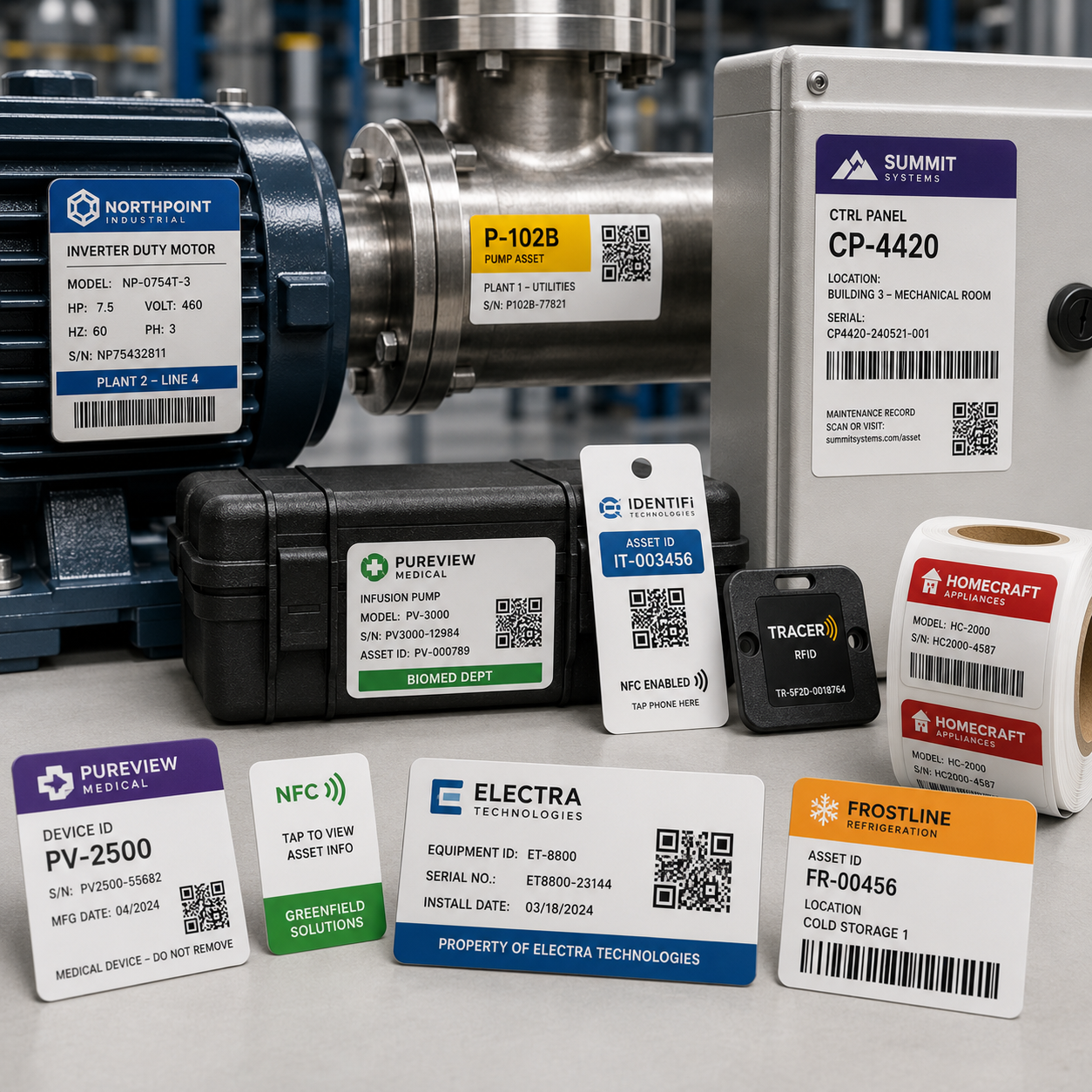
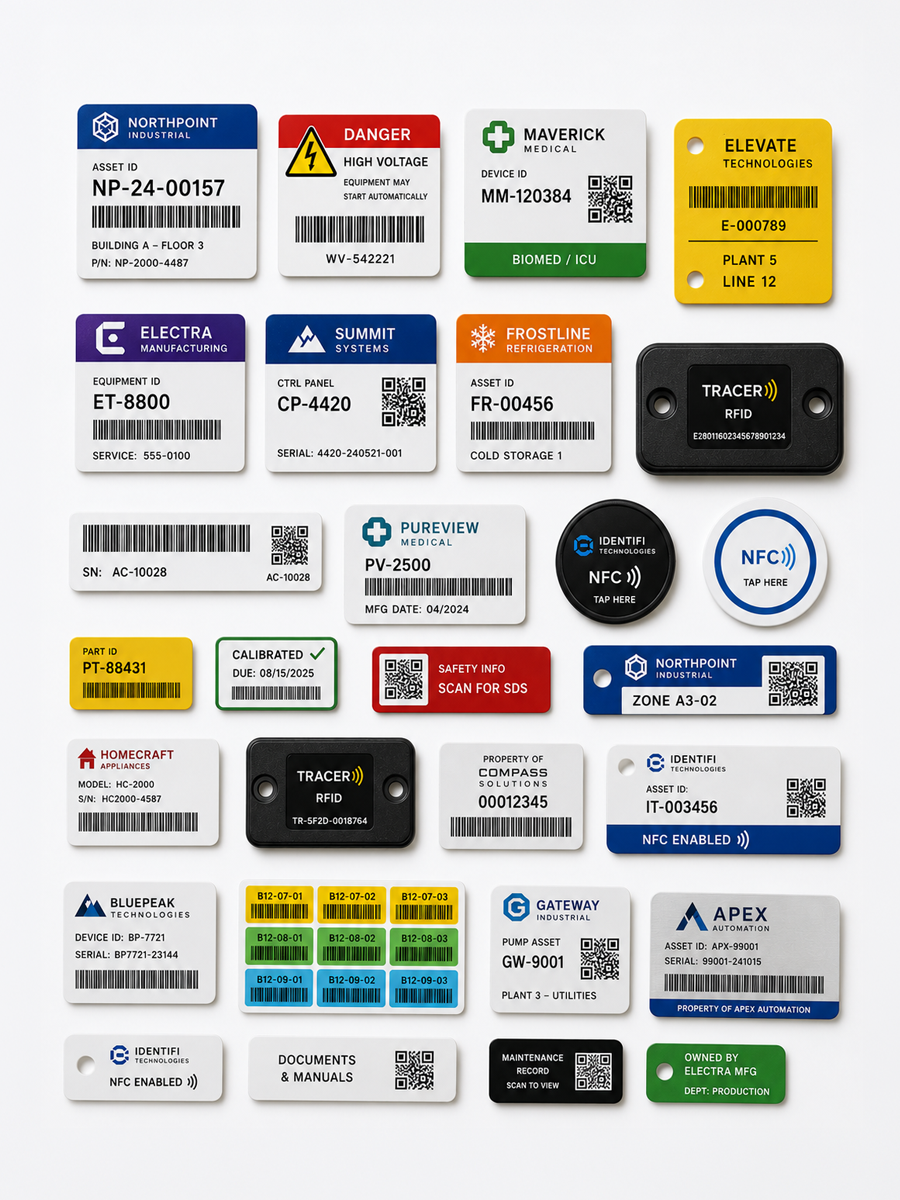
That identifier may be a barcode, QR code, serialized label, metal tag, RFID tag, NFC-enabled label or tamper-evident construction. The right solution depends on how the asset is used, how it will be scanned, what environment it will face and how long the information must remain readable.
RLG Engineered helps customers define the requirement before selecting the technology. We support durable asset labels, serialized tags and tracking constructions built around application surfaces, data needs, workflow requirements and long-term field performance.
The goal is not simply to mark the asset. The goal is to make the asset visible, accountable and manageable throughout its useful life.
Program Foundation
Asset programs succeed or fail on visibility, durability and data integrity.
The best asset identification strategy starts with the operational need. A warehouse asset, medical device, fleet component, IT server and outdoor equipment tag may each require a different construction, data format and scanning method.
Visibility
Can teams locate, scan and identify the asset when the information is needed?
Durability
Will the label or tag remain attached, readable and scannable for the expected service life?
Data Integrity
Does each identifier connect to the correct record, asset history and operational workflow?
Workflow Fit
Does the identification method match how people scan, audit, service and manage the asset?
Technology Selection
Different tracking needs demand different identification technologies.
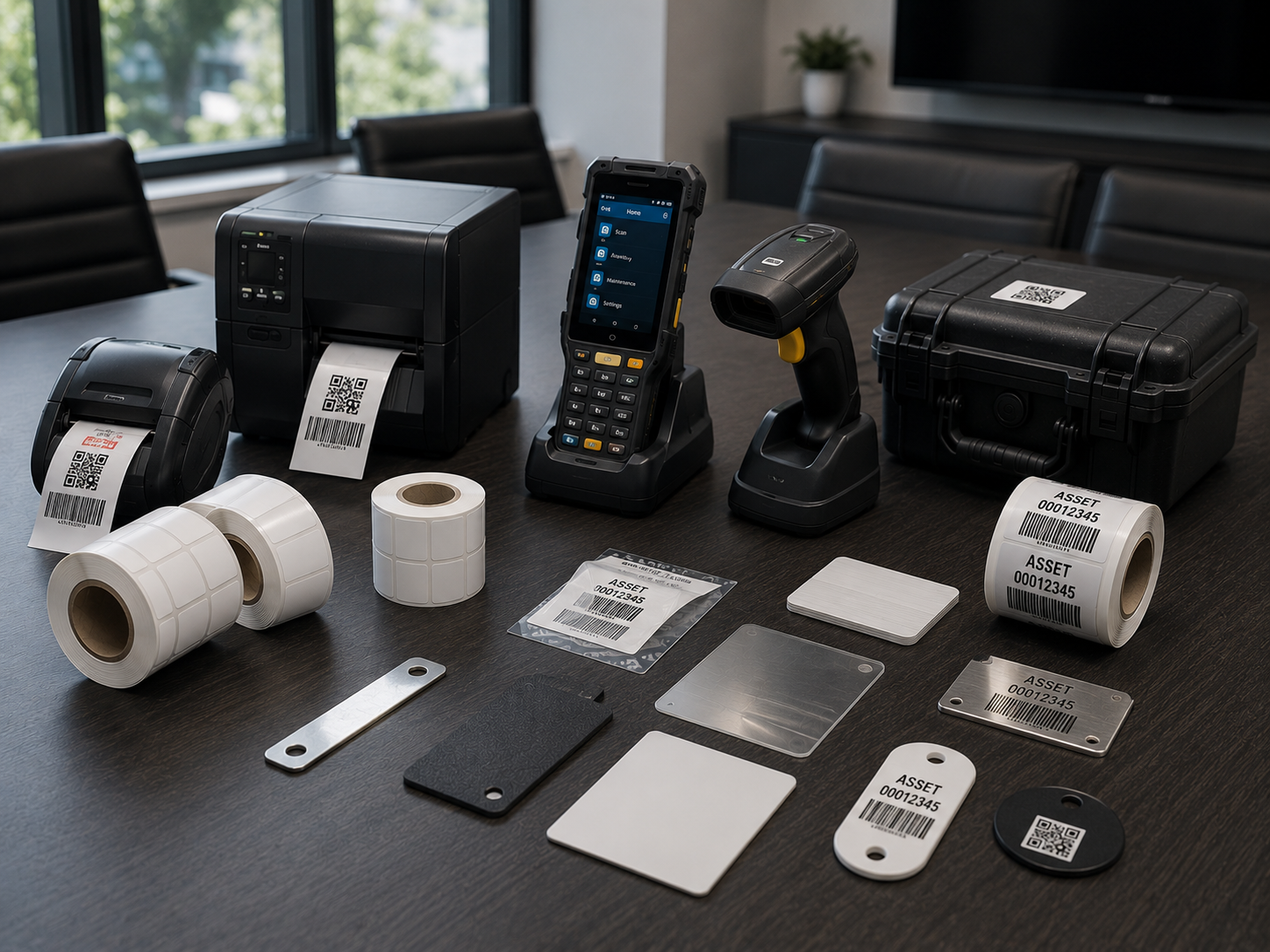
Barcode, QR, RFID, NFC and durable tag constructions each solve different problems. RLG Engineered helps customers match the technology, material and format to the asset, environment and operational workflow.
Barcode Asset Labels
Reliable and cost-effective identification for assets that can be scanned directly and managed through existing inventory, maintenance or audit systems.
QR Code Asset Tags
Useful when the identifier needs to connect people to more information, including service records, manuals, maintenance history or asset documentation.

RFID Asset Tags
Best suited when assets need to be identified without direct line-of-sight, scanned more quickly or managed across larger operational environments.

NFC-Enabled Identification
Supports tap-based access to digital records, instructions, authentication, product information or mobile workflows tied to a specific physical asset.
Tamper-Evident Tags
Helps protect higher-value assets by showing evidence of removal, transfer or alteration when chain of custody or asset control matters.
Metal & Durable Tags
Rugged options for equipment, fixtures, tools and assets exposed to abrasion, outdoor conditions, cleaning, heat or extended service life.
The Conditions Come First
The tracking method should follow the asset environment.
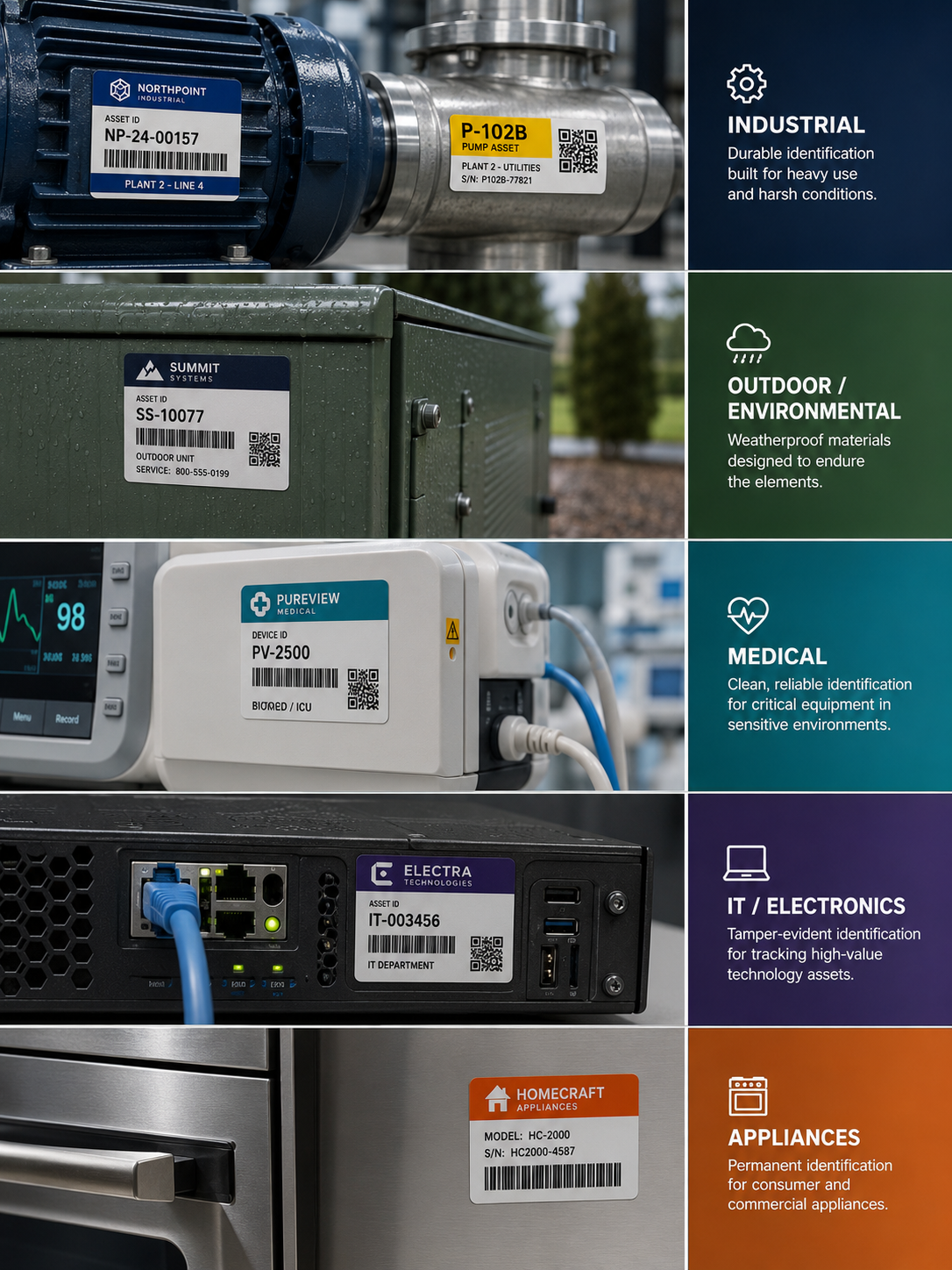
An asset tag is only useful if it survives where the asset actually lives. Surface material, texture, cleaning process, temperature, abrasion, moisture, UV exposure and handling frequency can all influence the best construction.
Surface and adhesion
Powder coatings, plastics, metals, textured finishes and curved surfaces can each require different adhesive strategies.
Scan method and distance
Barcode, QR, RFID and NFC each carry different requirements for scanning workflow, reader technology and data capture.
Environmental exposure
Outdoor use, chemicals, abrasion, moisture, cleaning agents and temperature swings can affect legibility and adhesion.
Asset lifecycle
The tag may need to last through acquisition, deployment, maintenance, relocation, audit cycles and retirement.
Security and control
Tamper-evident, destructible, hidden, serialized or connected identification features can help protect higher-value assets.
Visibility Framework
Operational visibility depends on four things.
The goal is a reliable connection between the physical asset and the information needed to manage it throughout its lifecycle.
Location
Where is it?
Support visibility across facilities, departments, jobsites, warehouses and supply chains using barcode, QR or RFID-enabled identification.
Condition
Is it serviceable?
Connect assets to inspection status, calibration schedules, maintenance records, cleaning cycles and service history.
Ownership
Who is responsible?
Support accountability, custody, department assignment, asset transfers and audit workflows across locations and teams.
History
What has happened?
Create a durable link to lifecycle records, movement, repairs, inspections, compliance documentation and retirement decisions.

RLG Engineered Approach
The identification method is only part of the solution.
Many asset identification programs begin by choosing a label, tag or tracking technology. RLG Engineered starts by understanding the operational objective: what needs to be located, who needs access to the data, how the asset will be scanned and how long the identifier must perform.
Whether the goal is location, condition, ownership, history or all four, we help align the identification method, material construction, attachment strategy and durability requirements with the real asset environment.
That approach helps customers avoid overbuilding simple programs, underbuilding demanding applications and selecting technologies that do not match the workflow.
The result is an asset identification system designed to support operational visibility, not just a scannable code.
Failure Points
Where asset identification programs typically fail.
Most asset tracking problems start before the label is produced. Programs lose value when identification methods are selected without considering environment, workflow, ownership and long-term data requirements.
The label does not last
The material, adhesive or print system fails before the asset reaches the end of its useful life.
The code is hard to scan
Poor placement, abrasion, low contrast, curvature or scan distance can reduce readability and workflow adoption.
The system is overbuilt
RFID or NFC may be valuable, but not every asset requires advanced technology when barcode or QR identification can solve the need.
The data falls out of sync
Labels and tags only work when the identifier connects cleanly to accurate asset records and operational workflows.
Departments use different standards
Inconsistent identification formats can make audits, ownership and reporting harder than they need to be.
The environment was ignored
Cleaning agents, UV, abrasion, moisture, temperature and surface energy can all undermine a poorly matched construction.
Application Range
Where asset identification has to perform.
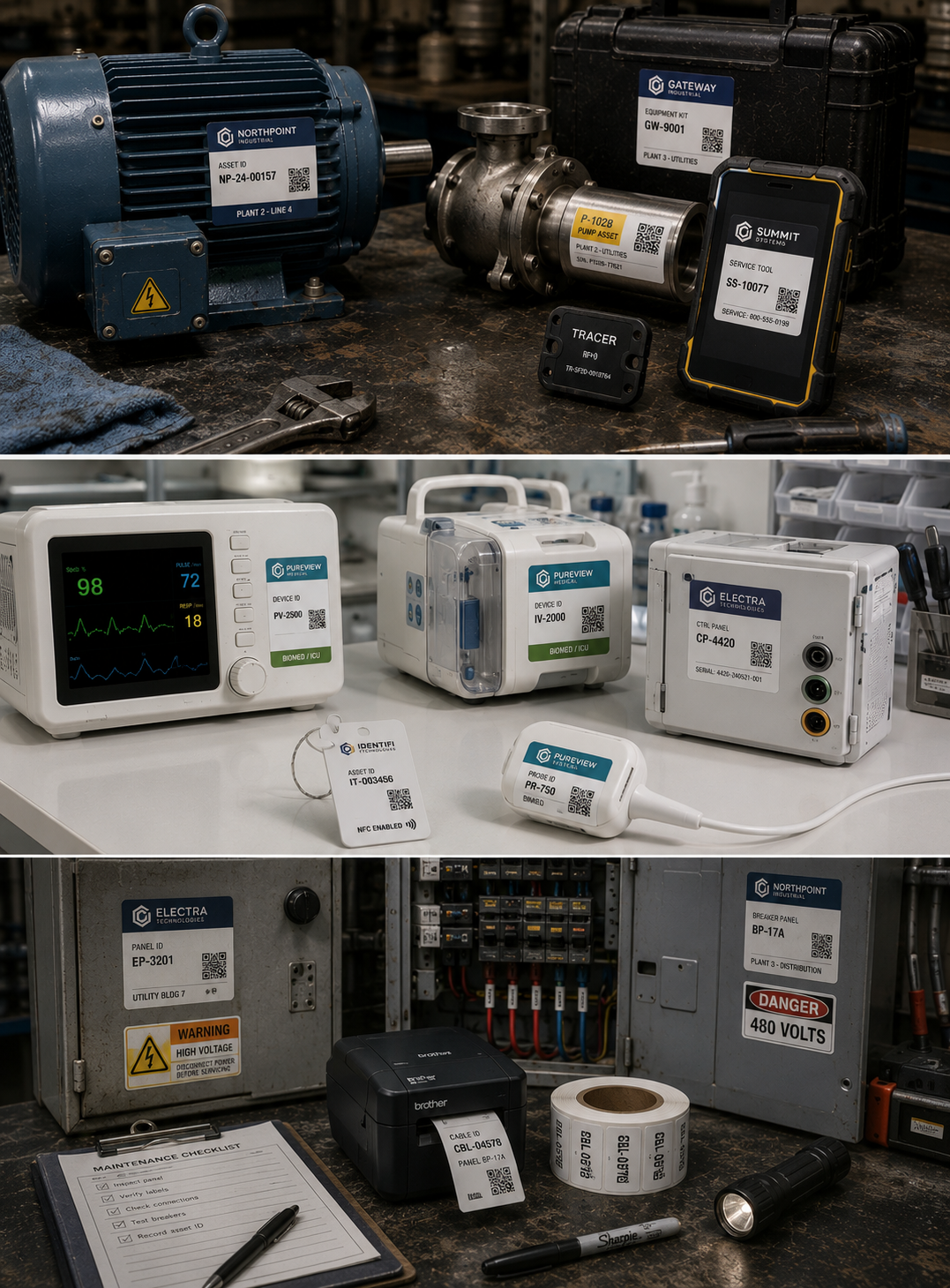
Asset tracking and identification support organizations where equipment, devices, tools, inventory and fixed assets need to stay visible, accountable and connected to useful records.
Industrial Equipment & Machinery
Track maintenance history, service records, calibration schedules and equipment location across manufacturing environments.
Medical & Laboratory Devices
Support traceability, inventory control, documentation and UDI-adjacent identification for regulated or sensitive equipment.
Fleet & Transportation Assets
Identify vehicles, trailers, service equipment, containers and mobile assets exposed to weather, handling and field use.
IT & Technology Assets
Track servers, network equipment, devices, instruments and deployed technology across departments and facilities.
Facilities & Operations
Manage tools, furniture, fixtures, safety equipment, maintenance assets and facility resources through durable identification.
Warehousing & Distribution
Improve inventory visibility, audit accuracy, parcel identification, pallet tracking and movement through operational environments.
RFID Bridge
When visibility extends beyond line-of-sight.
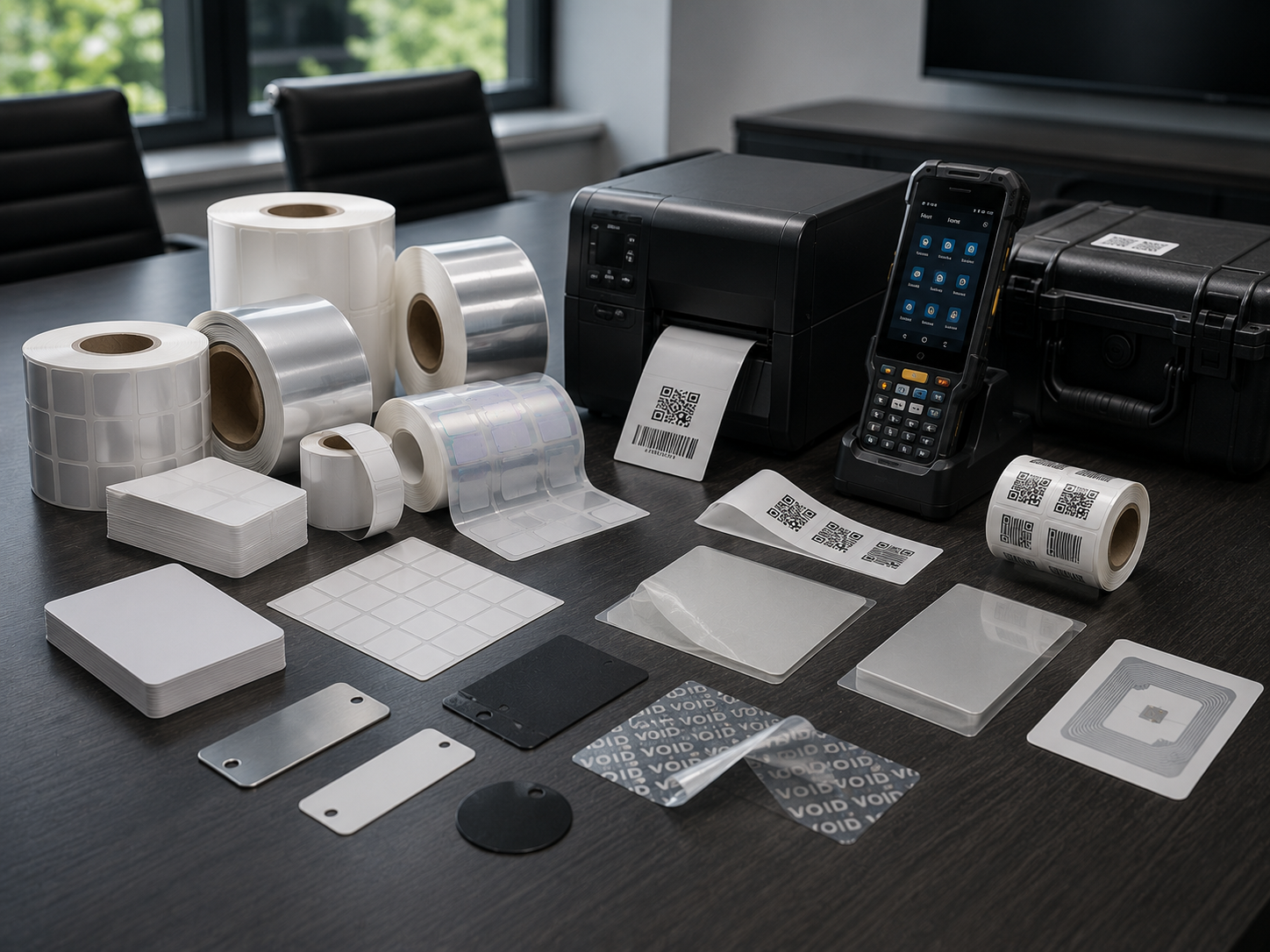
Some asset tracking programs need more than direct scanning. RFID can enable non-line-of-sight reads, faster item-level capture and broader visibility when the application, environment, readers and data system are aligned.
Because RFID can quickly become its own technical discussion, this page treats RFID as one asset identification option. For a deeper look at RFID labels, encoding, inlays and implementation, visit the dedicated RFID resource.
Related RLG Engineered Solutions
When asset identification is part of a broader product requirement.
Asset tracking needs often connect to durable identification, compliance labeling, precision converted components, RFID programs and engineered constructions. RLG Engineered helps support these related requirements through one connected platform.
Asset Tracking FAQ
Questions worth answering before an asset identification program begins.
The right asset tag is defined by what needs to be tracked, where it will be used, how it will be scanned and how long the identifier needs to perform.
What is asset tracking and identification?
Asset tracking and identification assigns a unique identifier to a physical asset so it can be connected to information such as location, ownership, condition, maintenance history, audit status and lifecycle records.
What is the difference between barcode, QR, RFID and NFC asset tags?
Barcode and QR codes are visual identifiers scanned directly with a reader or mobile device. RFID uses radio-frequency technology for non-line-of-sight reads when paired with the right system. NFC supports short-range tap interactions, often used for connected information access, authentication or user engagement.
How do I choose the right asset tag material?
Material selection should start with the asset surface, use environment, handling, exposure conditions, expected service life and scanning method. Polyester, vinyl, metal, tamper-evident, laminated and RFID-enabled constructions each serve different requirements.
Can asset labels be tamper evident?
Yes. Tamper-evident, destructible or security-focused constructions can help reveal removal, alteration or unauthorized transfer. The right approach depends on the asset value, security requirement and surface.
Can asset tags support medical device or UDI-related tracking?
Asset identification can support medical device traceability, inventory visibility and UDI-adjacent workflows when the data structure, construction and documentation requirements are defined early in the program.
When should I consider RFID for asset tracking?
RFID may be useful when assets need to be read without direct line-of-sight, scanned in groups, tracked more quickly or integrated into a broader system. Barcode or QR identification may be sufficient when direct scanning is practical and cost-effective.

Talk With RLG Engineered
Need an asset tracking and identification solution built around real operating conditions?
Bring us the asset, surface, environment, scanning workflow, data requirement and lifecycle expectation. From location and ownership to condition and maintenance history, RLG Engineered can help define the right label, tag, material and tracking construction.