Understanding TTB Wine Label Requirements
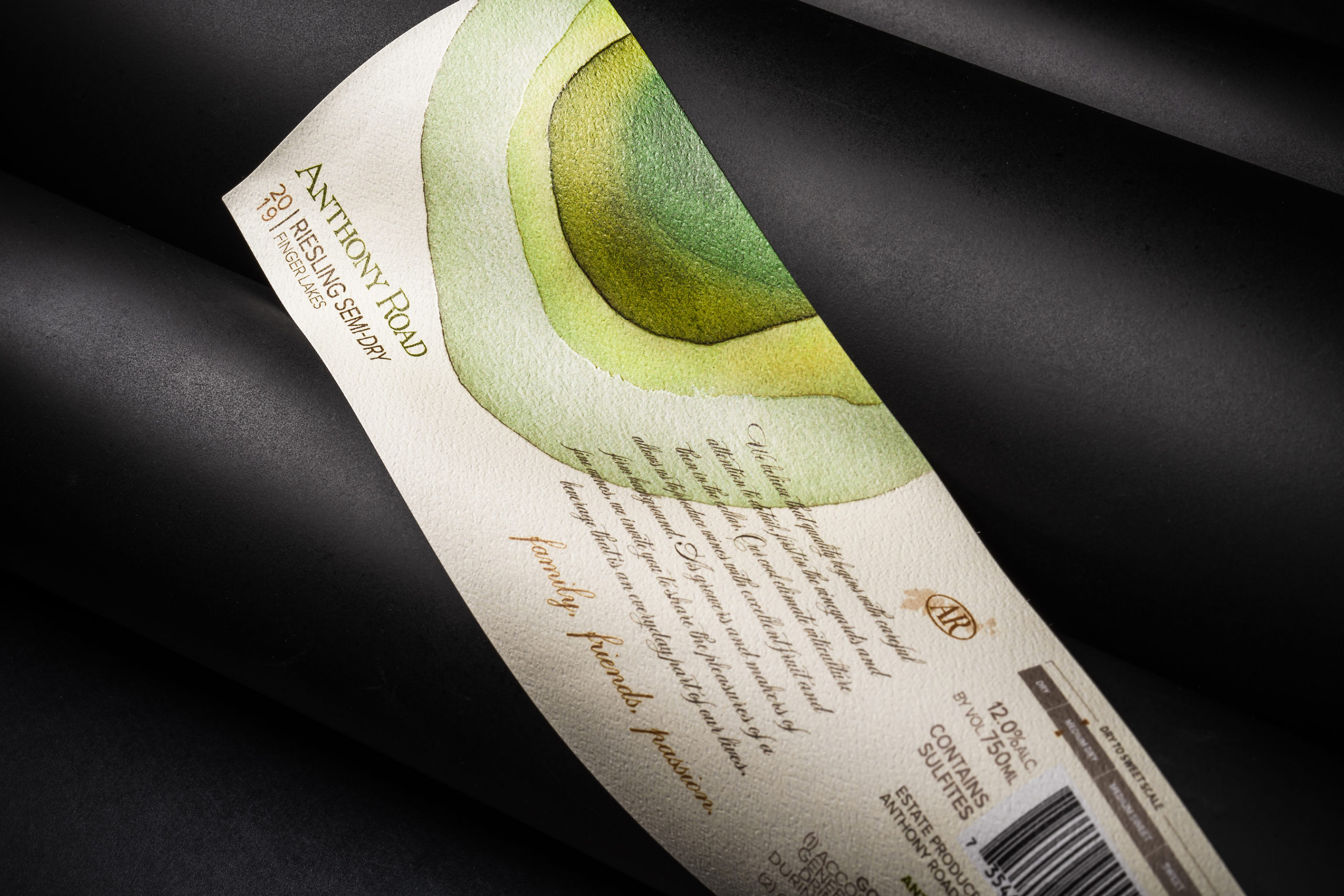
Wine labels in the United States must include certain required information so consumers, regulators, distributors, and retailers can identify what the product is, who bottled or imported it, how much wine is in the container, and what required warnings or declarations apply.
For most wines sold in the U.S. that are regulated by the Alcohol and Tobacco Tax and Trade Bureau, or TTB, required wine label information may include the brand name, class or type designation, appellation of origin when applicable, alcohol content, name and address, net contents, sulfite declaration, health warning statement, and other required or conditional details depending on the wine.
Because wine label requirements can vary by alcohol content, origin, formula, import status, production method, and label claims, this guide should be used as a general overview rather than a substitute for official TTB guidance or legal compliance review. Always confirm current requirements with TTB before submitting a Certificate of Label Approval, or COLA, and before printing your final wine labels.
Quick Answer: What Information Is Required on a Wine Label?
U.S. wine labels commonly need to show the wine’s brand name, class or type, name and address, net contents, alcohol content when required, health warning statement, and sulfite declaration when applicable. Some labels may also need an appellation of origin, country of origin for imported wines, percentage of foreign wine for certain blends, or certain ingredient disclosures, depending on the product and label claims.
The easiest way to approach wine label compliance is to treat the label as two connected parts: the required compliance information and the brand design. A successful wine label needs enough space, contrast, type size, and layout planning to satisfy required label information while still supporting the look and story of the wine brand.
In this guide, we’ll walk through the main TTB wine label requirements, explain which information is required or conditional, and highlight design and printing considerations that can affect your final wine label.
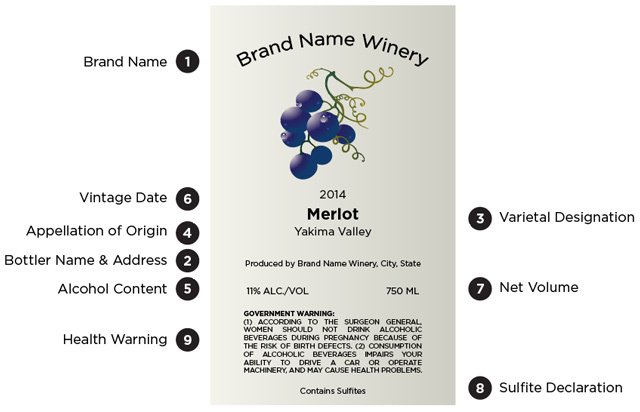
TTB Wine Label Requirements Checklist
Wine label requirements can vary depending on the wine’s alcohol content, origin, import status, formula, and label claims. However, TTB guidance generally separates mandatory wine label information into two groups: information that must appear on the brand label and information that may appear on any label, such as the front label, back label, or side label.
The checklist below summarizes common required and conditional wine label information for U.S. wine labels. It is not a substitute for TTB review, COLA requirements, or legal compliance guidance, but it can help organize the main elements that should be considered before label design and printing.
| Wine Label Element | Required or Conditional? | Where It May Need to Appear | What It Identifies |
|---|---|---|---|
| Brand name | Required | Brand label | The name under which the wine or wine brand is marketed. |
| Class or type designation | Required | Brand label | The type of wine in the container, such as red wine, white wine, table wine, sparkling wine, or another approved class/type designation. |
| Appellation of origin | Conditional | Usually brand label when required | The geographic origin of the wine, such as a country, state, county, or American Viticultural Area, when required by the label claim or wine designation. |
| Vintage date | Conditional | Must be used with required origin information when shown | The year associated with the grapes used to make the wine, when the label includes a vintage claim. |
| Varietal designation | Conditional | Often brand label when used as the class/type designation | The grape variety or varieties named on the label, such as Cabernet Sauvignon, Merlot, Chardonnay, or Riesling. |
| Alcohol content | Required or conditional, depending on the wine | Any label | The alcohol content by volume, when required, or an approved class/type designation such as table wine when allowed. |
| Name and address | Required | Any label | The required bottler, packer, importer, or other responsible party information, depending on how and where the wine is produced, bottled, packed, or imported. |
| Net contents | Required | Any label or the container itself, when allowed | The amount of wine in the container, such as 750 mL. |
| Sulfite declaration | Conditional | Any label | A declaration such as “Contains Sulfites” when sulfur dioxide or sulfiting agents are present at the required threshold. |
| Health warning statement | Required for applicable alcohol beverages | Any label | The required government warning statement for alcohol beverages sold or distributed in the United States. |
| Country of origin | Conditional | Imported wine labels, as applicable | The country of origin information required for imported wines. |
| Color ingredient disclosure | Conditional | As required by the ingredient or color additive used | A disclosure required when certain color ingredients are used in the wine. |
This checklist is a starting point. A wine label may need additional review if it includes claims about origin, grape variety, vintage, estate bottling, production method, organic status, sweetness, nutrition, allergens, ingredients, or other statements that may trigger additional requirements.
Before printing, wineries should confirm which information is required for their specific wine, where each item must appear, whether a COLA is required, and whether the final label artwork satisfies TTB formatting, legibility, and type-size rules.
Who Regulates Wine Labels in the United States?
Wine label requirements in the United States depend on the type of wine, alcohol content, where the wine is produced, and whether the wine is imported. For many wines sold in the U.S., the primary federal regulator is the Alcohol and Tobacco Tax and Trade Bureau, commonly known as TTB.
TTB regulates labeling for many wine products under the Federal Alcohol Administration Act and the wine labeling regulations in 27 CFR part 4. These rules are designed to help ensure that wine labels are truthful, not misleading, and provide consumers with required information about the product.
For domestic wines that contain 7% or more alcohol by volume, TTB labeling requirements generally apply. These wines may also require a Certificate of Label Approval, or COLA, before the label can be used in the marketplace.
For domestic wines that contain less than 7% alcohol by volume, TTB’s FAA Act wine labeling rules generally do not apply in the same way. These products may instead be subject to U.S. Food and Drug Administration food labeling requirements, along with other applicable rules.
Imported wines may have additional requirements. In addition to TTB wine labeling requirements, imported wine labels may also need to comply with U.S. Customs and Border Protection country-of-origin marking requirements and other import-related rules.
Because jurisdiction can change based on alcohol content, product type, formula, origin, and import status, wineries and beverage brands should confirm which rules apply before submitting label artwork or starting production.
What Is a COLA for Wine Labels?
A COLA is a Certificate of Label Approval. For wine labels that require TTB approval, a COLA confirms that the submitted label has been reviewed for compliance with applicable federal labeling requirements.
A COLA review is not the same as a full packaging or brand review. It focuses on whether the label meets applicable regulatory requirements. Before submitting a wine label for approval, brands should review required label information, formatting, type size, placement, and any claims that may require additional documentation or formula approval.
Common reasons a wine label may need extra review include:
- appellation of origin claims
- vintage dates
- varietal designations
- imported wine statements
- sulfite declarations
- health warning formatting
- organic claims
- flavor, formula, or non-standard wine statements
- color ingredient disclosures
- claims that could be interpreted as misleading or unsupported
For label design and printing, this means compliance should be considered early in the creative process. Required information can affect the label layout, back label copy, type size, spacing, contrast, and final artwork approval timeline.
Required Wine Label Information
Required wine label information helps identify the product, the responsible bottler or importer, the amount of wine in the container, and any required declarations or warnings. Some information must appear on the brand label, while other information may appear on another label, such as the back label or side label.
The exact requirements depend on the wine, but the following elements are commonly reviewed when preparing a U.S. wine label for compliance and printing.
Brand Name
The brand name is the name under which the wine is marketed. It is one of the core pieces of required wine label information and typically appears prominently on the front label.
If a wine does not have a separate brand name, the name of the bottler, packer, or producer may serve as the brand name. The brand name should be clear, legible, and consistent with the rest of the label artwork.
From a design standpoint, the brand name is often one of the most important visual elements on a wine label. However, it still needs to work within the required layout, type-size, and legibility rules that apply to the finished label.
Class or Type Designation
The class or type designation tells consumers what kind of wine is in the bottle. This may be a general designation such as red wine, white wine, table wine, sparkling wine, or another approved class or type depending on the product.
In some cases, a varietal designation such as Cabernet Sauvignon, Merlot, Chardonnay, or Riesling may be used as part of the class or type information when the wine meets the applicable requirements. When a varietal is used, other information, such as appellation of origin, may also be required.
This information is important because a fanciful name or brand name does not replace the required class or type designation. For example, a creative name for the wine may support the brand story, but the label still needs to identify the wine in a way that satisfies the applicable labeling rules.
Appellation of Origin
An appellation of origin identifies where the wine comes from. This may be a country, state, county, or American Viticultural Area, depending on the wine and the claim being made.
Appellation information is conditional, meaning it is not always required in the same way for every wine. However, it may be required when the label uses certain claims, such as a varietal designation, vintage date, or geographic reference.
Because origin claims can affect how consumers understand the wine, wineries should confirm that the stated appellation is accurate and that the wine meets the requirements for using that geographic designation.
Name and Address
Wine labels must include required name and address information for the responsible party. For domestic wines, this may include the bottler or packer name, city, and state, with the appropriate phrase such as “Bottled by” or “Packed by.”
Other phrases, such as “Produced by,” “Vinted by,” “Blended by,” or “Made by,” may be used only when they accurately describe the production or bottling arrangement. These terms are not interchangeable, so the correct wording should be confirmed before the label is finalized.
For imported wines, the label may also need importer information, including the name and address of the importer or other responsible party. Imported wine labels may have additional country-of-origin and import-related requirements.
Alcohol Content
Alcohol content tells consumers the amount of alcohol in the wine, usually expressed as alcohol by volume. Depending on the wine’s alcohol content and class/type designation, a numerical alcohol content statement may be required.
Alcohol content is especially important for wines above certain thresholds and for labels where the class/type designation does not already satisfy the applicable requirement. The wording, abbreviation, type size, and formatting should be reviewed before the label is printed.
Because alcohol-content rules can be specific, brands should avoid guessing at the correct format. A small wording or formatting issue can create problems during label review or production.
Net Contents
Net contents identify how much wine is in the container. For many wine bottles, this is stated in milliliters, such as 750 mL.
Net contents may appear on a label or, when allowed, may be shown on the container itself through a visible bottle marking. The statement should be clear, legible, and placed where it will not be obscured by the label design, bottle shape, capsule, packaging, or other product elements.
For label planning, net contents should be considered early because the required statement needs enough space and contrast to remain readable on the final package.
Sulfite Declaration
A sulfite declaration may be required when sulfur dioxide or sulfiting agents are present at the applicable threshold. The most common statement is “Contains Sulfites.”
This information often appears on the back label with other compliance details, but the placement and formatting still need to be considered as part of the full label layout.
If a wine requires a sulfite declaration, the wording should be clear and should not be hidden in decorative elements, low-contrast areas, or crowded back-label copy.
Government Health Warning Statement
Alcohol beverages sold or distributed in the United States generally require a government health warning statement when the product meets the applicable alcohol-content threshold.
The health warning statement has required wording and formatting rules. Because the statement is usually longer than other required wine label information, it can affect the back label layout, available copy space, type size, and visual balance of the label.
For that reason, the health warning should not be treated as an afterthought. It should be built into the label design from the beginning so the final label remains compliant, legible, and visually organized.
Country of Origin for Imported Wines
Imported wine labels may need to include country-of-origin information and other import-related statements. These requirements can vary based on where the wine is produced, bottled, and imported from.
For imported wine programs, brands should confirm both TTB requirements and any applicable U.S. Customs and Border Protection marking requirements before finalizing the label artwork.
Country-of-origin and importer statements can affect back-label copy, spacing, and compliance review, especially when the label also includes required warnings, sulfite declarations, alcohol content, and marketing claims.
Color Ingredient Disclosures, If Applicable
Some wines may require a color ingredient disclosure if certain color additives are used. This is not required for every wine, but it should be considered during compliance review when the product includes ingredients or processing details that may trigger additional label statements.
Like other conditional information, color ingredient disclosures should be confirmed before printing. If required, the disclosure needs to be incorporated into the final label in a way that is accurate, legible, and consistent with the rest of the required information.
These required and conditional elements are the foundation of wine label compliance. Once they are identified, the next step is to understand which optional claims or design choices may trigger additional requirements.
Conditional Wine Label Claims and Information
Not every piece of wine label information is required for every wine. Some details are optional until they are used on the label. Once they appear, they may trigger additional requirements for wording, placement, supporting information, or documentation.
This is especially important for wine labels that include a vintage date, grape variety, appellation of origin, fanciful name, blend information, estate or production claims, flavor statements, or other marketing language. These details can help tell the story of the wine, but they need to be accurate and consistent with applicable TTB rules.
Vintage Date
A vintage date identifies the year associated with the grapes used to make the wine. Vintage dates are common on wine labels, but they are not simply decorative. When a vintage date appears on a wine label, it can trigger additional origin requirements.
For example, if a wine label includes a vintage date, the label may also need to include an appellation of origin. This helps connect the vintage claim to where the grapes were grown and supports the accuracy of the label information.
From a design perspective, the vintage date is often placed near the brand name, varietal designation, or appellation. Before finalizing the design, confirm that the vintage date is accurate, allowed for the wine, and supported by the required origin information.
Varietal Designation
A varietal designation identifies the grape variety named on the label, such as Cabernet Sauvignon, Merlot, Chardonnay, Pinot Noir, Sauvignon Blanc, or Riesling. A varietal name can help consumers understand the style of wine, but it can also carry specific labeling requirements.
When a grape variety is used as the class or type designation, the wine generally needs to meet the applicable requirements for using that varietal name. The label may also need an appellation of origin in the required location.
If more than one grape variety is listed as the type designation, the label may need to show the percentage of each grape variety, and those percentages must add up to 100%.
Because varietal claims are tied to both composition and origin, they should be reviewed before label design is finalized. A label can look complete visually while still missing required supporting information for the varietal claim.
American Viticultural Area and Appellation Claims
An appellation of origin identifies where the grapes were grown. This may be a country, state, county, or American Viticultural Area, depending on the claim and the wine.
American Viticultural Area, or AVA, claims can be valuable for wine branding because they connect the product to a recognized growing region. However, geographic claims must be accurate and supported by the wine’s composition, records, and applicable requirements.
If the label uses a grape variety, vintage date, semi-generic designation, or certain origin-related claims, an appellation of origin may be required. When it is required, placement matters. The appellation may need to appear with the class or type designation on the brand label.
For two-piece label designs, this becomes especially important. If the front label and back label divide brand, varietal, vintage, and origin information, the design should be reviewed to make sure required elements appear together where required.
Fanciful Name
A fanciful name is a creative or proprietary name used for the wine. It may support the brand story, product line, seasonal theme, or marketing concept.
However, a fanciful name does not replace the required class or type designation. For example, a name such as “Sunset Reserve” or “Harvest Moon” may help identify the product line, but the label still needs to identify the wine with an acceptable class or type designation when required.
Fanciful names should also avoid misleading consumers about the wine’s origin, composition, grape variety, age, production method, or quality. If the name could imply a claim, the brand should confirm whether additional support or label wording is needed.
Multiple Varietals or Blends
Wine blends may include more than one grape variety. If multiple varietals are listed on the label as the wine’s type designation, the label may need to show the percentage of each variety and the percentages should total 100%.
This can affect both compliance copy and label layout. A front label with a blend name may still need additional varietal percentage information, class/type wording, or origin information depending on how the wine is presented.
For labels with limited space, such as small bottles or premium front labels with minimal copy, blend information may need to be carefully planned between the front label and back label. The goal is to keep the required information legible without crowding the brand design.
Non-Standard Wines and Formula Approval
Some wine products do not fit standard wine categories or include ingredients, flavors, colors, or production methods that may require formula review before label approval. These products may need a truthful and adequate statement of composition on the brand label.
Formula-related requirements can affect the class or type designation, label wording, ingredient-related statements, and whether certain optional claims are allowed. In some cases, the product description suggested or accepted during formula review must align with the final label.
For wine specialty products, flavored wines, or other non-standard wine products, compliance should be reviewed before the label design is finalized. The required statement of composition may need prominent placement and enough space to remain readable on the finished label.
Optional Marketing Claims
Wine labels often include optional claims such as estate bottled, reserve, organic, sustainable, barrel aged, limited release, single vineyard, old vine, low alcohol, or other brand-driven statements. These claims can help position the wine, but they should be reviewed before printing.
Optional claims should be truthful, accurate, specific, and not misleading. They should not conflict with required label information or imply something about the wine that cannot be supported.
Before including optional marketing language, confirm whether the claim triggers additional documentation, placement rules, wording requirements, or third-party certification requirements.
Conditional label information is one of the most common areas where wine label design and compliance overlap. The earlier these details are identified, the easier it is to build a label that is both visually effective and ready for review, approval, and printing.
Wine Label Type Size and Legibility Requirements
Wine label compliance is not only about what information appears on the label. It also matters how that information appears. Required wine label information must be legible, placed on a contrasting background, and printed at the required minimum type size.
Type size requirements are different from physical wine label dimensions. A wine label may be tall, narrow, wraparound, front-and-back, or custom-shaped, but the required information still needs to be large enough and clear enough to read under ordinary conditions.
General Type Size Requirements
For many mandatory wine label statements under TTB wine labeling rules, the general type-size requirements are:
| Container Size | General Minimum Type Size for Mandatory Information | Notes |
|---|---|---|
| Containers larger than 187 mL | At least 2 mm | Applies to many mandatory wine label statements, except alcohol content and the government health warning statement, which have separate rules. |
| Containers of 187 mL or less | At least 1 mm | Applies to many mandatory wine label statements, except alcohol content and the government health warning statement, which have separate rules. |
If mandatory information appears within other descriptive or explanatory text, it may need to be substantially more conspicuous than the surrounding copy. This is important for back labels that include storytelling, tasting notes, food pairings, production details, or marketing copy near required information.
Alcohol Content Type Size
Alcohol content has its own formatting and type-size rules. For wine containers of 5 liters or less, the alcohol content statement must generally be at least 1 mm and no more than 3 mm in type size.
The alcohol content statement must also be readily legible and appear on a contrasting background. It should not be set off with a border or otherwise made more prominent than allowed.
TTB allows specific formats for alcohol content statements, but not every abbreviation is acceptable. For example, “alc.” and “vol.” may be used to abbreviate alcohol and volume, but “ABV” is not allowed on wine labels under TTB’s alcohol-content formatting guidance.
Government Warning Type Size
The government health warning statement has separate requirements. The type size depends on the container size:
| Container Size | Minimum Type Size for Health Warning | Maximum Characters Per Inch |
|---|---|---|
| 237 mL or less | At least 1 mm | 40 characters per inch |
| More than 237 mL up to 3 L | At least 2 mm | 25 characters per inch |
| More than 3 L | At least 3 mm | 12 characters per inch |
The words “GOVERNMENT WARNING” must appear in capital letters and bold type, while the rest of the warning statement may not appear in bold type. The warning must appear as a continuous paragraph, separate and apart from other information, and on a contrasting background.
Why Type Size Matters for Wine Label Design
Type size requirements can affect more than compliance. They can influence the entire wine label layout, especially when a label needs to include required information, brand storytelling, tasting notes, origin details, QR codes, barcodes, sustainability statements, importer information, or multilingual copy.
Small bottles, narrow back labels, dark backgrounds, textured materials, metallic papers, foils, embossing, and decorative typefaces can all make required information harder to read. A label may look beautiful in a design file but become difficult to read once it is printed on the final material and applied to a curved bottle.
Before printing, wineries should review the final artwork at actual size. Required information should be checked for type size, contrast, spacing, placement, and legibility on the finished label material.
For custom wine labels, it is often best to plan the compliance information before finalizing the creative layout. This helps prevent last-minute design changes, delayed approvals, or reprints caused by missing, crowded, or hard-to-read required information.
Government Warning, Sulfite, and Alcohol Content Rules
Some wine label requirements deserve extra planning because they can affect the layout, available space, wording, and compliance review process. The government health warning statement, sulfite declaration, and alcohol content statement are three of the most common areas where compliance and label design overlap.
These statements often appear on the back label, but they still need to be legible, properly formatted, and easy to identify. They should not be squeezed into the design at the last minute or placed in a way that makes them difficult to read on the finished bottle.
Government Warning Statement for Wine Labels
Alcohol beverages sold or distributed in the United States that contain at least 0.5% alcohol by volume generally need to include the required government health warning statement.
The required warning statement begins with “GOVERNMENT WARNING” and includes language about pregnancy, birth defects, impaired driving or machinery operation, and possible health problems. The warning has specific wording and formatting requirements, so wineries should not rewrite, shorten, paraphrase, or restyle it in a way that changes the required statement.
The health warning statement may appear on the front label, back label, or side label. In wine packaging, it commonly appears on the back label with other required information such as the sulfite declaration, alcohol content, bottler or importer information, and net contents.
From a design standpoint, the health warning is important because it is longer than many other required statements. It needs enough space to remain readable at the required type size and should appear separate and apart from other information. If the back label also includes tasting notes, food pairings, QR codes, UPC codes, production details, or brand storytelling, the warning should be planned into the layout early.
Sulfite Declaration Requirements
A sulfite declaration is required when sulfur dioxide or a sulfiting agent is detected at 10 or more parts per million, measured as total sulfur dioxide. The most common label statement is “Contains Sulfites.”
The sulfite declaration may appear on any label. For many wine bottles, it appears on the back label near the government warning statement and other compliance information.
If a wine contains less than 10 ppm total sulfur dioxide, a sulfite declaration may not be required. However, TTB may require laboratory analysis before approving a label that does not include a sulfite declaration, unless the wine falls into a category where different rules apply. Because sulfite levels can vary by batch, production method, or vintage, wineries should confirm the correct approach before removing the declaration from a label.
Wineries should also be careful with “sulfite free” style claims. TTB guidance does not permit statements such as “sulfite free,” “free of sulfites,” or “contains no sulfites.” If a winery wants to make a sulfite-related statement, the wording should be reviewed carefully before artwork is submitted or printed.
Alcohol Content Requirements
The alcohol content statement tells consumers the percentage of alcohol by volume in the wine. For wines over 14% alcohol by volume, a numerical alcohol content statement is mandatory.
For wines between 7% and 14% alcohol by volume, a numerical alcohol content statement may be optional if the brand label includes an allowed class or type designation such as “table wine” or “light wine.” However, many brands still choose to include numerical alcohol content for clarity, retailer expectations, or packaging consistency.
Alcohol content may appear as a specific number or, when allowed, as a range. It may appear on any label of the container, but it must be formatted correctly and remain readily legible on a contrasting background.
TTB allows certain alcohol-content wording formats, such as “Alc. 13.5% By Vol.” or “13.5% Alc. by Vol.” The abbreviations “alc.” and “vol.” may be used for alcohol and volume, but “ABV” is not allowed as the wine label alcohol content abbreviation under TTB guidance.
For containers of 5 liters or less, the alcohol content statement generally must be at least 1 mm and no more than 3 mm in type size. This range can affect label layout, especially on smaller bottles or designs with limited back-label space.
Design Tips for Required Statements
Government warning, sulfite, and alcohol content statements are often small compared with the brand name and front-label design, but they play an important role in compliance. Before printing, review the final label artwork at actual size and confirm that required statements are readable on the final material.
When planning these statements, consider:
- whether the back label has enough room for required information
- whether the type size meets the applicable requirement
- whether the text appears on a contrasting background
- whether decorative fonts or textures affect legibility
- whether the label material, foil, varnish, or embossing changes readability
- whether curved bottle surfaces make the text harder to read
- whether required statements are separated clearly from marketing copy
A strong wine label design leaves room for both brand expression and required information. Planning compliance copy early can help avoid crowded back labels, delayed approvals, or last-minute artwork changes before printing.
Common Wine Label Compliance Mistakes
Wine label compliance issues often happen when required information is treated as a final production detail instead of part of the design process. A label may look finished from a branding perspective but still need changes before it is ready for submission, approval, or printing.
Many mistakes can be avoided by identifying required and conditional information early, reviewing the label at actual size, and confirming that the final artwork matches the wine’s class, origin, alcohol content, ingredients, and claims.
Missing Required Label Information
One of the most common wine label mistakes is leaving out required information. This may include the brand name, class or type designation, name and address, net contents, alcohol content when required, sulfite declaration when applicable, or government health warning statement.
Required information should be reviewed before the artwork is finalized. Adding compliance copy after the design is complete can lead to crowded layouts, poor readability, delayed approval, or rework before printing.
Using the Wrong Class or Type Designation
The class or type designation tells consumers what kind of wine is in the bottle. A brand name, fanciful name, vineyard name, or product line name does not replace the required class or type designation.
For example, a creative wine name may support the brand story, but the label still needs to identify the product using an acceptable designation when required. If the wine uses a varietal name, blend description, or specialty product description, the class/type language should be reviewed carefully.
Forgetting Appellation Requirements
Appellation of origin is conditional, but it becomes important when the label includes certain claims, such as a varietal designation, vintage date, or geographic reference.
A label may need to show the appropriate origin information in the required location. For two-piece wine label designs, this can affect whether the front label and back label divide information correctly. If a varietal, vintage, and appellation need to appear together, the layout should be reviewed before printing.
Incorrect Vintage or Varietal Claims
Vintage dates and varietal designations can add value to a wine label, but they also need to be accurate and supported. If a label includes a vintage date, grape variety, or multiple varietals, the wine must meet the applicable requirements for those claims.
For blends, listing multiple grape varieties may require showing the percentage of each variety. If those details are missing, unclear, or inconsistent with production records, the label may need to be revised.
Health Warning Formatting Problems
The government health warning statement has required wording and formatting rules. Mistakes can happen when the warning is rewritten, shortened, placed too close to unrelated copy, printed too small, or styled in a way that affects readability.
Because the warning statement is relatively long, it should be built into the back label layout early. It needs adequate space, contrast, and separation from other copy so it remains readable on the finished bottle.
Missing or Incorrect Sulfite Declaration
If a sulfite declaration is required, it should be included clearly on the label. The most common statement is “Contains Sulfites.”
Problems can occur when the declaration is omitted, hidden in crowded back-label copy, or replaced with unsupported sulfite-related claims. Wineries should be especially careful with wording that implies a wine is “sulfite free” or contains no sulfites.
Alcohol Content Wording or Abbreviation Issues
Alcohol content statements need to follow accepted wording and formatting. A numerical alcohol content statement may be required depending on the wine’s alcohol level and class/type designation.
Wine labels should also use accepted alcohol-content wording. For example, “alc.” and “vol.” may be used in approved formats, while “ABV” is not allowed as the wine label alcohol-content abbreviation under TTB guidance.
Confusing Type Size With Label Size
Physical wine label dimensions and required type size are different issues. A wine bottle label can be custom-sized, front-and-back, wraparound, or specialty-shaped, but required information still needs to meet applicable type-size and legibility requirements.
This matters most on small bottles, narrow back labels, dark backgrounds, textured stocks, metallic materials, and labels with heavy design elements. Required information should be reviewed at actual printed size, not only on a large computer screen.
Overcrowding the Back Label
Back labels often need to carry a lot of information, including required statements, tasting notes, food pairings, origin details, QR codes, UPC codes, brand story copy, importer information, and recycling or sustainability statements.
When too much copy is packed into a small space, required information can become difficult to read. A cleaner back label layout can help improve both compliance and consumer experience.
Submitting or Printing Before Compliance Review
Wine label compliance should be reviewed before final artwork is released for printing. Waiting until the production stage can create delays if the label needs copy changes, type-size adjustments, new artwork files, or layout revisions.
Before printing, review the label for:
- required and conditional label information
- correct class or type designation
- accurate vintage, varietal, and origin claims
- government health warning wording and formatting
- sulfite declaration requirements
- alcohol content wording, placement, and type size
- name and address requirements
- net contents statement
- country-of-origin or importer information, if applicable
- legibility, contrast, spacing, and actual-size readability
A strong wine label workflow brings compliance, design, and printing together early. That helps protect the brand design while reducing the risk of delayed approvals, production changes, or reprints.
Wine Label Design and Printing Considerations
Wine label requirements affect more than regulatory review. They also affect how the label is designed, printed, finished, and applied to the bottle. A label needs to support the brand visually while leaving enough room for required information to remain clear, legible, and properly placed.
This is especially important for wine labels because many designs include premium materials, textured papers, foil, embossing, decorative typefaces, dark backgrounds, small back labels, or curved bottle surfaces. These details can elevate the brand, but they can also make required information harder to read if they are not planned carefully.
Plan the Front Label and Back Label Together
Many wine bottles use a front label for brand presentation and a back label for required information, tasting notes, origin details, and consumer-facing copy. Even when the front label carries most of the visual identity, the back label should be planned at the same time.
Required information may include the health warning statement, sulfite declaration, alcohol content, net contents, name and address, importer information, or other statements depending on the wine. If the back label is too small or too crowded, the final design may need revisions before approval or printing.
For two-piece label designs, it is also important to confirm whether certain required elements need to appear together. For example, a label that uses a varietal designation, vintage date, or appellation claim may need specific information to appear in the correct location.
Leave Enough Space for Required Information
Wine labels often need to balance brand storytelling with compliance copy. A back label may include tasting notes, food pairings, vineyard details, production notes, sustainability statements, QR codes, UPC codes, and required regulatory information.
Before finalizing the artwork, confirm that required information has enough space to meet type-size and legibility requirements. Adding compliance copy after the design is complete can force last-minute changes that affect the visual layout.
Choose Materials That Support the Bottle and Environment
The right label material depends on the wine bottle, storage environment, application method, and brand presentation. A wine label may need to perform on glass, withstand refrigeration or condensation, hold up during shipping, or maintain its appearance on shelf.
Common wine label material considerations include:
- paper, film, or specialty facestock
- adhesive performance on glass
- resistance to moisture, ice buckets, or refrigeration
- label shape and bottle curvature
- application speed and equipment compatibility
- scuff resistance during shipping and handling
- premium textures, finishes, or embellishments
A beautiful wine label still needs to perform in the real world. Material and adhesive selection should be reviewed alongside the design, bottle shape, storage conditions, and application process.
Use Finishes and Embellishments Carefully
Premium wine labels often use decorative finishes to create shelf impact and communicate quality. These may include foil stamping, embossing, debossing, spot varnish, textured materials, specialty coatings, or other finishing techniques.
These effects can help the label stand out, but they should not interfere with required information. Compliance text should remain readable, high-contrast, and separated from decorative elements that could reduce legibility.
For example, metallic foils, dark backgrounds, small serif fonts, heavy textures, or low-contrast color combinations may look attractive in a design file but become difficult to read on the finished bottle. Reviewing proofs and final artwork at actual size can help identify issues before production.
Consider Variable Data, QR Codes, and Smart Label Features
Some wine labels include variable information such as batch codes, lot numbers, regional details, serialized codes, QR codes, or promotional content. These elements should be planned into the label layout early so they do not compete with required information.
If each label or batch needs unique information, the project may require variable data printing or serialization support. If the label includes a QR code or connected packaging experience, the code should be placed where it can be scanned easily without disrupting required copy.
Digital features can add value to a wine label, but they should work with the compliance layout, not against it. The final design should make both the required information and the consumer experience easy to access.
Review the Final Artwork at Actual Size
Wine label artwork can look very different on a large design screen than it does on a printed label applied to a bottle. Before production, review the final artwork at actual size and consider how it will appear on the finished package.
Check the final label for:
- required information and conditional statements
- minimum type size
- contrast and readability
- spacing between required and marketing copy
- legibility on textured or specialty materials
- readability on curved bottle surfaces
- placement of QR codes, UPC codes, or variable data
- alignment between front and back labels
- compatibility with application equipment
When compliance, design, material selection, and printing are planned together, the final wine label is more likely to move smoothly from artwork review to approval, production, and application.
FAQs About Wine Label Requirements
What information is required on a wine label?
Required wine label information may include the brand name, class or type designation, name and address, net contents, alcohol content when required, sulfite declaration when applicable, and the government health warning statement. Depending on the wine, the label may also need appellation of origin, country of origin, vintage date support, varietal information, importer information, or color ingredient disclosures.
What are TTB wine label requirements?
TTB wine label requirements are the federal labeling rules that apply to many wine products sold in the United States. These rules help ensure wine labels are truthful, not misleading, and include required information about the product. Requirements can vary based on alcohol content, product type, origin, formula, import status, and label claims.
Does every wine label need a government warning?
Alcohol beverages sold or distributed in the United States that contain at least 0.5% alcohol by volume generally need the required government health warning statement. The statement has required wording, formatting, type-size, and placement rules, so it should be included in the label layout early.
When is a sulfite declaration required on a wine label?
A sulfite declaration is required when sulfur dioxide or a sulfiting agent is present at 10 or more parts per million, measured as total sulfur dioxide. The most common statement is “Contains Sulfites.” If a winery wants to omit a sulfite declaration or make a sulfite-related claim, the wording and documentation should be reviewed carefully before label approval or printing.
Does alcohol content have to appear on a wine label?
A numerical alcohol content statement is required for certain wines, including wines over 14% alcohol by volume. For some wines between 7% and 14% alcohol by volume, a numerical alcohol statement may be optional if an allowed class or type designation, such as “table wine” or “light wine,” appears on the label. Many brands still include alcohol content for clarity, retailer expectations, or packaging consistency.
What is a COLA for wine labels?
A COLA is a Certificate of Label Approval. For wine labels that require TTB approval, the COLA process reviews label artwork for compliance with applicable federal labeling requirements. A COLA does not replace the need for accurate product records, formula approval when required, or a broader brand and packaging review.
What is the difference between a brand label and a back label?
The brand label is generally the label that carries the brand name and certain core identifying information, such as the class or type designation. The back label often carries supporting information such as the health warning statement, sulfite declaration, name and address, alcohol content, net contents, tasting notes, UPC codes, QR codes, or importer information. Some required information must appear on the brand label, while other information may appear on any label.
What type size is required for wine label information?
Many mandatory wine label statements must meet minimum type-size requirements based on container size. For example, many required statements must be at least 2 mm on containers larger than 187 mL and at least 1 mm on containers of 187 mL or less. Alcohol content and the government health warning statement have separate type-size and formatting rules. Required information should always be reviewed at actual printed size before production.
Do imported wines have different label requirements?
Imported wines may need additional label information, including importer name and address, country-of-origin marking, and other import-related statements. Requirements can also differ depending on whether the imported wine contains 7% or more alcohol by volume or less than 7% alcohol by volume. Importers should confirm both TTB and applicable customs requirements before finalizing artwork.
Can wine label requirements affect the design?
Yes. Required information can affect label size, back label layout, type size, spacing, contrast, material selection, and the amount of room available for brand storytelling. Labels with dark backgrounds, textured papers, foil, embossing, small copy, or narrow back labels should be reviewed carefully to make sure required statements remain readable on the finished bottle.
Can Resource Label Group help with wine label compliance and printing?
Resource Label Group can help wineries and beverage brands plan wine labels with required information, print performance, material selection, and production needs in mind. Regulatory requirements should still be confirmed with TTB or a qualified compliance professional before label approval and printing.

Need Help With Wine Label Compliance and Printing?
Wine label requirements can affect your artwork, back label layout, type size, material selection, finishing options, and print timeline. Resource Label Group can help wineries and beverage brands plan custom wine labels with compliance information, premium materials, bottle application, durability, and shelf appeal in mind.