One Hand-Drawn Vision. Countless Ways to Discover It.
Richly illustrated spirits labels combine variable design, two-sided printing and tactile varnish to turn every bottle into a new view of the Pacific Northwest.
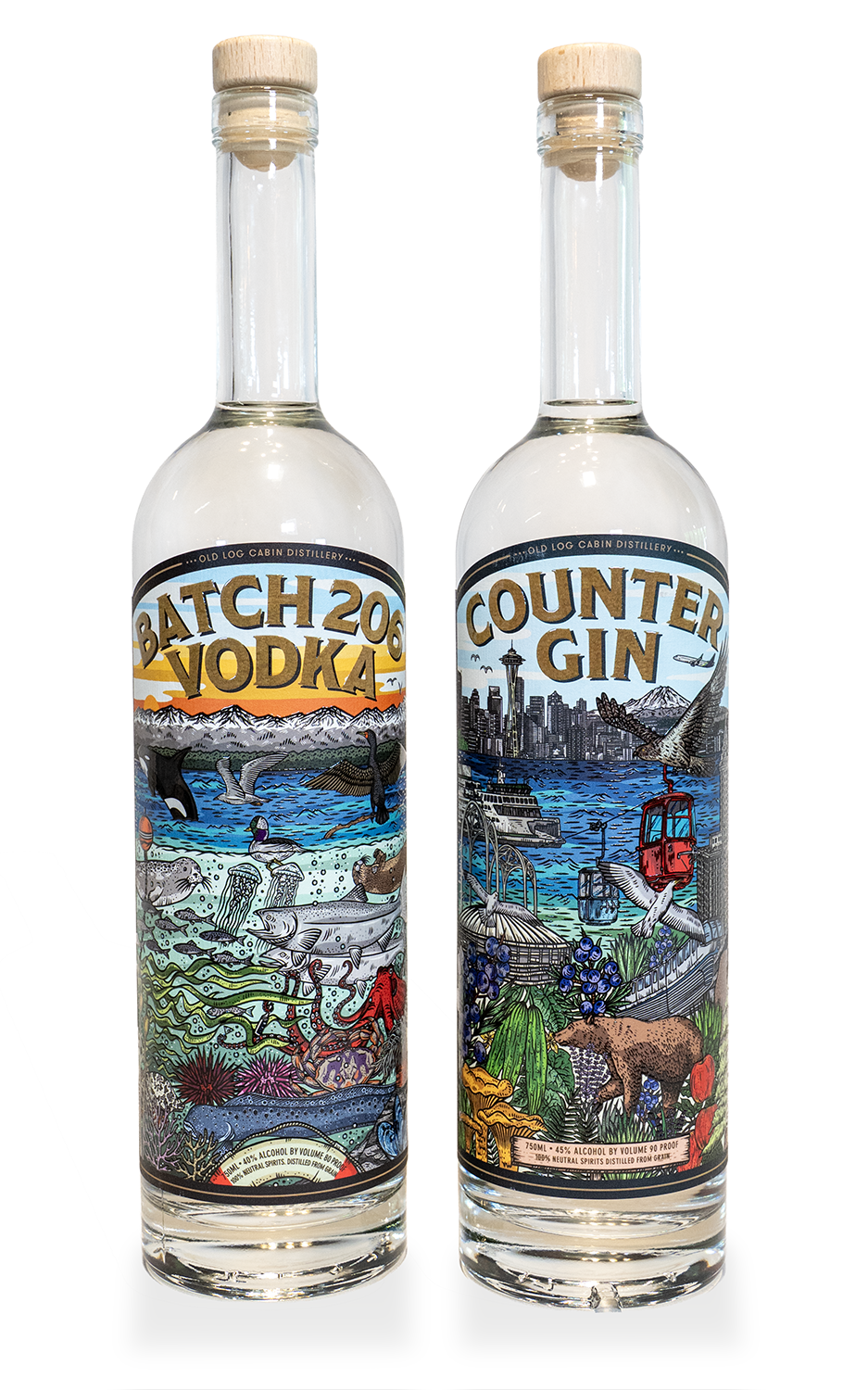
Old Log Cabin Distillery began with something unmistakably human: richly detailed, hand-drawn artwork inspired by the Pacific Northwest. Within each illustration was an entire world of animals, landmarks, landscapes and unexpected details waiting to be discovered.
Working together, the artist, brand and production teams found a way to carry that sense of discovery across the full packaging program—giving individual bottles their own view into the larger artwork while preserving a cohesive brand experience.
An illustrated world built to be explored.
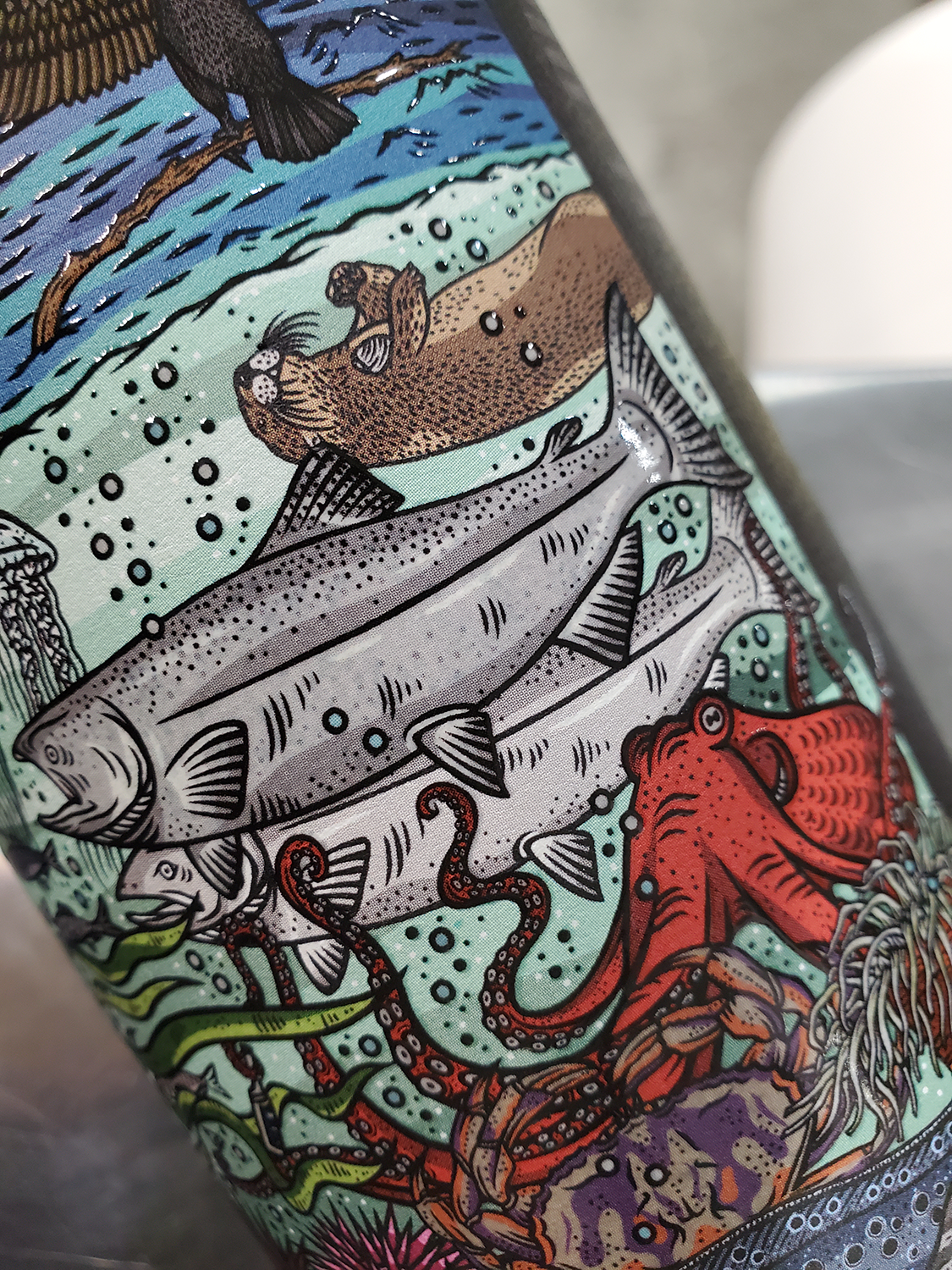
Artist Shogo Ota created expansive scenes filled with regional character, from wildlife and waterways to recognizable city and mountain details. The artwork gave the packaging team a rich creative foundation with enough depth to reveal new moments as the bottle turns and as different labels appear across the run.
The technology did not define the concept. It gave the concept more room to live, allowing the original artwork to reach consumers through a broader family of related compositions.
Variation became part of the experience.
A variable-design workflow generated different crops, scales and orientations from the approved artwork. As labels moved through production, the imagery continued to change while the core brand structure remained consistent.
The result feels like a collection of windows into the same illustrated world, giving consumers a reason to compare bottles, look for favorite details and discover something new.
Variable design
Different views from the larger illustration create meaningful variation without multiplying product SKUs.
Two-sided printing
Interior artwork uses the clear bottle to reveal additional imagery and encourage closer inspection.
High-build varnish
Selective raised detail adds dimension and touch without competing with the illustration.
Tactile detail brought the illustration forward.
High-build varnish was applied selectively so light and touch could emphasize the artwork while preserving the clarity of the full composition.
Precision in application
The varnish is applied in registration with the printed design, turning selected details into raised tactile moments.
Texture that invites interaction
As the finished label catches the light, elevated areas become visible and give consumers another reason to pick up the bottle.
The package creates reasons to look again.
The strongest outcome is not simply that every bottle can look different. The variation supports a richer consumer experience while the package remains unmistakably part of the same brand.
Creative control and scalable variation can work together.
Variable printing does not require brands to surrender creative control. The strongest programs begin with intentional artwork and clear design parameters, then use technology to extend that vision across a scalable family of related designs.
For Old Log Cabin Distillery, a variable-design workflow powered by HP SmartStream Mosaic helped transform approved illustrations into a broad collection of production-ready label variations. RLG’s role extended beyond access to the technology, bringing together artwork preparation, material knowledge, two-sided print execution, registration control and specialty finishing.