Flexo vs. Digital Printing for Labels: Which Is Right for Your Brand?
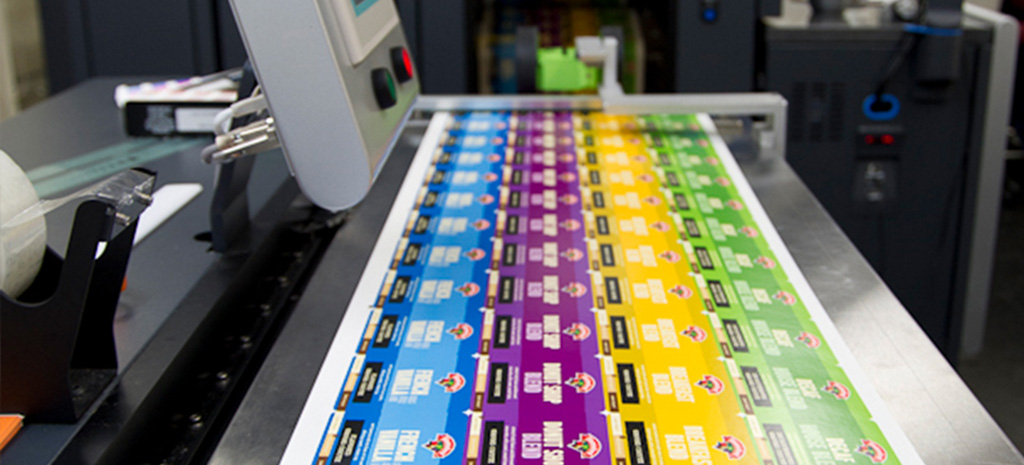
There is no single winner in the flexo vs. digital printing debate. Both technologies can produce high-quality labels, but the right choice depends on the details of your label program.
For some brands, digital label printing is the better fit because it supports shorter runs, faster changes, multiple SKUs, variable data, and personalized label campaigns. For others, flexographic label printing makes more sense because it supports long production runs, consistent artwork, spot colors, high-speed output, and certain finishing requirements.
The best answer often depends on factors such as run size, budget, lead time, artwork complexity, number of SKUs, material selection, color requirements, embellishments, and how often your label designs change.
That is why “flexo vs. digital” is not really about choosing the better technology. It is about choosing the better technology for the job.
Quick Answer: Digital vs. Flexo Printing
Digital printing is often the better fit for short runs, multiple SKUs, variable data, personalization, and fast changeovers. Flexographic printing is often the better fit for longer runs, consistent designs, high-volume production, Pantone spot colors, and certain in-line finishing needs. Many brands benefit from using both technologies across different products, campaigns, or stages of growth.
Resource Label Group works with brands across both digital and flexographic label printing, helping match each project to the production method that best supports the label’s design, performance requirements, timeline, and total cost.
In this guide, we’ll compare digital and flexo printing for labels, including how each process works, where each technology performs best, and what to consider before choosing the right approach for your brand.
| Factor | Digital Label Printing | Flexographic Label Printing |
|---|---|---|
| Best for | Short to mid-size runs, multiple SKUs, variable data, personalization, and frequent design changes | Long runs, consistent artwork, high-volume production, repeat orders, and certain spot-color or finishing needs |
| Setup | Minimal setup because plates are not required | Requires plates, setup time, and press preparation |
| Cost | Often more cost-effective for shorter runs, varied SKUs, and changing artwork | Often more cost-effective for larger runs once setup and plate costs are spread across a higher quantity |
| Speed | Faster setup and changeovers, especially for smaller or variable jobs | Very efficient once the press is set up and running for larger orders |
| SKU flexibility | Easier to combine multiple SKUs when label size and construction are similar | More setup may be required when artwork, colors, or designs change across SKUs |
| Variable data | Strong fit for personalization, serialization, versioning, and label-by-label changes | Less efficient for label-by-label variation |
| Color | Strong for CMYK and extended-gamut color depending on the project | Strong for Pantone spot colors and consistent repeat color needs |
| Embellishments | Can support embellishments through finishing steps depending on the label design and production path | Can support certain in-line finishing options depending on the press, material, and project requirements |
| Lead time | Often useful when brands need faster changes, shorter runs, or quick revisions | May require more upfront setup but can be efficient for high-volume production |
| Best use case | Seasonal labels, test launches, multiple SKUs, personalized campaigns, and variable label programs | Flagship SKUs, long-running products, large orders, and consistent label programs |
What Is Flexographic Printing for Labels?
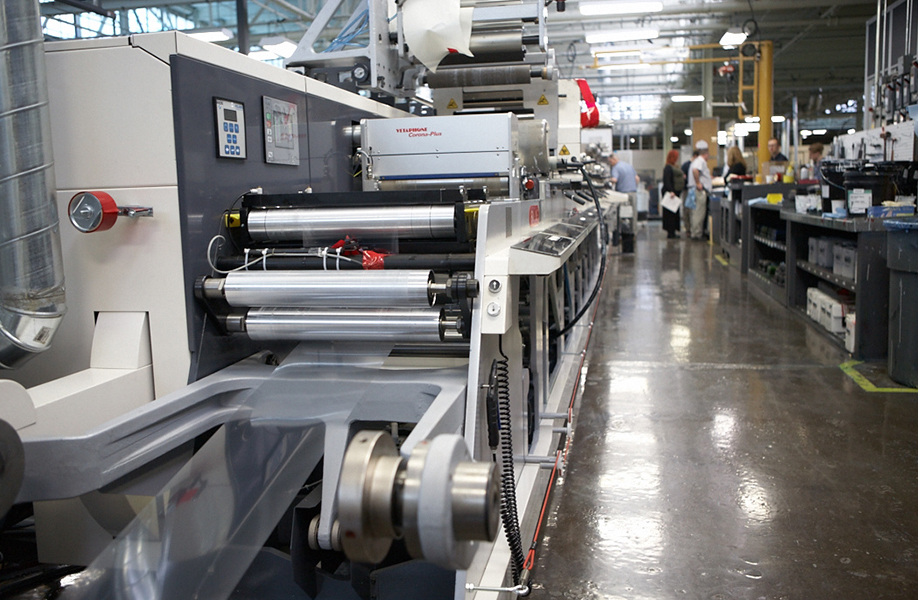
Flexographic label printing, often called flexo printing, is a print process that uses flexible printing plates to transfer ink onto label materials. The plates are mounted on cylinders, and as the label material moves through the press, each plate applies a specific color or design element to the label.
Flexo printing is widely used for pressure-sensitive labels, films, shrink sleeves, flexible packaging, and other roll-fed label applications. It is especially useful for large production runs, repeat orders, consistent artwork, and label programs that require speed, durability, spot colors, or certain finishing options.
Because flexographic printing uses plates, the process typically requires more setup than digital printing. Each color or design variation may require its own plate, and the press must be prepared before production begins. However, once the job is set up and running, flexo can produce labels quickly and efficiently at scale.
That makes flexographic label printing a strong option for brands with long-running products, flagship SKUs, high-volume orders, or packaging programs with limited variation from label to label.
Flexo printing may be the right fit when your brand needs:
- large label quantities
- consistent repeat orders
- Pantone spot colors
- high-speed production
- durable label constructions
- in-line finishing options
- long-running product lines
- labels with little variation between versions
Flexographic printing is not automatically better than digital printing, but it can offer strong value when the run size, artwork, color requirements, material, and finishing needs align with the strengths of the process.
What Is Digital Printing for Labels?
Digital label printing is a plate-free print process that produces labels directly from digital artwork files. Instead of creating physical plates for each color or design variation, the press uses digital instructions to print the label image onto the selected material.
Because digital printing does not require plates, it can be a strong fit for brands that need flexibility. It is often used for shorter runs, multiple SKUs, seasonal packaging, product launches, variable data, personalized labels, and projects where artwork may change frequently.
Digital label printing can also help brands manage SKU complexity. If several products use the same label size, shape, and construction, digital printing may make it easier to combine those versions into one production run. That can be helpful for product lines with multiple flavors, scents, formulations, regions, languages, or promotional variations.
Digital printing may be the right fit when your brand needs:
- short to mid-size label runs
- multiple SKUs or product versions
- variable data or serialization
- personalized label campaigns
- fast artwork changes
- seasonal or limited-edition labels
- test launches or smaller product rollouts
- complex graphics or high-detail designs
- labels that need to move quickly from file to production
Digital printing is not limited to small orders. For some brands, the flexibility of digital printing makes it valuable even when quantities grow, especially when the label program includes many versions, frequent changes, or personalization requirements.
Like flexo, digital printing is not automatically the better choice. The best option depends on the full label program, including run size, artwork, materials, color needs, finishing requirements, timeline, and budget.
Flexo vs. Digital Printing Cost: Where the Crossover Happens
Cost is one of the biggest factors in the flexo vs. digital printing decision, but it is not as simple as saying one method is always cheaper than the other.
Flexographic printing usually requires more setup at the beginning of a job. Plates need to be made, the press needs to be prepared, and the production team needs to align the job before the full run begins. Those upfront costs can make flexo less efficient for short runs or label programs with frequent design changes.
Digital printing does not require plates, which can reduce setup time and make shorter or more varied label runs more cost-effective. For brands with multiple SKUs, seasonal labels, personalized campaigns, or changing artwork, digital printing can offer more flexibility without the same plate-related setup costs.
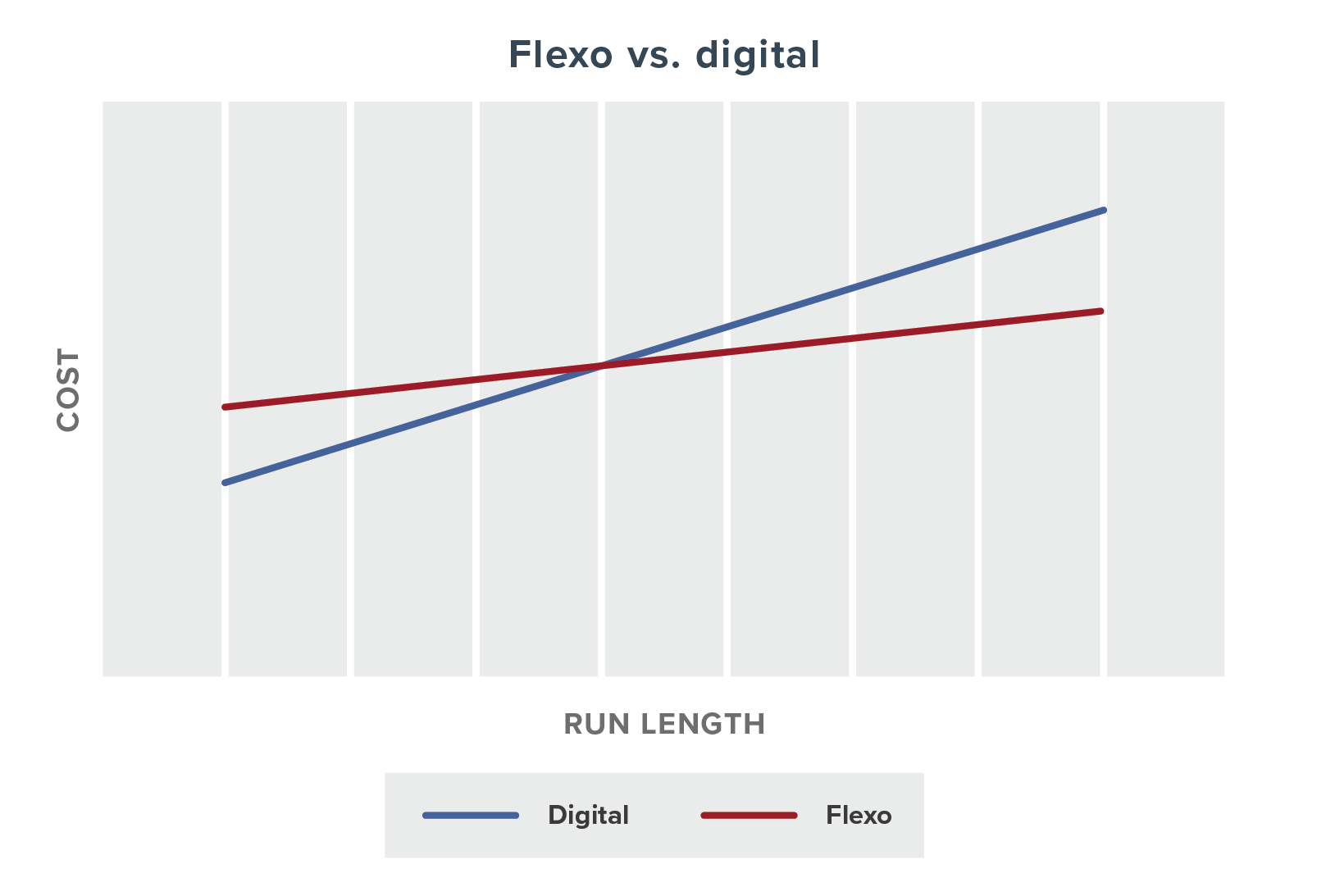
However, as order quantities increase, flexo can become more cost-efficient. Once the plates are made and the press is running, flexographic printing can produce large volumes quickly. For long runs with consistent artwork, the upfront setup cost can be spread across a larger number of labels, lowering the cost per label.
This is where the crossover point comes in. At lower quantities, digital printing may offer better value because it avoids plate costs and supports faster changes. At higher quantities, flexographic printing may offer better value because the setup investment is spread across a larger production run.
The exact crossover point is different for every project. It can depend on:
- total label quantity
- number of SKUs
- label size and shape
- number of colors
- Pantone or spot color requirements
- material and adhesive selection
- embellishments or finishing needs
- artwork complexity
- how often designs change
- lead time and production schedule
For example, a brand printing several short-run product variations may benefit from digital printing, even if the total number of labels is meaningful. A brand printing a large quantity of the same label for a flagship product may benefit from flexo because the run is long, repeatable, and consistent.
The right question is not only, “Which technology is cheaper?” The better question is, “Which technology gives this specific label program the best balance of cost, speed, quality, flexibility, and production efficiency?”
That is why it is important to evaluate the full label program before choosing a print method. A label converter with both digital and flexographic capabilities can help identify where the crossover point falls for your order and recommend the production path that makes the most sense.
When to Choose Digital Label Printing
Digital label printing can be the better choice when your brand needs flexibility, speed, versioning, or frequent design changes. Because digital printing does not require plates, it can make it easier to produce smaller or more varied label runs without the same setup requirements as flexographic printing.
This can be especially helpful for brands managing multiple SKUs, seasonal products, regional variations, test launches, or personalized campaigns. Instead of creating new plates for every version, digital printing allows the label artwork to move more directly from file to production.
Digital label printing may make sense when your brand needs:
- short to mid-size label runs
- multiple SKUs using the same label size or shape
- frequent artwork updates
- seasonal or limited-edition packaging
- personalized labels
- variable data, such as serial numbers, barcodes, batch codes, or regional information
- faster changeovers between label versions
- product testing or market launches
- complex graphics or high-detail artwork
- flexibility before committing to a larger production run
Digital printing can also help brands respond more quickly to changes in demand. If a product line adds a new flavor, scent, formulation, language, or promotion, digital printing can make it easier to update the label program without rebuilding the entire production setup.
For brands with many product variations, digital printing can also help reduce the friction that comes with SKU proliferation. When multiple labels share the same size, shape, and construction, those versions may be easier to manage within a digital production workflow.
Digital printing is not only for small brands or short orders. Larger brands may also use digital printing for product launches, regional campaigns, promotional packaging, seasonal releases, or any label program that requires frequent changes from one version to the next.
In many cases, digital label printing is the right choice when flexibility is just as important as volume. The more your label program depends on speed, variation, personalization, or frequent updates, the more digital printing may make sense.
When to Choose Flexographic Label Printing
Flexographic label printing can be the better choice when your brand needs large quantities, consistent artwork, repeat production, or specific color and finishing requirements. While flexo usually requires more setup at the beginning of a job, it can become highly efficient once the press is running.
That makes flexo a strong option for established products, flagship SKUs, long production runs, and label programs where the design does not change often. When the same label is printed in high volume, the setup and plate costs can be spread across a larger order, helping improve production efficiency.
Flexographic label printing may make sense when your brand needs:
- large label quantities
- long-running product lines
- repeat orders with consistent artwork
- high-speed production
- Pantone spot colors
- strong color consistency across larger runs
- in-line finishing options
- durable label constructions
- labels with limited variation between versions
- efficient production for flagship SKUs
Flexo can also be a strong fit when a label program requires specific spot colors or certain finishing needs. Depending on the project, flexographic printing may support in-line varnishes, coatings, screens, or other finishing elements that need to be considered as part of the full production plan.
For brands with stable, high-volume products, flexographic printing can offer a practical balance of speed, consistency, and long-run value. Once the job is set up, flexo can move efficiently through production, especially when the artwork, colors, materials, and finishing requirements remain consistent.
Flexographic printing may not be the best fit for every short-run or frequently changing label program, but it remains one of the most important technologies in label production. When the order size, artwork, color needs, and production goals align, flexo can be the right choice for reliable, repeatable label printing at scale.
Digital vs. Flexo Printing: Quality, Color, Materials, and Finishing
Both digital and flexographic printing can produce high-quality labels. The better choice depends less on which technology is “best” overall and more on which technology fits the label’s artwork, color requirements, material, finishing needs, and production environment.
A label with complex graphics, many versions, and frequent artwork changes may be a better fit for digital printing. A long-running label program with consistent artwork, specific spot colors, and high-volume production needs may be a better fit for flexo.
Print Quality and Detail
Digital printing can be a strong option for detailed artwork, gradients, photography, and complex designs. Because the label is printed directly from a digital file, it can support high-detail graphics and make it easier to manage multiple design versions.
Flexographic printing can also produce excellent label quality, especially when the job is built for consistent, repeatable production. With the right prepress work, plate preparation, press setup, and operator expertise, flexo can deliver strong results across large production runs.
Color Matching and Spot Colors
Color can be one of the most important factors when choosing between digital and flexo printing.
Digital printing is often a good fit for CMYK and extended-gamut color builds, especially when a brand needs flexibility across multiple SKUs or artwork versions.
Flexographic printing can be a strong fit when a brand requires specific Pantone spot colors or repeat color consistency across larger runs. If a brand color must be matched precisely, the production team should review the artwork, color expectations, material, and print method before the job is finalized.
Label Materials and Construction
Both digital and flexographic printing can work with a range of label materials, but the right choice depends on the full label construction.
The material, adhesive, coating, finish, container shape, product environment, and application method can all influence which print method makes the most sense. A label for a refrigerated beverage, for example, may have different material and durability needs than a label for a dry-goods package, cosmetic product, industrial container, or promotional item.
Before choosing a print method, it is important to evaluate where the label will be used, how it will be applied, and what conditions it needs to withstand.
Embellishments, Coatings, and Finishing
Finishing needs can also affect the flexo vs. digital printing decision. Some labels require additional effects such as foil stamping, embossed labels, spot varnish, coatings, laminates, or specialty finishes.
Digital label printing can support many finishing options through additional production steps. This can be useful for shorter runs, personalized campaigns, or labels with complex artwork that also need embellishments.
Flexographic printing may support certain in-line finishing options depending on the press, material, and project requirements. This can be helpful for longer runs where the label needs consistent finishing across a larger quantity.
Label Durability and Performance
Durability depends on more than the print method. The label material, adhesive, ink system, coating, laminate, and application environment all play important roles.
A durable label starts with understanding how the product will be used. Will the label face moisture, abrasion, refrigeration, heat, sunlight, chemicals, handling, or shipping conditions? Those requirements should be reviewed before deciding whether digital, flexo, or a combination of production methods is the best fit.
The right label printing technology should support the full performance needs of the product, not just the artwork on the label.
Can Brands Use Both Digital and Flexo Printing?
Brands do not always need to choose one printing technology for every label program. In many cases, the best approach is to use digital printing for some projects and flexographic printing for others.
A brand might use digital label printing for short runs, seasonal promotions, regional campaigns, product launches, variable data, or multiple SKU versions. That same brand might use flexographic label printing for flagship products, repeat orders, high-volume runs, or labels with consistent artwork and spot color requirements.
Using both technologies can help brands balance flexibility and production efficiency across the full product portfolio.
For example:
- A food brand may use digital printing for limited-time flavors and flexo printing for its core products.
- A beverage brand may use digital printing for regional promotions and flexo printing for high-volume national SKUs.
- A beauty brand may use digital printing for new product launches and flexo printing for established product lines.
- A nutraceutical brand may use digital printing for multiple formula variations and flexo printing for repeat high-volume labels.
This is why it helps to work with a label printer that understands both production methods. If a printer only offers one technology, the recommendation may be limited by the equipment available. But when your label partner has both digital and flexographic capabilities, they can evaluate the full project and recommend the method that best fits the job.
The right production path may change from one order to the next. A label program that starts with digital printing for a test launch may later move to flexo as volume grows. A product line that relies on flexo for flagship SKUs may still use digital printing for seasonal packaging, personalization, or short-run variations.
The goal is not to pick one technology forever. The goal is to choose the best printing method for each label, each product, and each stage of growth.
How to Choose Between Flexo and Digital Printing for Labels
Choosing between flexo and digital printing starts with understanding the full label program, not just the print method. The right choice depends on how many labels you need, how often the artwork changes, how many versions are involved, what materials are required, and what the finished label needs to do on the package.
Before choosing a production path, consider these questions.
What is your label quantity?
Run size is one of the first factors to evaluate. Digital printing is often a strong fit for shorter or more varied runs because it does not require plates. Flexographic printing is often a strong fit for larger runs because the setup investment can be spread across a higher quantity of labels.
How many SKUs or label versions do you need?
If your brand has many SKUs, flavors, scents, formulas, sizes, languages, or regional versions, digital printing may offer more flexibility. If the label design is consistent across a large quantity with little variation, flexo may be more efficient.
How often will the artwork change?
Brands with frequent artwork updates, seasonal packaging, limited-time offers, or promotional changes may benefit from digital printing. Brands with stable artwork and repeat production needs may benefit from flexographic printing.
Do you need variable data or personalization?
Digital printing is usually the stronger fit for variable data, serialization, personalization, versioning, or label-by-label changes. If each label needs unique information, digital can make those changes easier to manage.
Do you need Pantone spot colors or strict color matching?
If your label requires specific Pantone spot colors or strict brand color matching, flexographic printing may be the better fit depending on the job. Digital printing can support strong color reproduction and extended-gamut color, but spot color requirements should be reviewed with your label printer before production.
What label materials, adhesives, and applications are required?
The print method should support the full label construction. Consider the label material, adhesive, coating, finish, container shape, application method, and product environment. A label used on a refrigerated beverage, beauty product, supplement bottle, industrial container, or promotional package may each require a different construction.
Do you need embellishments or specialty finishes?
If your label uses foil stamping, embossing, spot varnish, coatings, laminates, or specialty finishes, those requirements should be discussed early. Some finishing options may work better with a specific production path, while others can be combined with either digital or flexographic printing.
What is your timeline?
If your brand needs a faster changeover, a shorter run, or quick artwork revisions, digital printing may be more practical. If the job is a large repeat order with stable artwork, flexo may offer production efficiency once the press is set up.
Is this a test launch or a flagship product?
Digital printing is often useful for test launches, smaller rollouts, seasonal packaging, and products still finding their market. Flexographic printing is often useful for established products, flagship SKUs, repeat orders, and long-running label programs.
Could your brand benefit from both?
Many brands do not need one permanent answer. Digital may be right for short-run or variable projects, while flexo may be right for larger, repeatable orders. The best label partner can help evaluate both options and recommend the right technology for each project.
The best way to choose between flexo and digital printing is to review the label program as a whole. Run size, cost, artwork, color, materials, finishing, timeline, and long-term production goals all matter. When those details are clear, the right printing method becomes much easier to identify.
FAQs About Flexo vs. Digital Printing
What is the difference between flexo and digital printing?
The main difference is how the labels are printed. Flexographic printing uses plates to transfer ink onto label material, while digital printing produces labels directly from digital artwork files without plates. Flexo is often a strong fit for larger, consistent runs, while digital is often a strong fit for shorter runs, multiple SKUs, variable data, personalization, and frequent design changes.
Is digital printing better than flexo printing?
Digital printing is not automatically better than flexo printing. It depends on the label program. Digital printing may be better for short runs, variable data, personalization, and fast changes. Flexographic printing may be better for long runs, consistent artwork, spot colors, and high-volume production. The right choice depends on quantity, artwork, color, materials, finishing needs, timeline, and budget.
Is flexo printing cheaper than digital printing?
Flexo printing can be more cost-effective for larger runs because setup and plate costs can be spread across a higher number of labels. Digital printing can be more cost-effective for shorter runs or label programs with many versions because it does not require plates. The most cost-effective option depends on run size, number of SKUs, design complexity, materials, and finishing requirements.
When should brands use digital label printing?
Brands should consider digital label printing when they need short to mid-size runs, multiple SKUs, variable data, personalization, seasonal packaging, product launches, fast artwork changes, or test-market labels. Digital printing is often useful when flexibility and speed are important parts of the label program.
When should brands use flexographic label printing?
Brands should consider flexographic label printing when they need larger quantities, repeat orders, consistent artwork, high-speed production, Pantone spot colors, or certain finishing options. Flexo can be especially useful for flagship SKUs, long-running product lines, and label programs with limited variation.
Can a brand use both flexo and digital printing?
Yes. Many brands use both flexo and digital printing across their product portfolio. Digital printing may be used for short runs, seasonal campaigns, product launches, or variable label programs, while flexo printing may be used for larger repeat orders and high-volume flagship products.
Which printing method is better for variable data?
Digital printing is generally the better fit for variable data because it can support label-by-label changes without creating new plates. This can be useful for serialization, personalization, regional information, batch codes, barcodes, promotional variations, and other changing label details.
Which printing method is better for Pantone spot colors?
Flexographic printing is often a strong choice when a label requires true Pantone spot colors or strict repeat color consistency. Digital printing can also produce strong color results, including CMYK and extended-gamut color depending on the project, but spot color requirements should be reviewed with your label printer before production.

Need Help Choosing Between Flexo and Digital Printing?
Your label program may need digital printing, flexographic printing, or a mix of both. Resource Label Group can help you evaluate your run size, SKUs, artwork, materials, color requirements, finishing needs, timeline, and production goals.